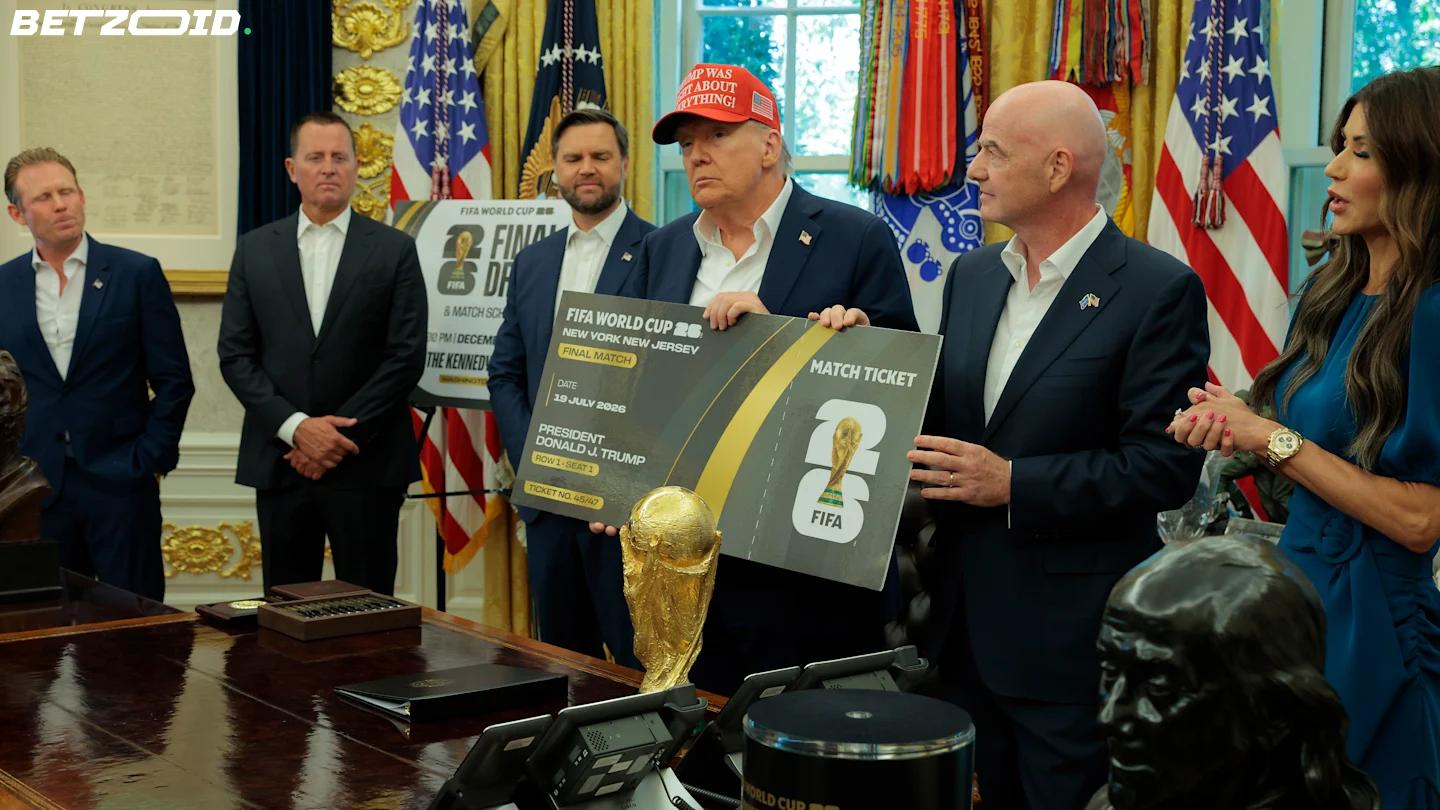
"Fans are the key," said Pep Guardiola. "The key for this business to go on." FIFA, apparently, missed the memo — or simply doesn't care.
Four Category One seats for the 2026 World Cup final at MetLife Stadium are currently listed at $2,299,998.85 each on FIFA's own official resale platform. No private box. No catering. No meet-and-greet with the finalists. Just a seat near the goal, slightly to the right, from which you'll struggle to read the game tactically anyway.
Nobody is actually paying that. But that's not the point.
FIFA built the machine, then sold tickets on it
For the first time in World Cup history, FIFA has formally embraced the resale market. Thanks to relaxed ticketing laws in the United States and Canada — where 91 of the tournament's 104 games will be played — sellers can list at any price they choose. FIFA takes 15% from the buyer and 15% from the seller on every secondary transaction. If someone were genuinely reckless enough to hand over $2.3 million for a single seat, FIFA would pocket roughly $690,000 from that one deal alone.
Football Supporters Europe put it neatly: "The fact that scalping is legal doesn't mean FIFA must become the scalper."
FIFA's official response leaned on the kind of language that sounds reasonable until you think about it: "variable pricing," "industry standards," "fair market value." Standard stuff from an organisation that has rebranded exploitation as alignment with North American entertainment trends.
What the numbers actually mean
Even at the lower end, the cheapest Category One seat for the final is listed above $16,000 — roughly three months' wages for the average New Jersey resident. The equivalent ticket at the 2022 World Cup final cost around $1,600. That's a tenfold increase in three years.
Guardiola, who as one of the best-paid managers on the planet is among the few who could actually afford to go, didn't hide his frustration. "Before I remember the World Cup — years, years, years ago — was like a celebration of the joy of football for the nations going there. Everyone traveled all around the globe. And it was affordable."
He's right. The tournament was conceived in 1930 by Jules Rimet, a French diplomat shaped by the devastation of the First World War, who built it as a vehicle for international unity. His guiding principle: "Loss of money is never fatal."
FIFA, 95 years later, begs to differ.
Any futures markets tied to attendance atmosphere, fan energy or host nation engagement should factor in one uncomfortable reality: the 2026 World Cup final could be filled with corporate buyers and empty seats while genuine fans watch from their living rooms. It wouldn't be the first time a showpiece event priced out the people who make it worth watching.