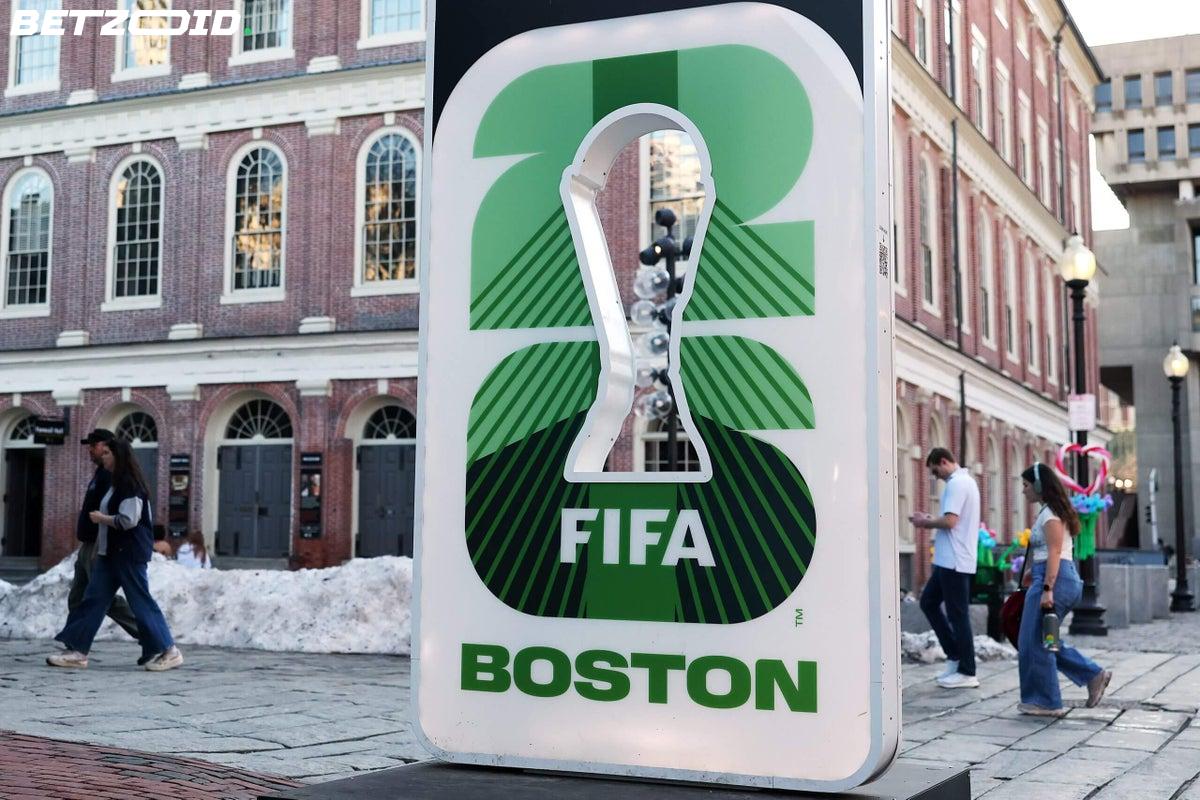
"Extracting as much money as possible from a captive audience." That's not a disgruntled fan venting on social media — that's Ronan Evain, executive director of Football Supporters Europe, describing the transport situation developing around the 2026 World Cup in Boston. And after Tuesday's announcement, it's hard to argue with him.
Boston's World Cup host committee has confirmed it will run a bus service — branded the Boston Stadium Express — from pickup points across Greater Boston to Gillette Stadium in Foxboro. The price: $95 per seat, one way. No discount for children. No concession for over-60s. Nothing for passengers with accessibility needs.
A captive market, priced accordingly
This isn't happening in isolation. Earlier this month, the MBTA confirmed it would charge $80 for a round-trip train ticket from central Boston to Gillette — a 27-mile journey that normally costs $20 for Patriots games. The bus is more expensive still, and it's justified, apparently, because it offers more pickup locations. Over 20 across Greater Boston, including Boston Logan International and the Rhode Island Convention Center in Providence.
The committee is framing the $95 as reasonable given the scale of the operation. Sources close to the committee pointed to Taylor Swift's Eras Tour at Gillette, where similar shuttle buses ran at around $75 per seat. The World Cup pricing is higher, they say, due to greater coordination involved. Whether fans buy that logic is another matter.
What makes this genuinely uncomfortable is what fans are being pushed toward. There will be no free or general parking at Gillette during the World Cup — FIFA controls all official parking revenue. Official spaces start at $175 for the group stage and climb to $270 for the quarter-final. Oversized vehicles? $980 for the last-eight game. Tailgating — a cornerstone of American sports culture — is banned within FIFA's extended stadium perimeter.
So fans are paying $95 for a bus because the alternatives are a $80 train, a $175 car park, or simply not going.
FIFA takes the prize money; cities take the bill
The deeper issue is the financial structure of this tournament. FIFA president Gianni Infantino has projected $11 billion in revenue — from ticket sales, broadcast deals, in-stadium sponsorship, and even official parking fees. All of that flows to FIFA. Meanwhile, host cities like Boston are on the hook for safety, security, police escorts for teams and referees (and Infantino himself), medical services, fire protection, and transport logistics. None of that comes cheap, and none of it comes with FIFA footing the bill.
FIFA's pitch to the cities was a projected $30 billion in economic impact across the U.S. Several city executives, speaking anonymously to protect working relationships, now doubt those figures will materialise. The bus and train pricing is a direct consequence — Boston is trying to claw back some of what it's spending.
Compare this to the 2022 World Cup in Qatar, where official ticket-holders rode Doha's metro for free throughout the tournament. Or Euro 2024 in Germany, where match tickets unlocked free public transport on game days. Those models required either state funding or a centralized approach that U.S. host cities simply don't have — and FIFA hasn't provided.
- Group stage parking: $175 per car
- Round of 32 parking: $220 per car
- Quarter-final parking: $270 per car
- Oversized vehicle (quarter-final): $980
- Round-trip train from Boston: $80
- Boston Stadium Express bus: $95
Gillette Stadium — home to the Patriots and the Revolution, owned by the Kraft Group — will host seven matches, including two Scotland games (vs Haiti and Morocco), England vs Ghana, Norway vs France, a round-of-32 tie, and a quarter-final. The stadium capacity is 65,000. That's a lot of fans who need to get there somehow.
The Boston Stadium Express will aim to serve 10,000 fans per game. Tickets must be bought in advance and require a valid same-day World Cup match ticket to board. Buses start running three hours before kick-off and leave the stadium approximately 30 minutes after the final whistle.
"Charging fans for making the safe and environmentally responsible choice of using public transport," Evain said, "makes a mockery of FIFA's climate strategy and its net-zero commitments." That's a pointed observation — and one FIFA will almost certainly ignore.