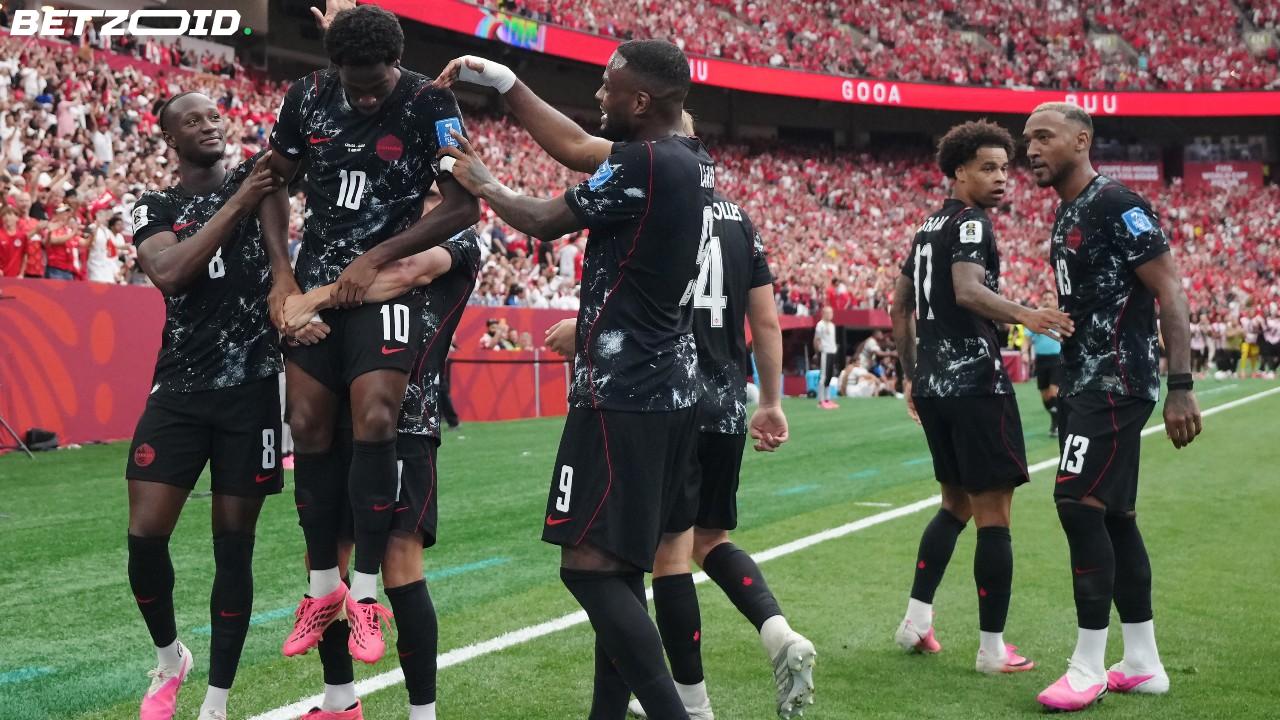
"We're no longer viewed as the easy game." That line from Canada Soccer president Peter Augruso tells you more about where this program has arrived than any statistic could.
Speaking a day after Canada's 2-1 loss to Switzerland ended any hope of finishing top of Group B, Augruso wasn't in mourning. He was measuring distance traveled. Canada have earned their first World Cup point, their first World Cup win, and now face South Africa in Los Angeles on Sunday with a place in the last 16 on the line. For a country that had never won a World Cup match before this tournament, that's not a small thing.
Marsch has brought something Canadians weren't used to seeing
Augruso credits Jesse Marsch — his most consequential hire — with giving the group a different mentality. "He might rub some commentators the wrong way, or certain former players in the United States, but he's taught Canadians to believe in themselves," Augruso said. "Jesse isn't trying to take away our Canadian identity, but he has brought an edge to this group. If we want to compete with the best countries in the world, we have to have that edge."
That edge is showing up on the pitch. Canada's 6-0 dismantling of Qatar was watched by FIFA president Gianni Infantino and Prime Minister Mark Carney alongside Augruso. Around 8,000 supporters marched to the stadium together. Vancouver hasn't just hosted a World Cup — it's inhabited one. According to Augruso, Infantino has been "pleasantly surprised" by the reception.
The numbers coming out of this tournament are doing real things for Canada's odds of being taken seriously as a football nation long-term — not just now, while the flags are out.
The infrastructure problem is real, and Augruso knows it
Previous generations of Canadian soccer leadership promised growth and delivered stagnation. Augruso acknowledges it directly. His answer is infrastructure — around 20 mini-pitches in British Columbia, 25 community pitches funded by Jumpstart, and projects in Atlantic Canada and the West Coast. Canada currently has roughly 750,000 registered players. He wants over a million within a year of the tournament ending.
That's an ambitious target. Whether it happens depends heavily on whether the World Cup translates into sustained domestic interest — and that means people actually showing up to CPL and Northern Super League matches when the cameras move on.
"We can't allow this World Cup to become just a great memory," Augruso said. "The Northern Super League has only been around for a short time and we're already seeing players coming into our national team environment. The CPL has done the same thing on the men's side. Those leagues matter because they're where the next generation develops."
He's right. The domestic leagues are the connective tissue between this moment and any lasting culture. Without them, 2026 is a highlight reel. With them, it's a foundation.
Former national team goalkeeper Katrina LeBlanc gave Augruso a line he's been carrying with him: "There are only two groups of people who wear the maple leaf — those who protect it and those who inspire it." Sunday against South Africa, Canada get another chance to do the latter.