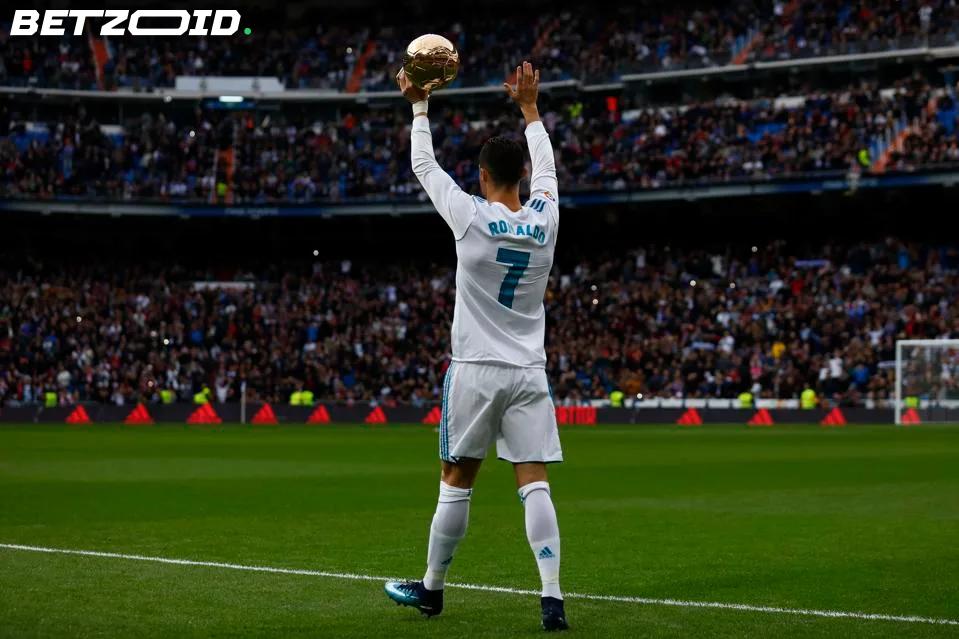
Real Madrid and Barcelona are level on 12 Ballon d'Or wins each, accounting for every single one of La Liga's 24 victories in the award's history. That's not a coincidence — it's the story of modern football's two dominant forces swallowing everything in their path for seven decades.
With the 70th edition being handed out at the London Palladium, and four Madrid players on the 30-man shortlist — Kylian Mbappé, Jude Bellingham, Vinícius Júnior, and Marc Cucurella — it's worth mapping exactly how Madrid got to 12, because the detail matters more than the number.
The winners, and what they actually won it for
Alfredo Di Stéfano started it, taking the award in 1957 and 1959 while leading the side that won five consecutive European Cups. He scored in all five finals. Raymond Kopa added a third for the club in 1958, fresh off a World Cup in Sweden where France finished third and he was named best player of the tournament — his name now graces the under-21 award.
Then came a 42-year gap before Luís Figo won in 2000, followed by Ronaldo Nazário in 2002 for his World Cup exploits with Brazil — eight goals, both in the final against Germany. Fabio Cannavaro collected his in 2006 after captaining Italy to the World Cup, and remains the last defender ever to win it.
Cristiano Ronaldo dominates Madrid's modern count with four wins — 2013, 2014, 2016, and 2017 — tied to two Champions League titles, Euro 2016, and La Liga. Luka Modrić broke the Messi-Ronaldo stranglehold in 2018, scoring 753 points to Ronaldo's 476 after winning a third straight Champions League and dragging Croatia to a World Cup final. Karim Benzema closed out the list in 2022, the first award decided on a European season basis, with hat-tricks against PSG and Chelsea on his way to a Champions League and La Liga double.
Three of the 12 were earned elsewhere
Here's where it gets complicated. France Football credits the club a player represents at the time of the ceremony — not the club they actually performed for that season. Which means Figo's 2000 award was built on a season at Barcelona, Ronaldo's 2002 rested almost entirely on Inter Milan and the World Cup, and Cannavaro's 2006 was a Juventus season. All three had signed for Madrid between the end of the season and the ceremony.
Strip those out on a strict seasonal count and Madrid's total drops to nine. Whether you accept the official tally or the stricter version probably depends on how much you like Madrid.
The near misses that still sting
Vinícius Júnior came closest in 2024 — losing to Rodri by just 41 points, 1,170 to 1,129, after a season that brought the Champions League, La Liga, and the Spanish Super Cup. Bellingham finished third, Carvajal fourth. Madrid sent no one to the ceremony in protest, then watched Vinícius pick up FIFA's The Best award weeks later as a partial consolation.
Raúl finished second to Michael Owen in 2001 — 140 points to Owen's 176 — despite finishing as La Liga's top scorer with 24 goals. Ferenc Puskás never won it at all, his best finish a second place in 1960 after scoring four goals in a 7-3 European Cup final win over Eintracht Frankfurt at Hampden Park.
With Mbappé arriving as the headline name and Vinícius coming off arguably his best season in a Madrid shirt, the odds on a 13th Ballon d'Or landing at the Bernabéu are shorter than they've been since Benzema's peak. Whether it actually arrives depends on who has the better 2024/25 season — and whether the voters are willing to overlook Vinícius being robbed last time around.