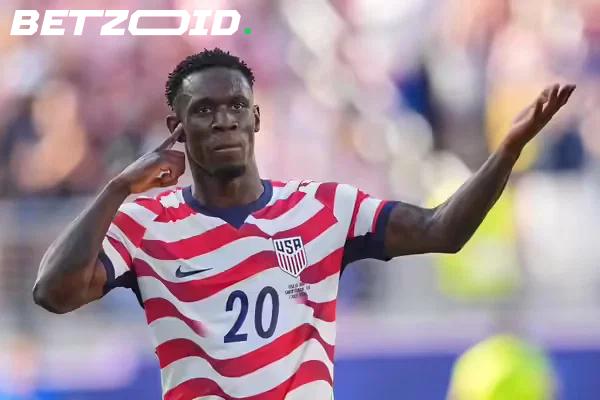
Wayne Rooney put it plainly: "Infantino, he should be ashamed of this because I think the sportsmanship of this game is in question here." Hard to argue.
Folarin Balogun was sent off in the 64th minute of the USA's 2-0 win over Bosnia & Herzegovina for stepping on Tarik Muharemović's ankle. Direct red. Automatic one-match ban. He should be watching Sunday's Round of 16 clash against Belgium from the stands. Instead, he's playing — because FIFA quietly invoked Article 27, placing the suspension on a one-year probationary hold, and Donald Trump held a press conference to take credit for it.
"Thank you to FIFA for doing what was right, and reversing a great injustice!" Trump posted. Gianni Infantino, under fire from every direction, responded that "FIFA's judicial bodies are independent." Those two statements cannot both be true.
Bosnia want the USA thrown out
Bosnia's federation didn't hold back. Their official account posted that regardless of whether the red card was correct, "Government interference is a violation of FIFA Articles 2 & 15, and the punishment is disqualification and suspension." That's not an emotional reaction — those are the actual rules. FIFA has previously removed nations from competition for government interference. Whether they apply the same standard to the host nation is a different question entirely.
Belgium tried the formal route. The Royal Belgian Football Association officially contested Balogun's eligibility, stating they would challenge his inclusion on the team sheet. FIFA dismissed it immediately, ruling that Belgium had "no standing to appeal." Their manager, Rudi Garcia, was more cutting: "I didn't know that at the World Cup, the 5th of July is actually the first of April."
UEFA called the ruling "unprecedented, incomprehensible and unjustifiable." When the sport's governing body for an entire continent uses all three of those words in one sentence, something has gone badly wrong.
What this does to the Belgium game
Balogun's presence changes the USA's attacking picture significantly. He was their focal point against Bosnia, and Belgium's defenders will now have to account for a striker they expected to be absent. Belgium's defensive odds, which were already adjustable given their squad depth, just became harder to read — not because Belgium are weak, but because the preparation was built around a different scenario.
Reports indicate this is the first time FIFA's Article 27 provision has been used in this way since Garrincha in 1962. Over sixty years. That context alone tells you how extraordinary — and how uncomfortable — this decision is.
FIFA has the authority to make it right, and they still chose this. That's the part that's hard to walk back.