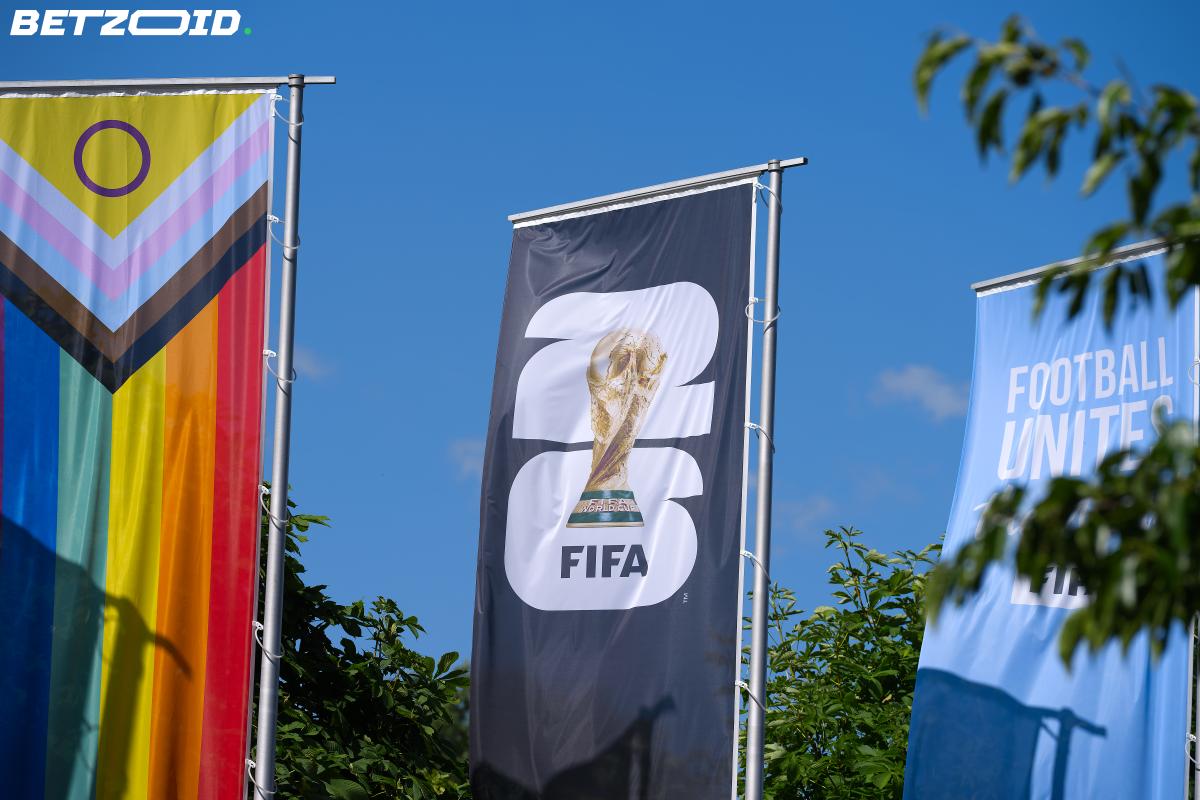
"There will be no 'Pride Match' at the World Cup." That was Gianni Infantino in January, drawing what he apparently thought was a clean line. Six months later, Iran and Egypt played in Seattle while the city threw one of its biggest Pride celebrations in years. The line was not clean. It never was.
Seattle's local organizing committee had planned the Pride weekend events before the draw was made. When the bracket landed and it turned out the teams were Iran and Egypt — two countries where same-sex relations are not just frowned upon but criminalized — nobody in Seattle changed anything. "Once the teams were drawn for this match, no change to our approach," said Leo Flor, chief legacy officer for Seattle FWC26. The city held its position. FIFA held its distance. And the gap between those two stances is exactly where this story lives.
FIFA's rules exist. FIFA just won't enforce them.
Iran's Football Federation president Mehdi Taj called the Pride branding "inappropriate" and "an irrational move." Egyptian staffers blocked Pride questions to players at practice. Iran requested that its pre-match press conference take only football questions. Both federations wrote to FIFA demanding the celebrations be canceled — and FIFA, according to Iran's federation, privately assured them that "no ceremonies or promotional activities related to this issue will take place inside the stadium or as part of the official match programme."
So FIFA told the federations: don't worry about it. And told the world: nothing to do with us. Both things cannot serve the organization's stated values simultaneously.
Because FIFA's statutes bar discrimination on the basis of sexual orientation. Its No Discrimination campaign commits the governing body to ridding football of discrimination in any form. Its human-rights policy extends those expectations to entities operating under FIFA's auspices. British human rights campaigner Peter Tatchell wrote to Infantino last week urging FIFA to seek written assurances from 11 World Cup nations that criminalize homosexuality — Iran, Egypt, Saudi Arabia, Ghana and Qatar among them — confirming that no player would be excluded from a squad for being gay.
FIFA's response, dated June 23: "The selection of players is the responsibility of the respective participating FIFA member associations."
That's not a policy. That's a shrug wearing a suit.
"FIFA cannot simply hand responsibility back to national associations from countries that criminalize homosexuality and pretend its anti-discrimination rules are being enforced," Tatchell said. "This exposes the hypocrisy at the heart of FIFA's Pride Match."
Qatar, Saudi Arabia, and a pattern FIFA keeps repeating
The Seattle situation didn't arrive without precedent. At the 2022 World Cup in Qatar — where same-sex relations are also illegal — European captains abandoned plans to wear OneLove armbands after FIFA threatened yellow cards. Germany's players covered their mouths in the pre-match team photo. The German Football Association's response was direct: "Denying us the armband is the same as denying us a voice."
In Qatar, FIFA used its tournament authority to kill an inclusion gesture. In Seattle, four years later, FIFA says rainbow flags are permitted under the stadium code of conduct and that fans of all sexual orientations are welcome. The symbol is allowed. The substance is still missing.
And then there's 2034. FIFA awarded that World Cup to Saudi Arabia, a country that criminalizes same-sex activity with a maximum penalty of death, according to the Human Dignity Trust. Amnesty International said the award was made without adequate human-rights protections. Human Rights Watch called it an exposure of empty commitments. Infantino called the Saudi bid "absolutely incredible" and suggested the tournament could catalyze social change.
That's the same logic applied every time. The tournament as catalyst. The host nation as a project. The rights concerns as something to be navigated around rather than resolved.
Meanwhile, the Premier League — watching the same cultural tensions play out domestically — ended its Rainbow Laces partnership with Stonewall entirely last summer after a meeting of all 20 club captains concluded it was no longer workable. FIFA is threading a needle that even the world's richest domestic league quietly put down.
Seattle supplied the civic conviction. Fans supplied the images. FIFA supplied the permission slip — and just enough distance to avoid being held to its own rules.