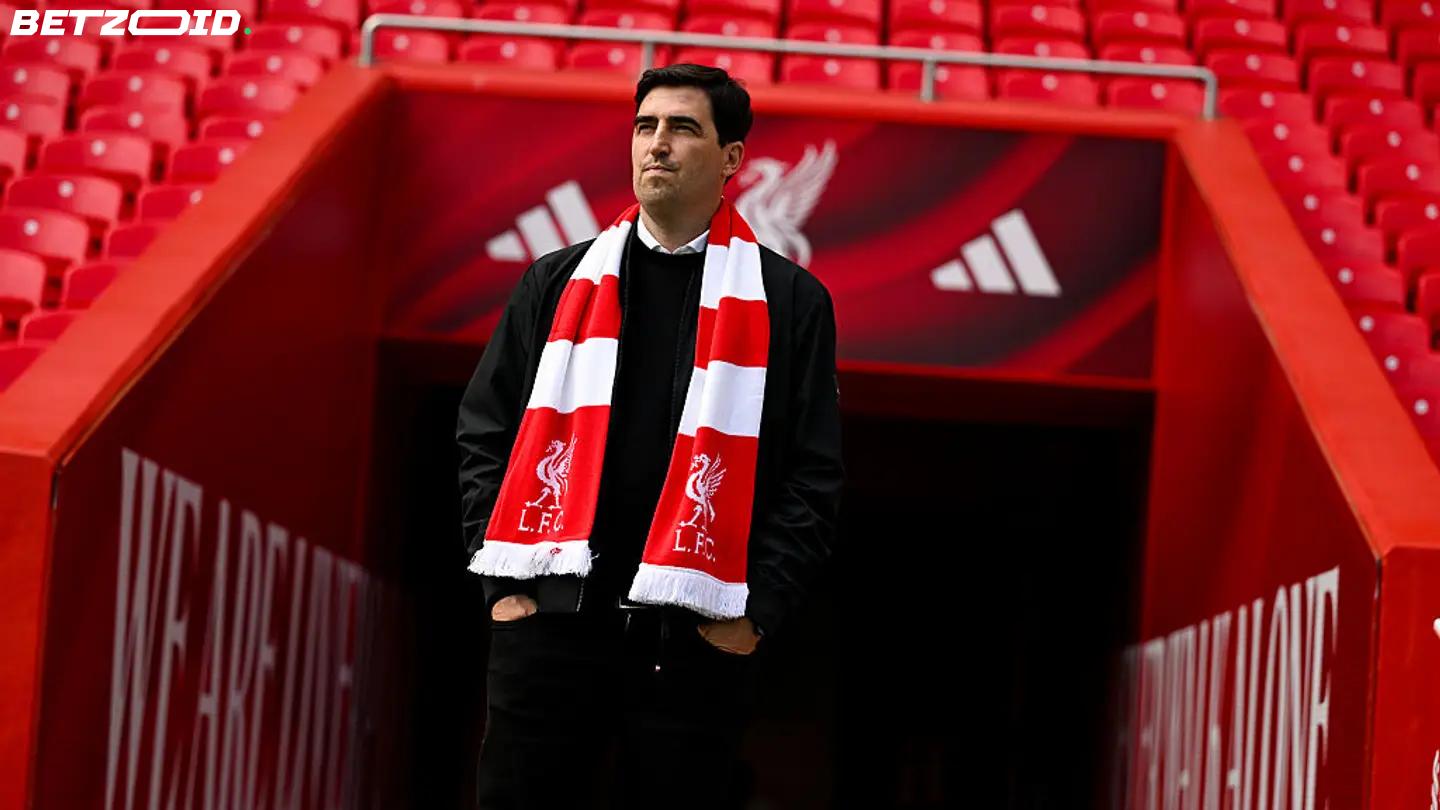
Bournemouth won just one of 13 matches last season when they held 55% possession or more. That stat isn't a footnote. For a coach about to take charge of a club where opponents routinely park deep and surrender the ball, it's the central question surrounding Andoni Iraola's appointment at Liverpool.
The excitement is understandable. Iraola dragged a threadbare Bournemouth side to Europa League qualification, building one of the Premier League's most ferocious pressing units on a fraction of the budgets above them. He's tactically sharp, personable, and genuinely good at his job. But good at his job in a very specific set of circumstances — and Liverpool represents a dramatically different environment.
Arne Slot Already Handed Opponents the Blueprint
Arne Slot spelled it out himself last October, after three consecutive defeats. "Teams played in a completely different way against us in the first half of last season," he said. "I can see this going now into this part of this season." He was right. Premier League sides stopped trying to play through Liverpool and started lumping it long instead — cutting off the press at source and neutering the very mechanism Slot's system depended on.
Iraola's system at Bournemouth runs on the same fuel. "What you have to do is stay on top of them as they bring the ball out," he's explained. The problem is that most teams facing Liverpool don't bring the ball out. They launch it. And when the press has nothing to bite into, Bournemouth — like Slot's Liverpool before them — have looked pedestrian.
Liverpool's title odds entering next season rest heavily on whether Iraola can find an answer to that problem that neither he nor Slot have convincingly solved.
Set Pieces Add Another Layer of Concern
Then there's the dead-ball picture, which is uncomfortable viewing from both ends. Liverpool conceded a league-high 20 set-piece goals last season. Iraola's Bournemouth shipped 18 from those situations and recorded the highest set-piece xG faced in the entire division. Combine those two tendencies under one roof and you have a vulnerability that every analyst, coach, and sharp bettor in England will be circling before the season kicks off.
Slot himself identified set pieces as a key tool for breaking low blocks — Liverpool eventually scored 18 from dead balls — but the defensive exposure was the trade-off. Iraola inherits that same fragility, arguably amplified.
None of this means the appointment is wrong. Iraola transformed Rayo Vallecano and then Bournemouth with limited resources and genuine tactical intelligence. His playing career at Athletic Club — where possession and structure were non-negotiable — suggests the tools exist somewhere. But there's a meaningful gap between having the tools and deploying them at a club where the expectation is a title challenge, not survival.
"I think I've learned to take things with less urgency or less dramatics," Iraola told The Independent. "Otherwise you go crazy."
He may need that temperament sooner than he thinks.