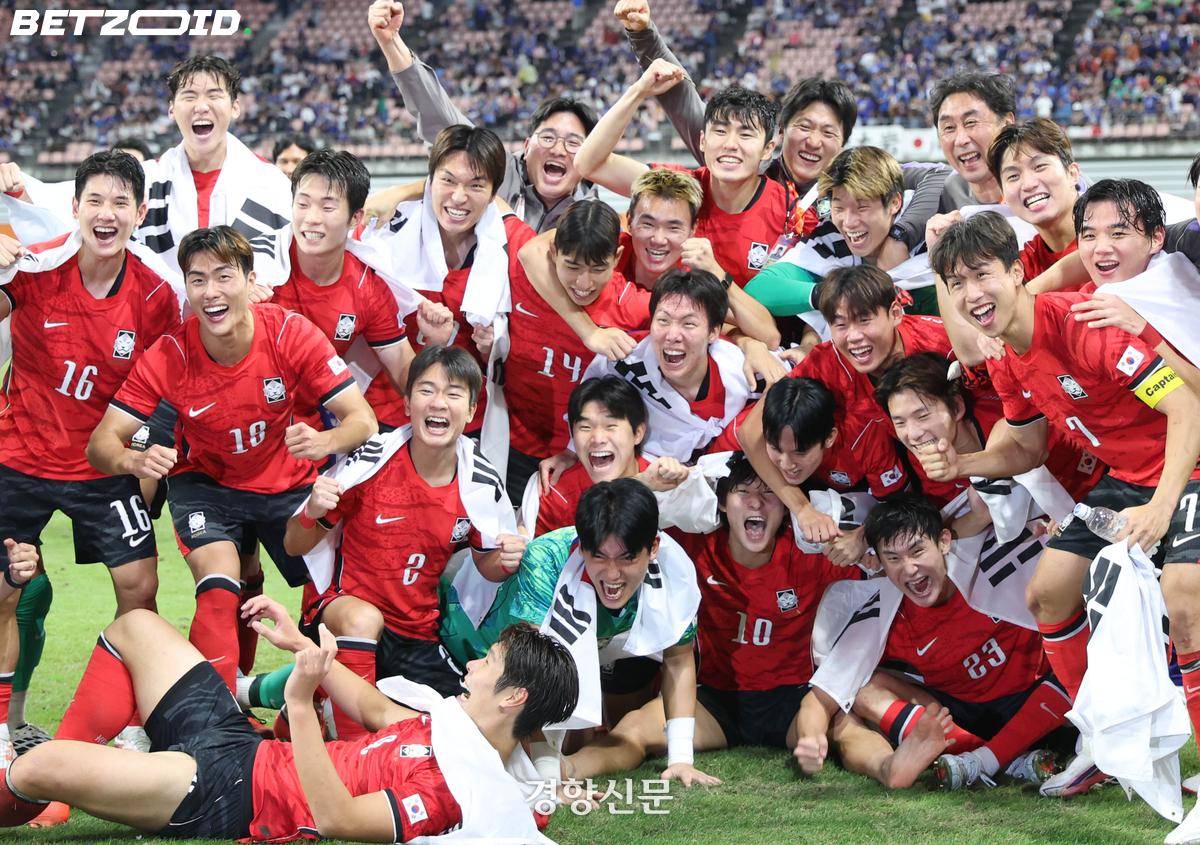
South Korea beat Japan to win gold in men's football at the 2026 Aichi-Nagoya Asian Games. It was a legitimate achievement — a team that had weathered real criticism after a troubled World Cup cycle delivering when it mattered. Then captain Lee Ki-hyeok held up his medal and told reporters, "I am not going to the army." Teammate Park Seung-su posted a photo of himself wearing a discharge cap from a service he had never completed.
Public opinion in South Korea did not gently shift. It froze, then ignited.
A system that has been catching fire since 1973
The military exemption scheme for national-team athletes — formally called the Arts and Sports Personnel system — has existed since the Park Chung-hee administration introduced it in 1973 under the stated aim of "enhancing national prestige." For five decades it has expanded, contracted, and attracted controversy in roughly equal measure. The 2002 World Cup semifinal run got an exemption category added. The 2006 WBC semifinal appearance got one added, then deleted within a year. BTS boosted South Korea's global profile by any measurable standard and every member still completed full military duty. The inconsistency is not a bug in the system — at this point, it's the system.
Now a public petition calling for the abolition or fundamental overhaul of the exemption scheme has landed at the National Assembly. The Defense Minister was fielding questions about it at a parliamentary audit on October 7th. A gold medal at the Asian Games has somehow produced a political headache that will outlast the medal ceremony by months.
The real argument isn't about the players
The more pointed take is coming from young South Korean men themselves — including some recently discharged. "The era when national-team athletes' activities were seen as enhancing national prestige has changed," said one 24-year-old who finished his service in February. He added that the players should have acted with more awareness of their position, which is fair. But he also said the deeper issue is that military service has come to be seen as "something that imposes a large personal cost" — a burden to dodge rather than a duty to carry.
A 20-year-old about to enlist put it more plainly: "It seems to be regarded as if it were a punishment."
That's the real story here, and it goes well beyond football. The players' remarks were careless and politically illiterate. But the reason those remarks landed so hard is that they reflected — out loud, in front of cameras — an attitude toward military service that clearly runs wider than two footballers. Stripping back exemptions doesn't fix that. It just makes the reward smaller while the underlying resentment stays exactly where it is.
South Korea's football odds won't be affected by any of this. But the national team's public standing just took a hit that a gold medal can't fully cover.