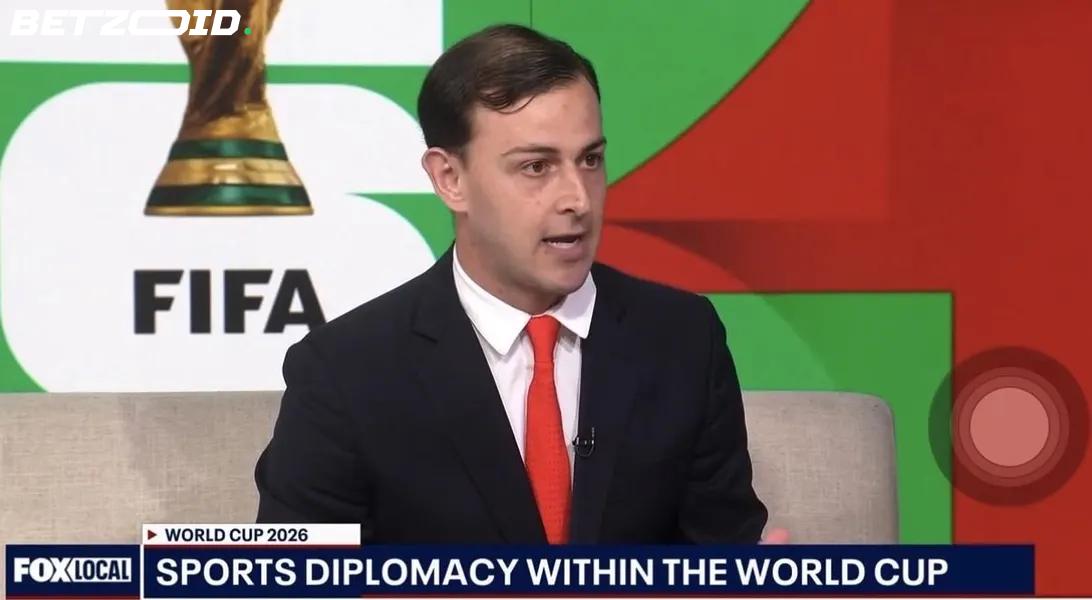
"The World Cup is the beginning, not the end." That line from Harvard Fellow and strategic advisor Samuel Hymes cuts through the post-tournament glow pretty cleanly. Spain lifted the trophy at MetLife Stadium on July 19. A record 6,810,966 fans attended 104 matches across 16 venues in three countries. And now the real question kicks in: what does the United States actually do with this moment?
Because the 2026 World Cup wasn't a one-off. It's the first event in what Hymes calls an American Decade of Sports — a run of global championships that no country has hosted in such concentration in modern memory.
What's actually on the calendar
- 2027 Military World Games — Charlotte, N.C.
- 2028 Summer Olympics and Paralympics — Los Angeles
- 2031 Men's Rugby World Cup
- 2033 Women's Rugby World Cup
- 2034 Winter Olympics and Paralympics — Salt Lake City
A sixth major event — a second FIFA World Cup — is expected to be confirmed at FIFA's Extraordinary Congress in Zurich on November 23, with the U.S., Mexico, Costa Rica, and Jamaica as the sole candidate group. That would make seven world-class championships in roughly a decade. The "American Decade of Sports Act" in Congress formalizes the strategy around it.
Hymes is direct about what's at stake beyond gate receipts: "If handled well, this decade of sports could help the country strengthen global relationships, improve public diplomacy, attract investment and tourism, support American business, expand cultural influence, and build people-to-people ties that outlast any single event." That's the pitch. Whether the infrastructure and political will exist to back it up is a separate conversation.
The World Cup itself delivered — eventually
There was genuine anxiety heading into this tournament. Ticket prices drew widespread criticism. Major sports outlets, by Hymes's own account, were covering Qatar 2022 more enthusiastically than a World Cup being played in their own backyard. That nervousness wasn't irrational.
It dissipated quickly. Algerian, Argentine, and English fans poured into Kansas City and were met warmly. Scottish supporters reportedly drank Boston dry — which, depending on your perspective, is either a public health incident or the highest compliment a visiting fanbase can pay a host city. Norwegian fans performed their "Row With Me" routine in the stands after every match, led by Erling Haaland, who by all accounts leaned hard into Texas and American culture during the tournament.
The halftime show at the final — featuring Madonna, Shakira, BTS, Justin Bieber, Ronaldinho, and Ronaldo — ran 27 minutes, nearly double the standard break. Traditional football purists had their concerns. Hymes thinks it's now a permanent fixture going forward, and the demand will only grow.
Spain won the tournament behind a defensive structure that was genuinely difficult to break down — their second World Cup title. The USMNT reached the Round of 16 for the first time with three wins in a single tournament, before Belgium ended the run 4-1. Cape Verde, competing in their first-ever World Cup thanks to the expanded 48-team format, held Spain to a scoreless draw and pushed Argentina to extra time. Many Americans had to Google where Cape Verde was. That's exactly the kind of cultural exchange Hymes is talking about.
The money question and what MLS could gain
FIFA is projected to earn around $15 billion from the 2026 edition. Hymes believes host nations should recoup a meaningful share: "If FIFA made billions of dollars, we should get some of those billions too." It's a fair argument, particularly given that U.S. infrastructure, venues, and fan appetite drove a significant portion of that revenue.
For MLS and American soccer broadly, the ripple effects could matter. When FIFA awarded the U.S. the 1994 World Cup back in 1988, the condition was essentially: build a first division. MLS launched in 1996 with 10 clubs and now has 30. The 2026 tournament gives the league another visibility surge — and Hymes thinks it signals to European players still in their prime that the American market is serious, not a retirement destination.
Whether that translates into genuine competitive improvement or just a bump in shirt sales is what the next five years will tell. The audience is there. The question is always what you build with it.
"This is what makes the American decade of sports such an important national opportunity," Hymes said. "The question is whether the United States is ready to use this opening moment to build something bigger."