Stanley Matthews won the first-ever Ballon d'Or at 41 years old. That fact alone should end most debates about age and greatness in football.
Since France Football launched the award in 1956, a handful of players have claimed the golden orb well past the point where most careers are winding down. Some were peak-era holdovers defying biology. Others were late bloomers finally getting their due. All of them had one thing in common: when the votes were counted, nobody was better that year.
The top ten, ranked by age
- Stanley Matthews – 41 (1956): Made his professional debut 24 years before winning the inaugural award. Lost significant prime years to World War II and still played until he was 50. The oldest winner by a distance that will almost certainly never be closed.
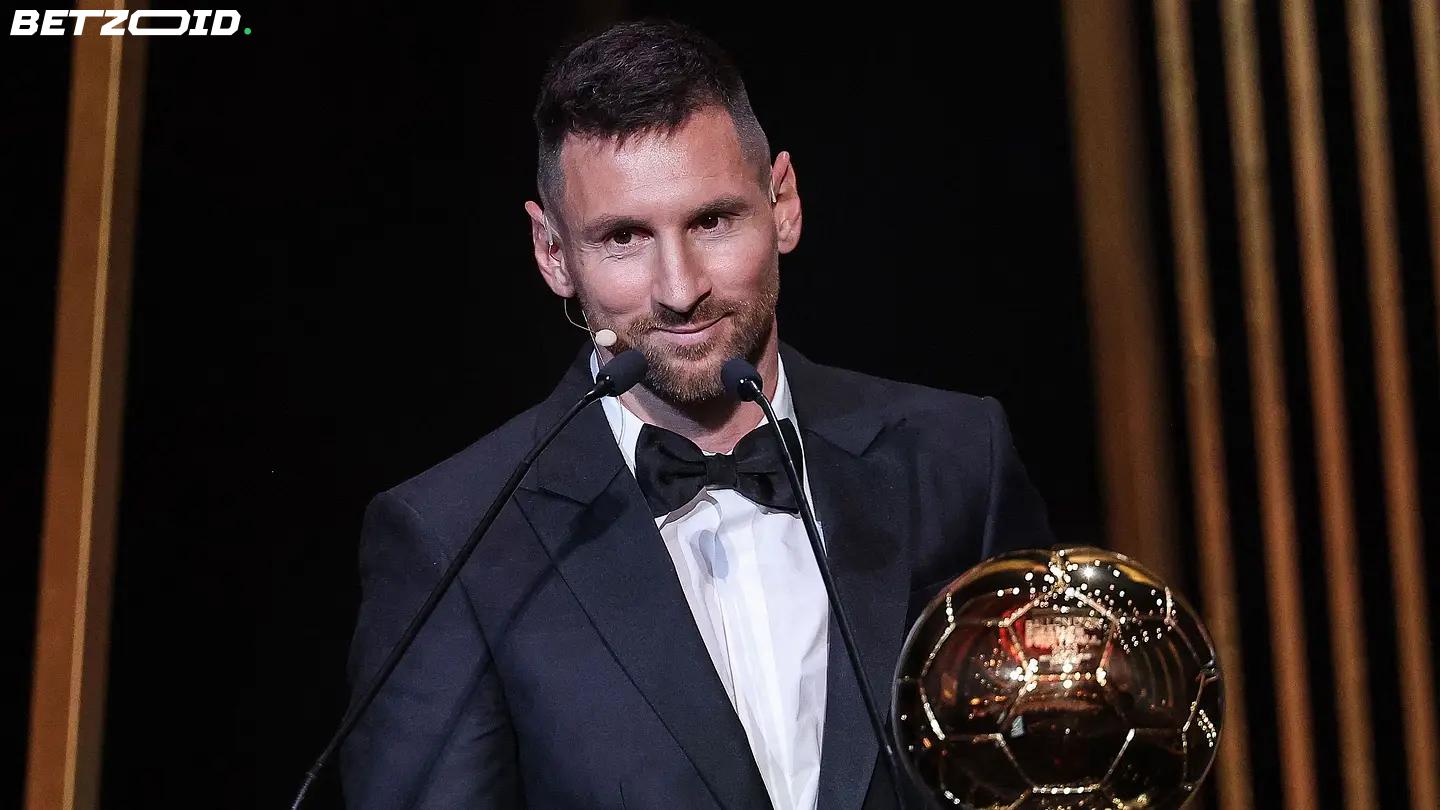
- Lionel Messi – 36 (2023): Didn't even make the 2022 shortlist after a dismal PSG season — six Ligue 1 goals, fewer than 43 players in the French top flight. Then he led Argentina to a World Cup and claimed his eighth Ballon d'Or. The bounce-back has no parallel in the award's history.
- Karim Benzema – 35 (2022): Spent years in Ronaldo's shadow at Real Madrid, finally stepped out of it with a Champions League-winning season that left voters no choice. Childhood idol Zinedine Zidane handed him the trophy. Fitting, and long overdue.
- Lev Yashin – 34 (1963): The only goalkeeper ever to win it, just one year after taking heavy criticism for the Soviet Union's early World Cup exit. Career reportedly included over 100 penalty saves. The award reflected a body of work, not just a single season.
- Alfredo Di Stéfano – 33 (1959): Won two Ballons d'Or — 1957 and 1959 — as the engine behind Real Madrid's first five European Cup triumphs. The second came at 33, and he probably deserved a third.
- Luka Modrić – 33 (2018): Was named one of La Liga's worst signings by Marca five years before ending Ronaldo and Messi's decade-long stranglehold on the award. Half of that early verdict aged terribly — which half is obvious.
- Fabio Cannavaro – 33 (2006): Captained Italy to the World Cup, dominated throughout, and became the last defender to win the Ballon d'Or. Nearly two decades later, no centre-back has come close to repeating it — which says everything about how the award has shifted toward attackers.
- Cristiano Ronaldo – 32 (2017): Won the award twice after turning 30. His physical conditioning bought him years that most forwards never see. Five Ballons d'Or total, but only two came on the far side of 30.
- Josef Masopust – 31 (1962): Scored the opening goal in the World Cup final against Brazil, only to watch his side concede three. Brazil won 3-1. He went home without the trophy — but had a Ballon d'Or to offer his wife as a belated birthday present instead.
- Pavel Nedved – 31 (2003): Almost dragged Juventus to the Champions League final single-handedly, then got suspended for the final itself. Without him, Juventus lost to AC Milan on penalties. He still won the Ballon d'Or. The snub argument for Thierry Henry that year has never fully gone away.
What this list actually tells us
Age is clearly not the disqualifier it's sometimes treated as. Goalkeepers, defenders, midfielders, and forwards all appear here — though the award has trended heavily toward forwards in recent decades, which makes Cannavaro's 2006 win look more like an anomaly with every passing year.
The more interesting thread running through this list is persistence. Matthews, Benzema, Modrić — none of them were considered favourites for the award at the ages they won it. Matthews was 41. Benzema had spent the better part of a decade being undervalued. Modrić was once a punchline in Spain.
The Ballon d'Or doesn't reward longevity directly. But the players who stay sharp long enough, in the right seasons, keep showing up on this list.