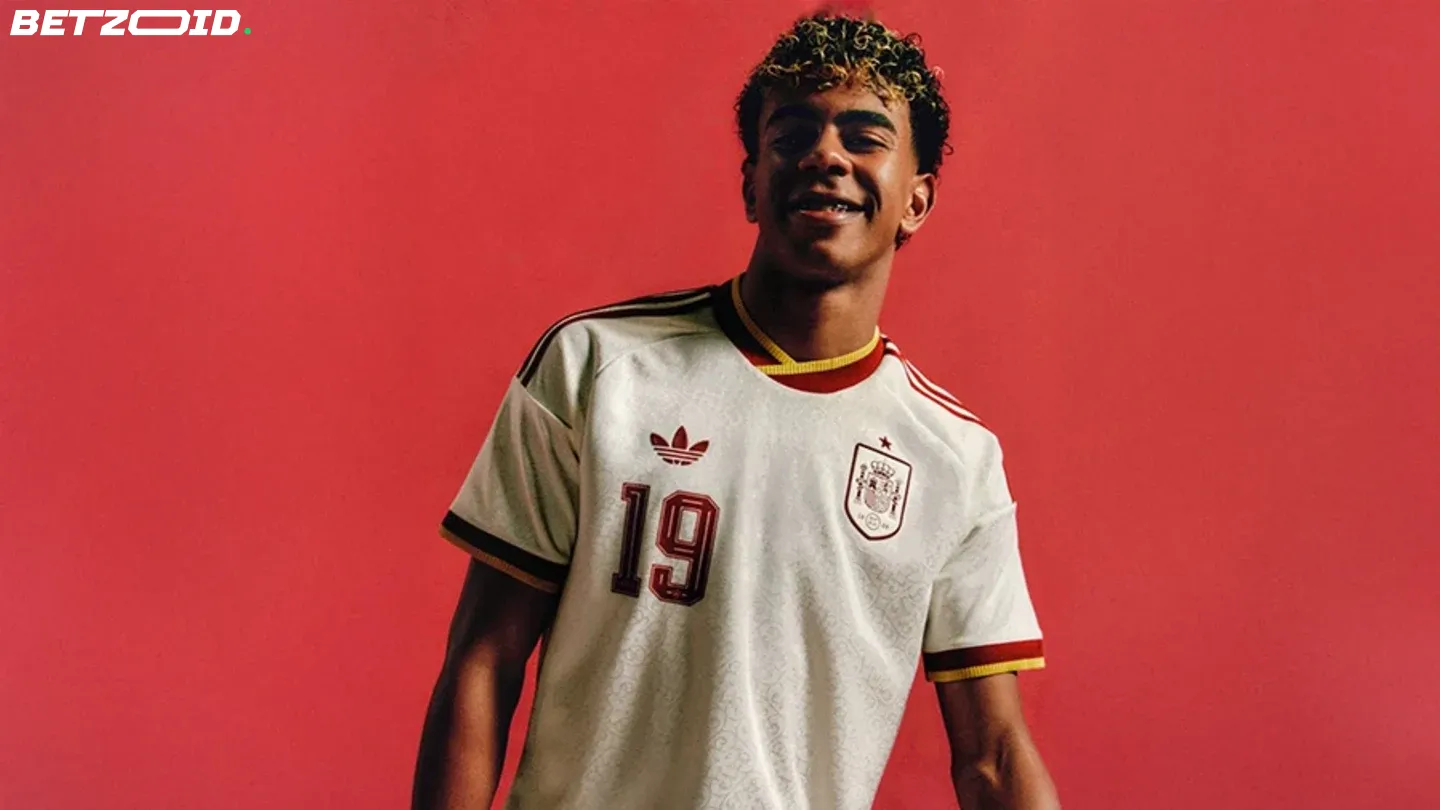
Away jerseys are where kit suppliers either get brave or get found out. No hiding behind tradition, no falling back on the classic home colorway. The 2026 World Cup away shirts are in — confirmed, leaked, and in some cases, baffling — and they range from genuine works of art to what appears to be a Puma intern's fever dream.
Here's the full rundown, with honest takes on who's pulled it off and who should've gone back to the drawing board.
The Ones Worth Talking About
Belgium have delivered the jersey of the tournament so far, and it isn't particularly close. Adidas have laced the shirt with a nod to surrealist artist René Magritte — the quote "Ceci n'est pas un maillot" ("This is not a jersey") is printed beneath the collar, directly referencing his "Treachery of Images" painting. It's clever, it's wearable, and it'll be in every art school student's wardrobe by September.
Argentina's black away shirt arrives covered in foliage swirls drawn from Buenos Aires's Fileteado Porteño folk art tradition. It shouldn't work as well as it does. For a side chasing back-to-back World Cup wins — something no nation has done since Brazil in 1962 — at least they'll look the part while they try.
Scotland are back at a World Cup for the first time in 28 years, and their adidas away shirt is the modern reboot of a classic. Vintage integrated with contemporary — the Tartan Army will travel in style.
Japan, as ever, just get it. Eleven colorful vertical stripes — one per player — run down a black and white base, with a single red stripe representing the wider Japanese football family. It nods to baseball, to national identity, and still manages to feel entirely original.
Ghana's Puma effort, inspired by Kente cloth traditionally worn by Ghanaian royalty, is loud and proud on an exuberant yellow base. You can see it from a considerable distance. That's the point.
Scotland's Curaçao, meanwhile, might be the biggest commercial hit of the tournament. Willemstad's colorful capital splashed across the sleeves of a pastel-yellow shirt — adidas will struggle to keep these on shelves.
Brazil's collaboration with Jordan — the brand's debut on the World Cup stage — is the most-hyped kit of the summer. Inspired by the Amazonian dart frog and built on the Seleção's traditional blue alternate colorway, it's unlike anything Brazil have worn before. The betting market on "best-selling kit of the tournament" effectively has one answer.
Paraguay's away jersey is a wild deviation from their classic red and white stripes — a visually striking shirt that mimics movement through clever use of light. Bold choice. It works.
Colombia's adidas shirt is already destined for summer festival circuits globally, regardless of how they perform on the pitch.
The Rest: Fine, Forgettable, or Flat-Out Rough
- Austria: Mint green with golden geometric lines and a marbled design paying tribute to architecture and Alpine terrain. One of the more underrated efforts in the tournament.
- England: Nike have gone back to red — the color worn in the 1966 final — with a gold star above the Three Lions crest. Sharp. Traditional. English fans won't care about the aesthetics if Harry Kane's lifting the trophy in New Jersey.
- Germany: Adidas' final major collaboration with Die Mannschaft before Nike take over next year, and they've gone for something genuinely unusual — a colorway inspired by decades-old training attire. Florian Wirtz called it "really good," and he's not wrong.
- France: Turquoise — or "igloo/monarch" if you believe Nike's color-naming department — reportedly as a tribute to the Statue of Liberty. The absence of the tricolor will irritate purists back home. It's a bold swap from white.
- Spain: The European champions in an off-white away shirt said to be inspired by Spanish ornamental literature, with maroon and faded gold trim. Elegant and effortless, which sums up Spain's current cycle pretty neatly.
- South Korea: A purple base featuring the Mugunghwa national flower. Distinct, and built to turn heads in North American stadiums.
- Mexico: Red and green on the collar and sleeves help this adidas shirt pop. There's genuine 1998 energy here — Mexico's kit from that tournament remains a cult classic, and this one has a shot at similar longevity.
- Wales: Their federation have called it "a masterpiece of football design." That's a lot. But the Welsh dragon designs across the cream jersey, with alternating red and green adidas stripes, make it hard to argue too strongly against them.
- Uruguay: Nobody had a Black Panther-inspired Uruguayan away kit on their bingo card. There's no mention of Wakanda on the shirt itself, but the resemblance is striking. Completely unlike anything a South American side has worn at a World Cup.
- Denmark: Hummel have dipped into nostalgia for a pinstriped design that'll take Danes of a certain generation straight back to 1986. Simple but effective.
- Portugal: A nautical theme with crashing waves in a deep V-shaped panel pays tribute to Portugal's seafaring history. The concept is sound; where the panel meets the rest of the shirt looks awkward.
- Canada: Nike's design director described the shirt as representing "the mastery of the environment" for people from the north. The maple leaf on a black base with icy detailing is striking — Canadian Soccer are genuinely optimistic about record shirt sales.
- Croatia: The checks are smaller than Euro 2024, thankfully. Dark and navy blue alternating. Reliable rather than exciting.
- New Zealand: Pale ice-blue with natural linework representing water currents. Calm, considered, and quietly good.
- Norway: All-black from Nike. Minimal commentary required. It works.
- Ivory Coast: Illustrations of Ivorian flora and fauna on a white base, with rotated palm trees functioning as stripes. Interesting concept; execution feels busy in the wrong way.
- Jamaica: Bold black base with reggae-inspired graphics. A crowd pleaser regardless of whether they qualify.
- Senegal: Green-dominant with all three flag colors represented. Clean, if unspectacular.
- Morocco: Moroccan tilework and architecture inspire the central design, but large portions of the shirt have been left completely untouched. A half-finished idea.
- Italy: Minimalistic, subtly textured, with collar and cuff colors that faintly echo Leeds United in the 1970s. Understated in a way that feels very Azzurri.
- Australia: Meant to represent a sunrise. It doesn't look like one.
- Algeria: Uses all three national colors. Ticks the box. Does little else.
- Ecuador: Classic navy blue. Inoffensive. Forgettable.
- USA: Stars are hidden in the design — you need to look closely. The lack of color and visible detail means it's unlikely to achieve the cult status of the '94 away shirt. Hopefully it improves in person.
- Netherlands: A thick horizontal stripe across the chest looks out of place, and the KNVB lion gets swallowed by it. Nike had the bones of something clean here and overcomplicated it.
- South Africa: Fits neatly, doesn't overwhelm the eye. Three crests sit comfortably on the chest without feeling crowded.
- Ukraine: All the design work is concentrated in the top half, with geometric embroidery motifs across the chest. Below that, not much happens.
- Egypt: Pyramids in the background of a dull shirt. Barely scratching the surface of Egypt's history.
- Saudi Arabia: White with gold trims. A marginal step up from Qatar's similarly plain effort. Marginally.
- Qatar: This is a Uniqlo T-shirt. A perfectly good Uniqlo T-shirt, but a Uniqlo T-shirt at World Cup prices.
- Türkiye: Crest, number, and swoosh are all fighting for the same small patch of shirt. Too much horizontal stripe, too little else.
- Poland: Deep crimson with marble-vein graphics running through it. The Polish Eagle stands its ground on the chest. Bolder than expected.
- Switzerland: Puma have produced what can only be described as a bib. A catastrophic bib.
The away jerseys that generate genuine cultural conversation — Belgium, Argentina, Brazil, Japan, Scotland — tend to be the ones rooted in something specific: art movements, folk traditions, deliberate historical nods. The forgettable ones are the designs that played it safe without the craft to make safety look intentional. Switzerland, Egypt, and Qatar fall squarely into that category. The kits are set. North America awaits.