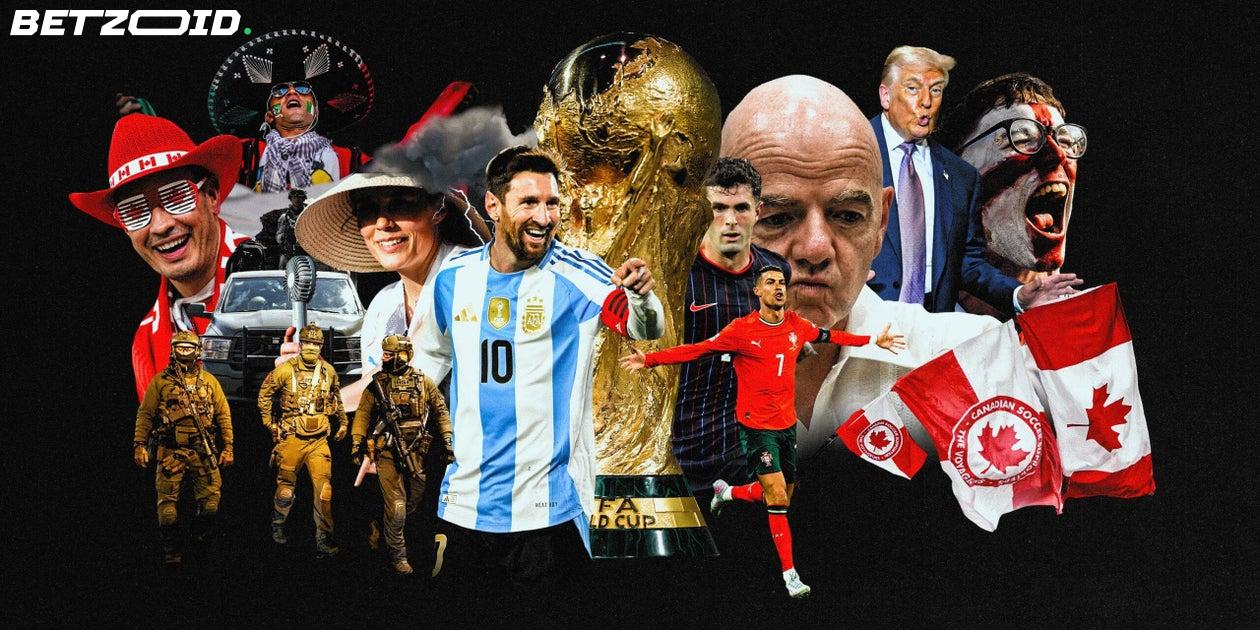
We're just 100 days away from the biggest World Cup ever. Forty-eight nations. One hundred and four games. Sixteen cities across the USA, Canada, and Mexico. It should be a summer to remember.
FIFA president Gianni Infantino is already calling it "the greatest event that humanity, mankind, has ever seen." He claims six billion people will tune in. Ticket requests hit 50 million in the first month alone.
But here's the thing. This World Cup feels different. And not in a good way.
Sure, we'll get to watch Messi and Ronaldo one last time. Haaland, Mbappé, and Kane will be chasing goals. Young stars like Lamine Yamal and Pedri will shine. First-timers like Curacao, Cape Verde, Jordan, and Uzbekistan will live their dreams.
But the political backdrop? It's darker than any World Cup in recent memory.
A Perfect Storm of Problems
Let's start with the visa issues. Fans from Senegal, Ivory Coast, Haiti, and Iran might not even get into the country due to immigration crackdowns. That's four qualifying nations potentially locked out.
Then there's the tension between the host nations themselves. The US relationship with Canada and Mexico has been strained. Throw in Trump's threat to annex Greenland, causing friction with Denmark and the EU.
In Minneapolis, two civilians died in separate incidents involving ICE agents. Protests erupted. Meanwhile, Guadalajara—one of the host cities—saw escalating battles between the Mexican government and drug cartels.
And that's before we get to the bombshell from last weekend. The US and Israel launched joint military strikes on Iran. Iran responded by hitting US military bases across seven Middle Eastern countries. Iran's supreme leader, Ayatollah Ali Khamenei, was reportedly killed in the strikes.
Now Iran's participation in Group G—alongside Belgium, Egypt, and New Zealand—is completely uncertain. No nation has withdrawn from a World Cup since 1950.
What This Means for the Tournament
The World Cup kicks off June 11 when Mexico faces South Africa at the Azteca Stadium. Canada starts their campaign the next day in Toronto. The US takes on Paraguay that evening at SoFi Stadium.
For bettors, this uncertainty creates chaos. If Iran withdraws, Group G dynamics change completely. Belgium would become overwhelming favorites, but the competition for second place opens wide. Odds will fluctuate wildly until we know who's actually playing.
The tournament was supposed to showcase "unity, certainty, and opportunity." Those three pillars from the original bid look shaky now. Street tensions are rising. Relations between the three host nations are strained. The global political climate grows more fragile by the day.
Add in astronomical ticket prices, frozen security funding due to government shutdowns, and warnings of "catastrophic" security consequences, and you've got a recipe for trouble.
Every recent World Cup has faced pre-tournament concerns. South Africa 2010 and Brazil 2014 had crime worries. Russia 2018 brought fears of racism and hooliganism. Qatar 2022 highlighted migrant worker conditions and LGBTQ+ rights.
Some concerns proved overblown. But Russia's World Cup became a propaganda event for Putin. Within four years, FIFA suspended Russia after they invaded Ukraine.
The hope is that once the football starts, it provides an escape. World Cups bring people together. Anyone who's attended one remembers the joy, the mixing of fans, the shared passion.
That opening game between Mexico and South Africa will echo the scenes from Johannesburg in 2010. Brazil versus Scotland in Miami on June 24 will remind us of similar matchups in 1982 and 1998.
This tournament will shatter attendance and viewing records. That's guaranteed. Revenue will be off the charts with 48 teams instead of 32.
But right now, with 100 days to go, uncertainty hangs over everything. The world waits in a state of heightened anxiety. This World Cup was meant to inspire hope and unity. Instead, it feels like it might be consumed by the very divisions tearing our world apart.