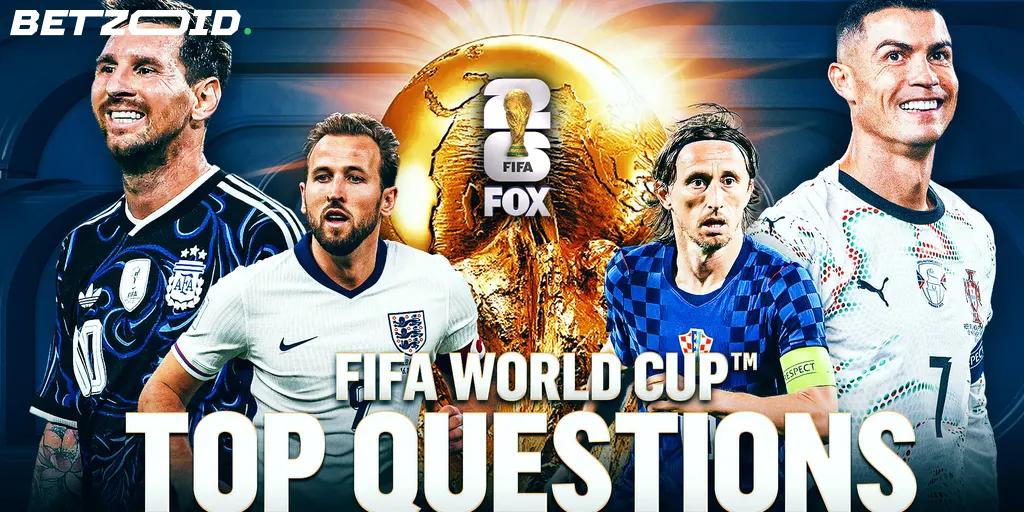
Forty-eight teams. Three co-hosts. And the same two names — Messi and Ronaldo — dominating the conversation before a single ball has been kicked. The 2026 World Cup is almost here, and the questions worth asking go well beyond who lifts the trophy.
Here's a sharp breakdown of what to actually watch for this summer.
The storylines that matter most
The expansion to 48 teams needs a Cinderella story to justify itself. Eight third-placed sides advancing to the knockouts gives a Haiti, a Curaçao, or a Cape Verde a genuine path deep into the tournament. That's not sentiment — that's structural incentive built into the format.
For American audiences, the stakes are different. The 1994 World Cup on US soil planted the seed. This one is supposed to be the harvest. Whether a second home tournament converts casual observers into lifelong fans — or parents who sign their kids up on Monday morning — is the subplot the sport in America genuinely needs to win.
And then there's the Messi-Ronaldo farewell tour. Both men are in the twilight. How their managers balance loyalty to legends against the brutal physical demands of a seven-game tournament will define Argentina's and Portugal's campaigns as much as tactics.
Who's primed to surprise — and who's set to crumble
Turkey deserves serious attention. Under Vincenzo Montella, they've quietly built something technically cohesive and genuinely dangerous. Arda Güler pulling strings from Real Madrid, Hakan Çalhanoğlu running the midfield engine from Inter, and Kenan Yildiz at Juventus adding direct, electrifying width — that's not a group-stage also-ran. Their clash with the USA on June 25 in Los Angeles could decide Group D outright. Turkey's odds are worth a look before the market catches up.
Japan, even without Kaoru Mitoma, is a deeply organized unit in a manageable group. Colombia — buoyed by enormous community support across the US — could go further than most expect, particularly with Luis Díaz in the kind of form he showed at Bayern Munich this season. Their group-stage finale against Portugal in Miami on June 27 has blockbuster written all over it.
Canada is the co-host easiest to overlook, which may be exactly why they shouldn't be. The 2024 Copa América semifinal run under Jesse Marsch showed real growth. Alphonso Davies might miss the opener against Bosnia and Herzegovina on June 12 in Toronto — that's a concern — but playing at home covers a lot of defensive gaps.
As for who disappoints? England are the obvious answer, and the obvious answer is usually right. The talent is there. The mental architecture isn't. "It's Coming Home" as banter is a nervous tic masquerading as confidence, and disciplined sides have been exploiting England's familiar lapses for decades. Nothing about this squad suggests that's changed.
France are the braver call for an upset. Their group includes Erling Haaland's Norway and a fixture against Senegal that carries 2002 weight — the tournament where France, as defending champions, didn't survive the group stage. Les Bleus are still favorites to go far, and the odds reflect that. But Mbappé under tournament pressure for France is a different proposition than Mbappé producing numbers for Real Madrid. Stranger things have happened, and recently.
Argentina are the defending champions most likely to run out of road. Squads that carry the same core from one World Cup to the next rarely repeat. Spain 2014. Germany 2018. The pattern is real. This 2026 Argentina group is essentially the 2022 version, aged two years. Is Messi still hungry enough to drag them through? That's a genuine question, not rhetoric.
Mexico's weight, and the Golden Ball race
No co-host carries more pressure than Mexico. El Tri have reached the knockout round in every World Cup since their 1990 suspension — until Qatar 2022 broke the streak. The only times Mexico has reached the quarterfinals were when they hosted, in 1970 and 1986. Playing group games at the Azteca, the stadium where Pelé and Maradona lifted trophies, is simultaneously the greatest advantage and the heaviest burden in world football. If Mexico exit in the group stage on home soil, the fallout will be severe.
For individual awards, the early Golden Ball candidates worth tracking:
- Erling Haaland (Norway) — No player arrives with more to prove. Norway finally at a major tournament, Haaland finally with a platform. Martin Ødegaard, Alexander Sørloth, and Antonio Nusa give him enough support to go deep.
- Kylian Mbappé (France) — Inconsistent at Real Madrid this season, but Qatar 2022 proved he can carry a nation at a tournament. Those are two different versions of the same player.
- Luis Díaz (Colombia) — Coming off a Bundesliga title with Bayern. Huge community backing in the US. If Colombia go on a run, Díaz is the reason.
- Lamine Yamal (Spain) — The obvious name, with an injury caveat. His hamstring recovery is the variable Spain can't control right now.
- Luka Modrić (Croatia) — The case for him is simple: he just had a strong season with AC Milan at 39 years old. His spatial intelligence doesn't age the way pace does. Croatia with Modrić pulling the tempo in a marathon format is a dangerous proposition for anyone they draw.
The tournament kicks off with 48 teams and approximately 104 games. Most of them won't matter. A handful will define careers, end eras, and answer questions that have been building for four years. The bracket is set. The pressure is real. Mexico's is probably the heaviest.