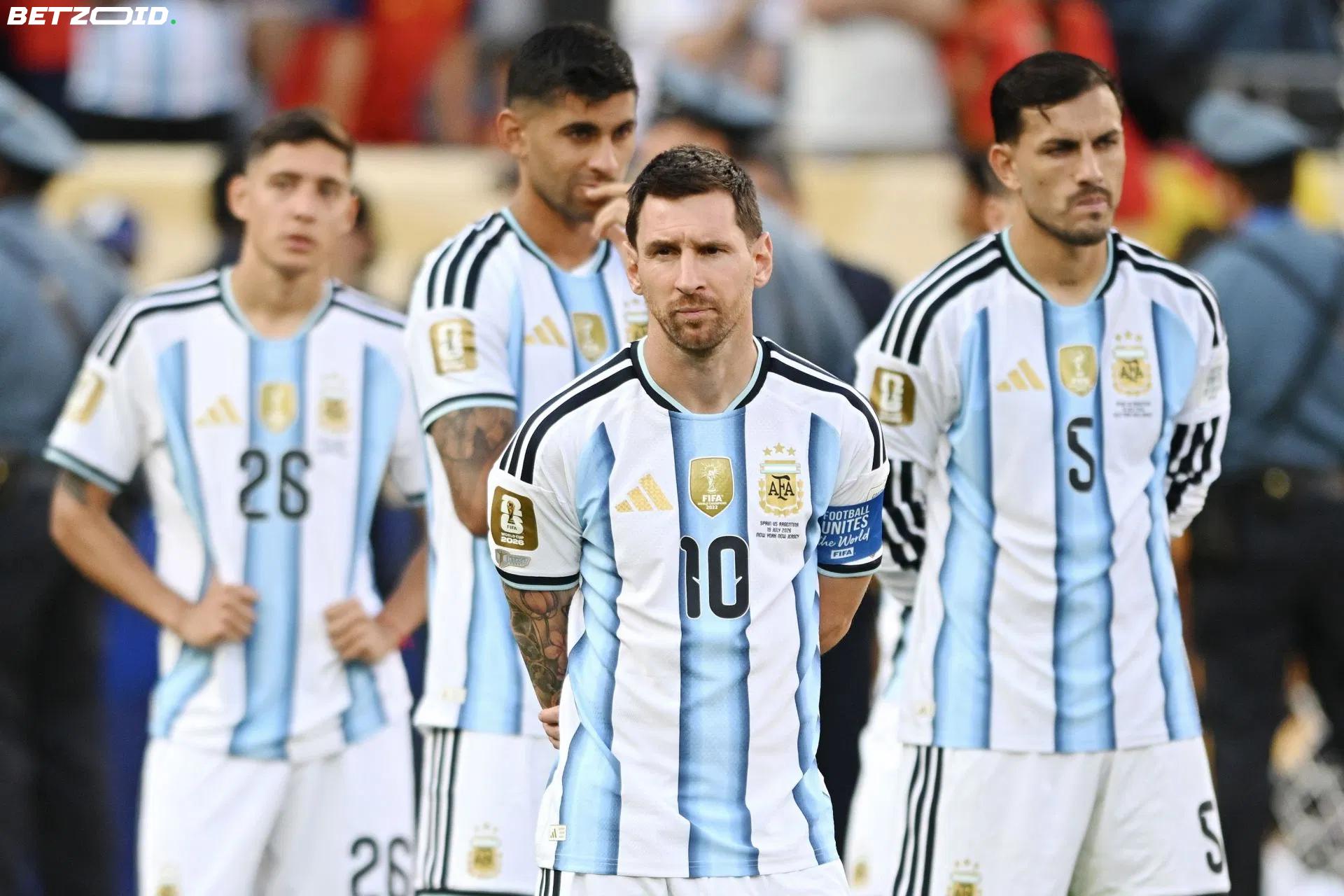
Argentina won't need to qualify for the 2030 FIFA World Cup. FIFA has confirmed that La Albiceleste, along with Uruguay and Paraguay, will receive automatic berths as centenary co-hosts — meaning the defending champions and 2026 runners-up are already booked in for the next one.
The 2030 tournament marks 100 years since the first World Cup, held in Uruguay in 1930. The main hosting duties fall to Spain, Portugal, and Morocco, but three symbolic matches will be staged in South America to honour the anniversary. Uruguay gets the nod for hosting and winning that inaugural edition. Argentina are included as the losing finalists — they fell 4-3 to Uruguay in that first final. Paraguay's place comes from housing CONMEBOL, South America's football confederation, which was the only continental governing body in existence at the time.
All six host nations — Spain, Portugal, Morocco, Argentina, Uruguay and Paraguay — skip qualifying entirely. That leaves 42 spots to be contested through the usual continental routes.
So, does Messi actually play in it?
That's the only question anyone cares about. Messi just finished the 2026 World Cup with eight goals and four assists in eight games, guiding Argentina to the final before falling short. He's 39 now. He'll be 42 when the 2030 tournament kicks off and will turn 43 during it.
Reports suggest he's already told teammates he's done with international football. He hasn't said a word publicly. Knowing Messi, that silence will stretch for months.
The automatic qualification removes one logistical barrier — Argentina won't be grinding through CONMEBOL qualifiers while wondering if their best player is in or out. But it doesn't change the biology. A 43-year-old Messi at a World Cup would be the sport's greatest story. A retired Messi watching from the stands in Buenos Aires might be the more likely one.
What's certain: Argentina are going to 2030. Whether their greatest ever player is on the pitch is still an open question — and it's the only one that matters.