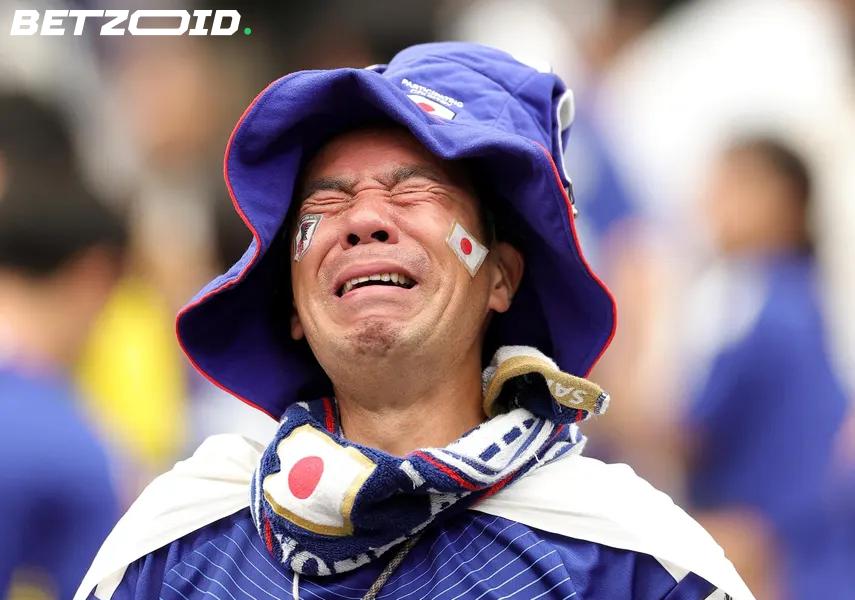
Asia sent teams to the World Cup and mostly watched them vanish in the group stage. Not one Asian side made it to the quarterfinals. For a continent representing over half the world's population, that's not a blip — it's a pattern that keeps repeating itself, and nobody in power seems serious about stopping it.
Start with the absence of the two biggest nations on earth. China has qualified for the World Cup exactly once — in 2002. India has never qualified directly in the tournament's modern era. That's nearly three billion people, 35% of the global population, with no stake in the world's biggest sporting event. The broadcast fallout was immediate: neither country's rights deals came close to what FIFA wanted, with last-minute agreements signed for significantly less. When your biggest potential markets don't care, everyone notices.
Japan's ceiling, South Korea's squandered window
Japan reached the last 32, which counts as progress by Asian standards. It shouldn't. Thirty years of patient football development, eight AFC Champions League titles for Japanese clubs, and the national team still hits a wall the moment the competition gets serious. Continental dominance clearly means very little when the step up to global competition arrives.
South Korea had fewer excuses. Lee Kang-in at Paris Saint-Germain. Kim Min-jae at Bayern Munich. Son Heung-min with a platform at Los Angeles FC. That's genuine elite-level talent — the kind Japan can't yet call upon. It didn't matter. South Korea went out in the group stage, the coach resigned, and the government stepped in. A squad built around players at two of the world's biggest clubs couldn't make it out of the groups. That demands more than a coaching change.
Anyone who had backed South Korea to reach the knockouts paid the price for assuming squad quality alone translates to results.
Saudi Arabia's 2034 problem is getting harder to ignore
Qatar and Saudi Arabia both finished bottom of their groups. Qatar won the Asian Cup in 2019 and 2023 — that golden generation is now aging, and without the structural momentum of hosting a tournament, rebuilding will be slow and difficult. A successful 2036 Olympic bid might help, but it's not a football plan.
Saudi Arabia's situation is more precarious. The country hosts the 2034 World Cup and needs its national team to at least reach the knockout rounds — finishing dead last in a group is not the trajectory. Cristiano Ronaldo playing for Al-Nassr generated headlines, but importing aging superstars hasn't produced a single domestic talent capable of anchoring the national side. The bubble has burst, and Riyadh's football officials are running out of time to build something real before the whole world is watching.
Iran, one of Asia's historically stronger sides, drew all three group games and went home without a win. That was the least chaotic part of their tournament — their training camp was moved from the US to Mexico over player safety concerns amid the conflict in the Gulf region, with the US implementing special immigration protocols for the squad. Performing under those circumstances was always going to be near impossible, but it also illustrates how geopolitics routinely destabilizes Asian football in ways other confederations don't face.
Jordan and Uzbekistan both made their World Cup debuts, which FIFA's tournament expansion was partly designed to enable. Neither got out of the group stage. The expanded format gives Asia more seats at the table — what it can't manufacture is the quality to do anything with them.
The problem isn't one bad tournament or one underperforming squad. It's systemic, it runs through every level of the game on the continent, and the Asian Football Confederation has shown no convincing signs it knows how to fix it.