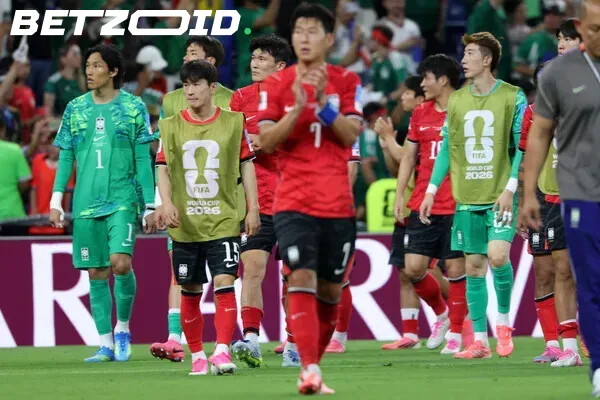
Korea didn't just lose to South Africa. They lost 1-0, sat in a waiting room for three days hoping other results would save them, and then learned the obvious: third-place brackets don't reward teams who couldn't win their group. The exit was painful precisely because it felt so avoidable — and so familiar.
Coach Hong Myung-bo went into this tournament with a plan. After his 2014 disaster in Brazil — a draw and two losses — he returned with a reputation for pragmatism, for grinding out 1-0 and 2-1 wins, for not repeating old mistakes. The problem is that when Korea conceded the opener against South Africa, the plan fell apart completely. They needed a goal. They played like they were trying not to concede a second one.
"The team expended too much energy in its first two group games," said Kim Dae-gil, a veteran commentator for KBS N. That's a damning line, but the responsibility lands squarely on Hong. Tired legs are a management problem. So is refusing to open up the game when you're losing and time is bleeding out.
The problems go well above the dugout
KFA president Chung Mong-gyu leaves behind a legacy of 400 billion won spent on the Korea Football Park in Cheonan and some financial stability through sponsorships. That's the highlight reel. The lowlight reel is longer: internal organizational reforms that accomplished nothing, key positions filled by the wrong people, and a failure to build any real coalition within Korean football. He's pledged to step down. Whether his replacement can do better is an open question the KFA doesn't have a clean answer for.
The political circus didn't help either. Lawmakers dragged Hong before the National Assembly and publicly berated him — less a serious conversation about structural reform than a performance for cameras. YouTubers piled on with the kind of sensationalist criticism that erodes team confidence without offering anything constructive in return. The Ministry of Culture flagged problems with Hong's appointment in an audit last year. None of it translated into actual improvement on the pitch.
Japan's blueprint makes Korea's inertia look worse
The contrast with Japan is stark enough to sting. The Japan Football Association set out a written roadmap in 2005: top 10 in FIFA rankings by 2030, World Cup champions by 2050. In this tournament, 23 of Japan's 26-man squad play in European leagues. Head coach Moriyasu has been in charge for over six years and can rotate his starting XI between group games because he actually has the depth to do it. Their wins against Brazil, France, Spain, and Germany in recent years aren't flukes — they're the output of a coherent, long-running system.
Korea launched its own version of this in 2024 — the "Made in Korea" project, a unified game model intended to connect youth football to the senior squad. Under internal and external pressure, it lost momentum before it gained any traction. Meanwhile, the surge in pro baseball's popularity has pulled resources further away from football. Competing priorities, no clear direction, and a coaching situation mired in politics — that's the environment Korea's players are operating in.
Any meaningful shift in Korea's World Cup odds for the next cycle hinges on whether the next KFA leadership can actually execute a long-term plan, rather than just announce one. The track record doesn't inspire confidence.