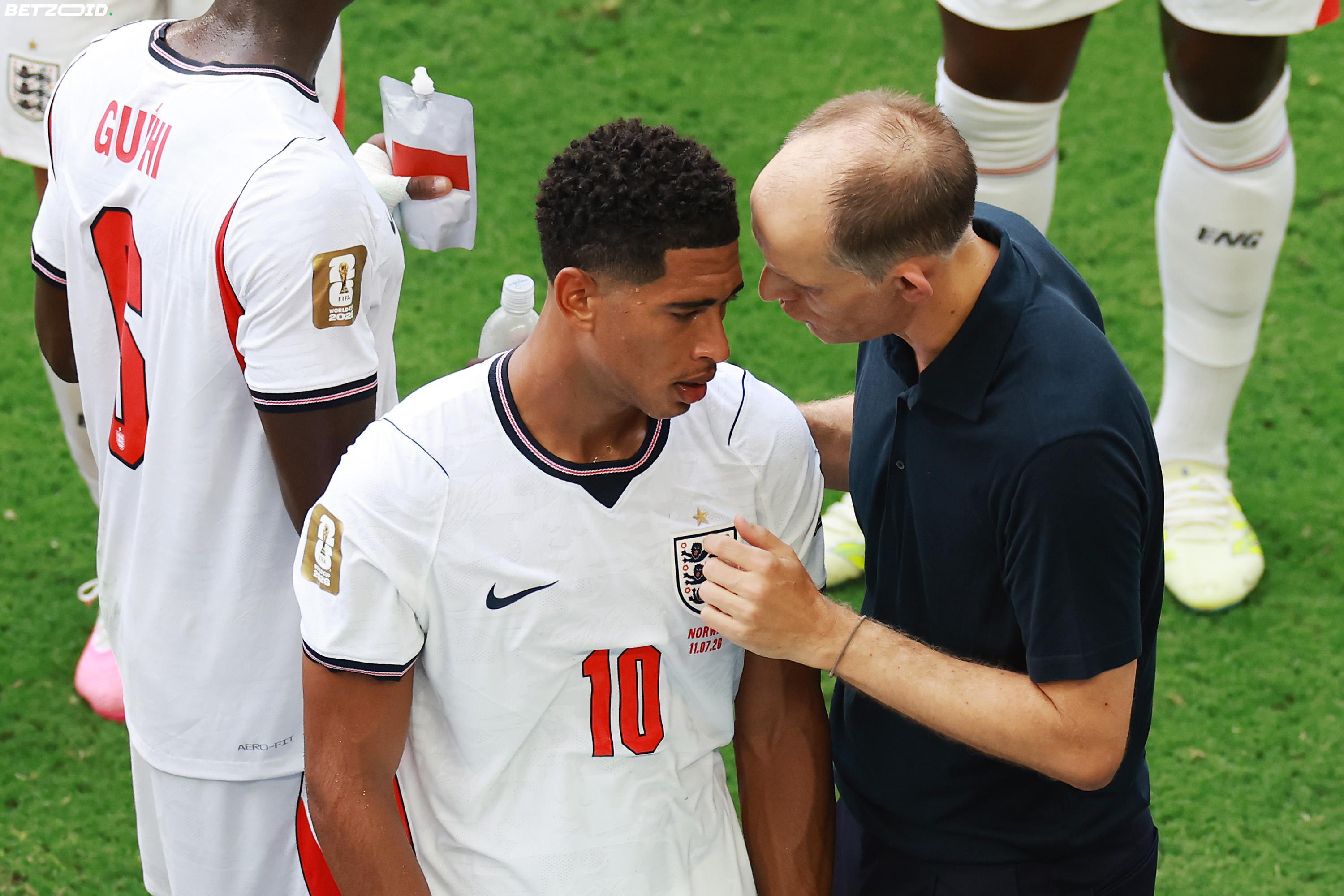
"Maybe he doesn't know what it's like to play in those kind of conditions." That's Jude Bellingham, still damp from the Miami heat after beating Norway, taking a not-so-subtle swing at his own manager's playing credentials. England are in a World Cup semifinal. The dressing room isn't exactly singing Kumbaya.
This isn't a new tension. It's been simmering since Thomas Tuchel walked in the door in March 2025 and immediately told England's players they were going to win the World Cup. Tuchel had no choice but to set that bar — the only way he improves on Gareth Southgate's record of two finals and a semifinal is to actually win one of them.
A timeline built on friction
The fault lines go back further than Tuchel. After Euro 2024 — where England stumbled to the final playing some of the most joyless football a tournament has seen — Bellingham admitted he'd "lost his smile" representing his country. He felt like a scapegoat. Whether that was fair or not, the image of him furiously gesturing toward the England bench became one of the defining pictures of that summer.
Then Tuchel arrived. Bellingham started the first three qualifiers fine, but then came the Senegal friendly in Nottingham. England lost. Bellingham booted a water cooler, screamed at an assistant referee, and Kane had to physically drag him back toward the supporters. Tuchel went on talkSPORT the next day and said Bellingham's fire could be "repulsive" — specifically invoking his own mother watching from home. The apology came quickly. The damage lingered.
Bellingham then missed September's games through shoulder surgery. Tuchel responded by keeping the same squad that produced a 5-0 win in Belgrade for the October internationals — a friendly against Wales and a dead-rubber against Latvia. Bellingham was available by then. He wasn't picked. The message wasn't subtle.
Six goals and a semifinal place
Whatever was said between them in private, it's working on the pitch. Bellingham has six World Cup goals, including back-to-back braces against Mexico and Norway in the knockouts. The last player to score in consecutive World Cup knockout rounds like that was Diego Maradona in 1986. That's not hyperbole — that's the actual comparison.
Tuchel has built this England team around two things: Harry Kane's movement and Bellingham's ability to arrive late, run beyond the striker, and do the ugly defensive work that doesn't show up on highlight reels. It's a different role to what Bellingham does at Real Madrid. He's being asked to run more, track more, press more. And he's doing it — while still finding the net at a rate that would embarrass most strikers.
After the Norway win, Tuchel was candid: "We were lucky today." Bellingham heard that and fired back with "yeah, well, whatever" on live television. In the mixed zone, once he'd had time to cool down, he doubled down rather than softened. That's either a sign of a relationship with serious cracks — or two people who are comfortable enough with each other to have it out in public and still function.
England's semifinal odds against Argentina will account for Bellingham's form. Six goals in a tournament from a midfielder playing a defensive-heavy system is the kind of number that moves markets significantly. The question isn't whether he's in form — he clearly is. The question is whether Tuchel and Bellingham can hold this together for five more days without it detonating at the worst possible moment.
Their entire history together suggests it probably doesn't end quietly.