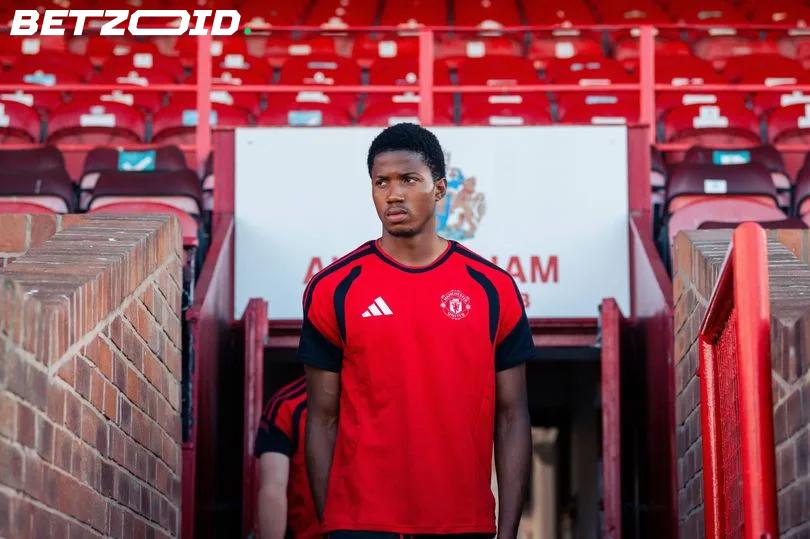
"We as a club sometimes forget who we are." Ruben Amorim said that in December 2025, directing it partly at Chido Obi, who had responded to being dropped from Under-21 selections by posting celebratory images on social media before quietly deleting them. Within months, Amorim was gone. So, effectively, was Obi — shipped out on loan to Willem II in the Netherlands, zero senior appearances to his name from an entire season at Old Trafford.
This is the loop Manchester United keep running. Young player arrives with genuine credentials, gets a handful of appearances during a squad crisis, disappears from the first-team picture, exits on loan. Since 2019, eleven academy graduates have featured in two matches or fewer before leaving the club. Obi fits that template almost precisely.
The rise was real — so was the drop
To be fair, Obi's early trajectory was legitimate. He turned down a professional contract at Arsenal — where he'd been training with the first team at 15 and once scored ten goals in a single match as Arsenal U16s beat Liverpool 14-3 — to join United. Within five months of arriving, he became the club's third-youngest Premier League player in history, behind only Angel Gomes and Shola Shoretire.
He made eight appearances under Amorim in 2024/25. Seven from the bench, one start against Brentford where United lost 4-3 and Obi played the full 90 without a goal or assist. Then last season: nothing. Back to the U21s. An FA Youth Cup final against City. No senior minutes whatsoever.
No 18-year-old is entitled to guaranteed first-team football — that part of Amorim's critique was fair. But going from eight appearances to zero in consecutive seasons is a confidence-eroding experience for any player, regardless of age.
The Carrick factor and what comes next
The arrival of Michael Carrick as manager has shifted the conversation around United's academy. Carrick played alongside the products of that system during its peak; the hope is he actually values development over optics. Under Solskjaer, 16 academy players debuted across roughly three years. The four and a half years since have produced 17 debuts combined under two foreign managers — but the quality of pathway, not the quantity of debuts, is what matters.
Obi's situation has also been shaped by United's attacking recruitment. When Cunha, Mbeumo, and Amad are all competing for minutes ahead of you, there is no obvious path to the pitch. That's not an excuse — it's a structural reality that the club created without apparently accounting for the players already in the building.
Willem II gives him Eredivisie football, which is a legitimate development environment. But the honest version of this story is that Obi is 18, already carries the weight of a social media spat with his former manager, and has zero senior contributions to show from his time at one of the world's biggest clubs. Whether he comes back a better player or becomes another name in the long list of United's promising departures — that question won't be answered in one loan season.
What United can't afford is to keep handing out debut appearances as development theatre while the actual pathway stays blocked. Token minutes are not a youth system. They're just a longer goodbye.