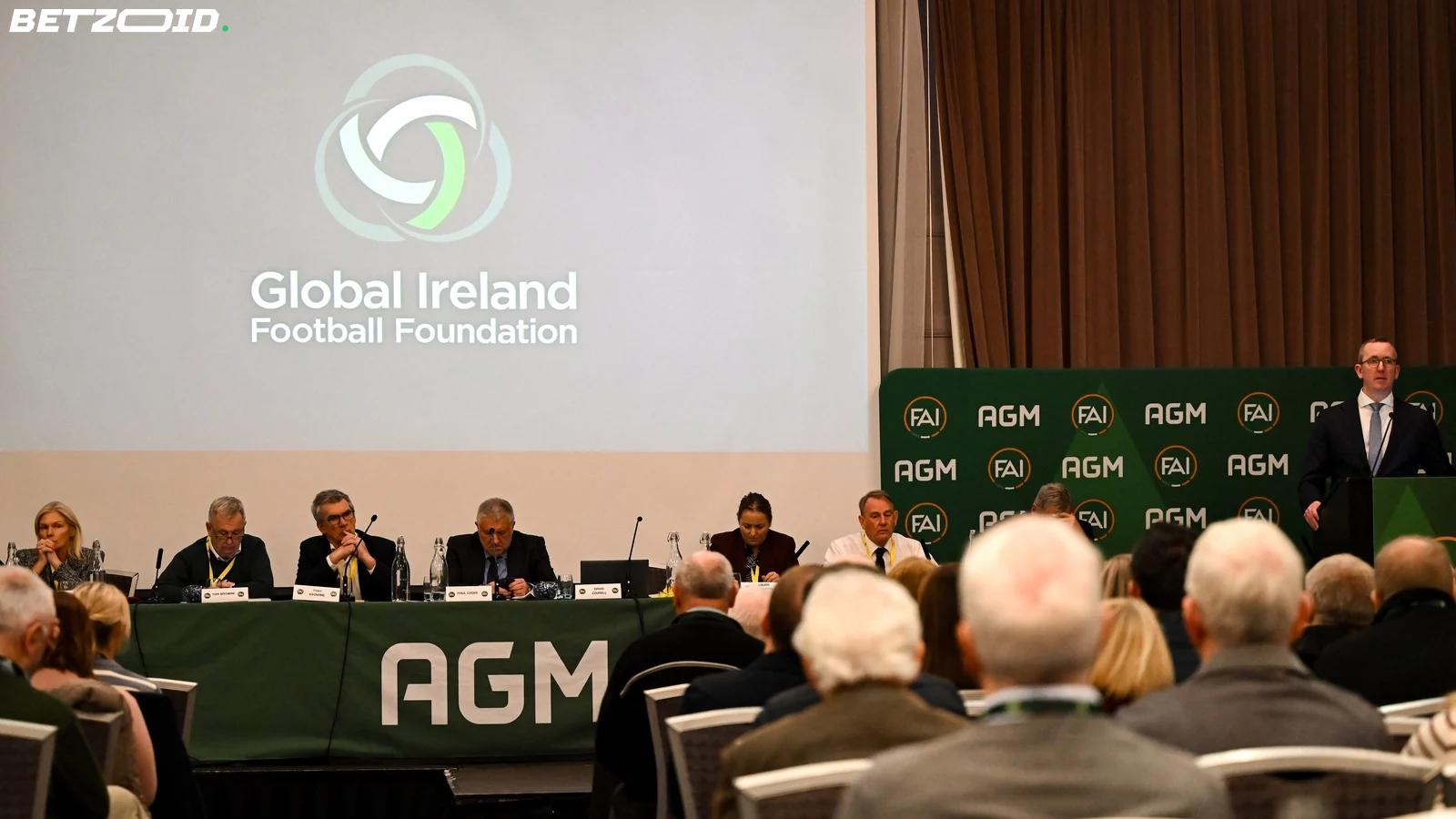
Irish football is turning to wealthy donors and the diaspora to solve a massive infrastructure problem. The FAI needs a staggering €863 million over 15 years to fix the country's grassroots facilities, and traditional government funding just won't cut it.
Here's the ambitious plan: the FAI has created the Global Ireland Football Foundation (GIFF) to tap into international philanthropy. The goal is to raise at least €15 million by 2029, exclusively for grassroots infrastructure. It's a novel approach for Irish football, and one that could genuinely change the landscape of the sport at the community level.
So far, €122 million of the overall €863 million target has been secured. But the grassroots portion – a hefty €426 million – is where the real challenge lies. The FAI knows government grants alone won't bridge this gap, which is why they're looking overseas.
Star-Studded Board Brings Serious Credentials
The GIFF will operate independently from the FAI with its own eight-member board. The appointments so far are genuinely impressive. Colin Ryan from tech giant Qualcomm chairs the board, while former Leicester City CEO Susan Whelan and Shamrock Rovers co-owner Ray Wilson also sit on it.
What's particularly interesting is that Ryan, Whelan, and Wilson all have experience with the Ireland Funds – a global philanthropic network that raises money for Irish projects. This connection isn't coincidental. FAI CEO David Courell admitted they've been studying the Ireland Funds model for years and built the GIFF concept around what works in that space.
"We've had unbelievably strong initial appointments to the board. I'm very excited about what's to come," Courell said at Tuesday's strategy launch at Aviva Stadium.
Why €15 Million Matters
Some might question whether €15 million is ambitious enough given the scale of the problem. After all, it's less than 4% of the grassroots funding needed. But Courell defended the target as realistic, pointing out that the FAI currently carries €37.5 million in debt.
"€15 million is still a significant chunk of money," he explained. "If we can generate that income stream or philanthropic donation stream from elsewhere that's a positive for Irish football."
The structure also matters from a tax perspective. North American donations will need to focus predominantly on grassroots facilities only, while domestic Irish donors might be able to contribute toward national training centres as well. These technical details could significantly impact how much money ultimately flows in.
For anyone interested in the long-term health of Irish football, this development is worth watching. Better grassroots facilities typically mean better player development, which eventually impacts the national team's performance in major tournaments – something that affects everything from national pride to betting markets on international competitions.
The FAI is also exploring multi-sport facilities in partnership with the GAA and rugby. Courell revealed that small teams from all three sports have been working together on potential pilot projects with government backing.
"Credit to the GAA, they've been very clear over recent years that they're very open to collaborating," Courell noted. "I think they recognise that it's in the interest of Irish sport that we do share facilities more readily."
The success or failure of this fundraising initiative will become clearer over the next few years. If the GIFF can tap into the diaspora's passion for Irish sport effectively, it could genuinely transform football at the community level across Ireland.