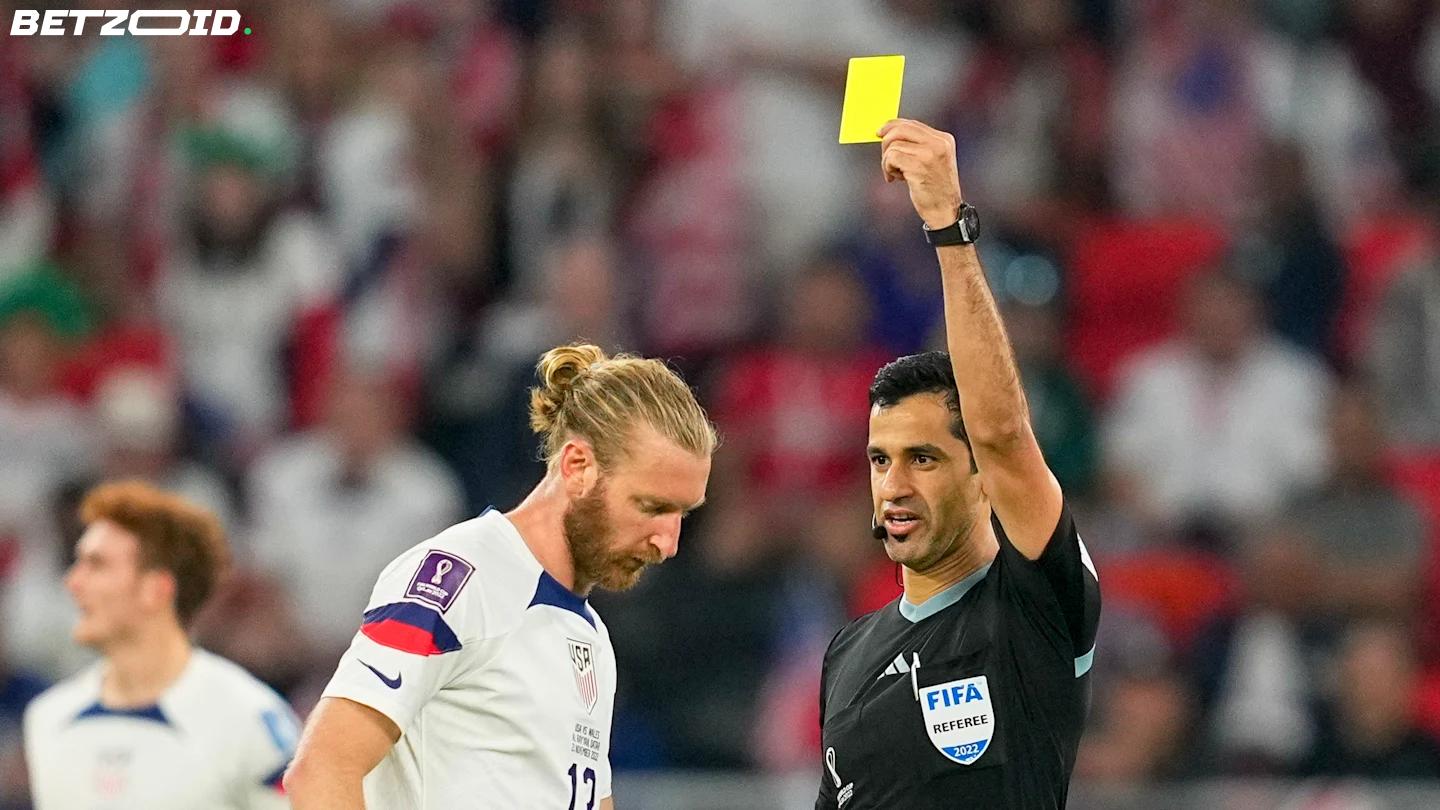
FIFA is weighing a rule change that would stop the 2026 World Cup from being remembered for the players who weren't there. The proposal: wipe yellow card slates clean twice — once after the group stage, once after the quarterfinals — rather than just the single reset that's existed until now.
The logic is straightforward. The tournament has grown to 48 teams, which means a new round of 32 sits between the group stage and the round of 16. That's one more high-stakes match where a player on a booking walks a tightrope. Under the old single-amnesty system, suspensions could cascade through the round of 16 and quarterfinals. The proposed change targets both those windows.
What actually changes — and what doesn't
Two bookings still earns a suspension. Red cards still trigger an automatic one-game ban. This isn't a free pass to foul your way through the group stage. What it does is reset first yellows so a player booked in the third group game doesn't carry that into a round-of-32 knockout. That's meaningful protection for the tournament's biggest names — and, frankly, for television audiences and betting markets built around those players being on the pitch.
A Mbappé or Vinicius Jr. missing a quarterfinal because of a tactical foul in the group stage has always felt like a poor advertisement for the tournament. FIFA appears to agree.
The proposal is set to be discussed at the FIFA Council meeting in Vancouver on Tuesday, ahead of the full FIFA Congress on Thursday — a gathering of all 211 member associations. It's one item on a crowded agenda that also reportedly includes Russia's potential return to global football and future World Cup hosting decisions.
Canada's role as FIFA's testing ground
There's a certain appropriateness to having this conversation in Vancouver. Canada's domestic league, the Canadian Premier League, is already serving as FIFA's pilot project for two separate rule experiments: Football Video Support and Arsène Wenger's "daylight" offside law. The country is essentially FIFA's laboratory ahead of a tournament it's co-hosting.
Vancouver itself hosts seven World Cup matches this summer, including two Canadian group games and knockout rounds stretching to the round of 16. The city has skin in the game beyond just the boardroom.
Whether the yellow card amnesty gets formally approved this week or rubber-stamped closer to the tournament, the direction of travel is clear. FIFA wants fewer empty seats in the knockout stage lineup sheets. Given the expanded format, that's not sentiment — it's a structural fix the tournament now genuinely needs.