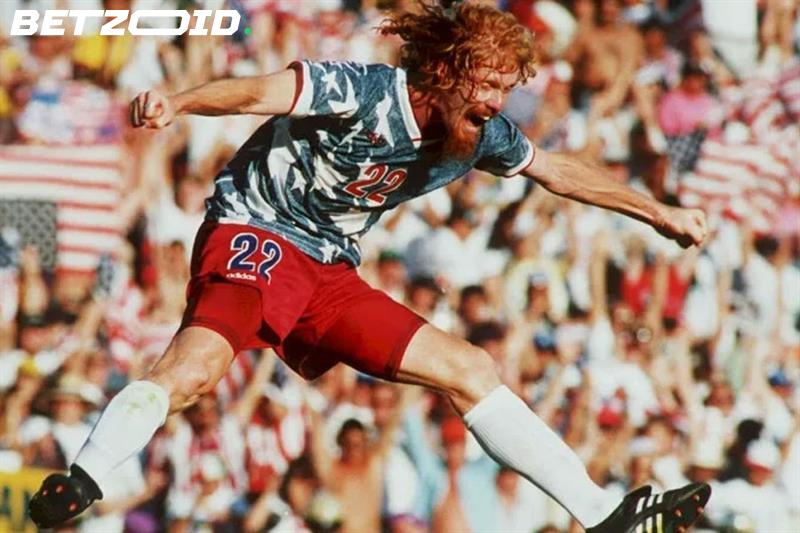
"We can no longer have low expectations." Alexi Lalas said it plainly, and nobody in the room pushed back. When the World Cup returns to the United States in 2026 — co-hosted with Mexico and Canada — thirty-two years of infrastructure, investment, and incremental progress gets put on trial in front of the whole world.
Lalas, the red-bearded defender who became one of the most recognizable faces of the 1994 tournament, now a TV commentator with strong opinions and no interest in softening them, was direct about the floor: anything short of the round of 16 is a failure. Not a disappointment. A failure.
The USA face Belgium in a friendly on Saturday — a useful early barometer before the real pressure arrives.
From condition to credibility
When FIFA handed the 1994 World Cup to the United States, it came with a mandate: build a top-tier professional league. MLS was essentially a condition of getting the tournament. Three decades later, that league has Lionel Messi and outdraws most European competitions on average attendance. According to FIFA World Cup 26 New York New Jersey CMO Bettina Garibaldi, soccer is now the third most popular sport in the country — ahead of baseball, as of January.
Manchester City CMO Nuria Tarre put a sharper number on it: 100 million people in the United States are already interested in soccer. Thirty-two million of them say they follow City specifically. That's not a fringe sport quietly growing. That's a commercial ecosystem with serious stakes — and clubs like City, through their ownership of New York City FC, are already positioned to convert World Cup eyeballs into long-term subscribers.
The 1999 Women's World Cup did something similar. Brandi Chastain's penalty celebration became a cultural moment that no marketing budget could have manufactured. The hope is that 2026 lands the same way — but this time, with the men's team giving people a reason to stay invested after the final whistle.
The pipeline problem hasn't gone away
Jozy Altidore isn't buying the optimism wholesale. The former US striker pointed to the gap that still exists at the developmental level. "Academies abroad are by far more robust," he said. "It's almost like a factory — Messi leaves Barcelona, here comes Yamal. It's not an accident."
That's the structural challenge American soccer hasn't fully solved. Money has flowed into elite facilities. Grassroots infrastructure — the kind that produces players who've been tested, challenged, and occasionally broken before they're 18 — is harder to manufacture. Altidore's point is that you can't shortcut the environment. "That's the only way to find out what makes you a special player."
Stu Holden, the former midfielder turned broadcaster, frames it in terms of expectation rather than aspiration. "Our expectations should not be that of the past," he said. "It's based in realism now that we should expect this group can get to a fourth and final." A semifinal on home soil would reshape the conversation about American soccer permanently — and shift the odds market for 2030 in ways that would have seemed laughable in 1994.
Carli Lloyd, who won two World Cups and understands better than most what tournament football at home can mean, puts the metric differently: "The measure of success with this team is going to be how much they inspire the country. That is the power that they have — and that is in their control."
The result on Saturday against Belgium won't settle any of this. But the clock is running.