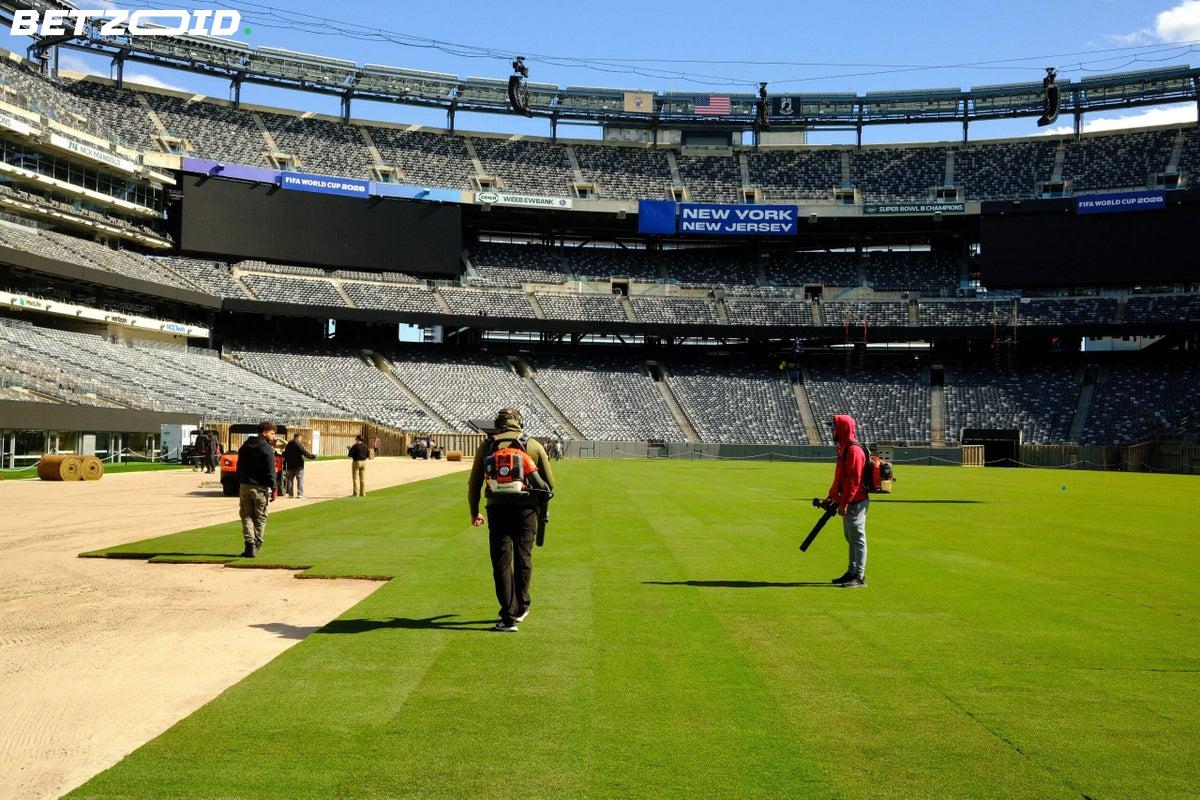
"It's only justice that the best players on the planet hopefully get the best grass on the planet." That's FIFA senior pitch manager David Graham, standing inside MetLife Stadium on Thursday as workers rolled out the turf that will host the World Cup final on July 19.
The installation began Wednesday evening when the first of 27 trucks — loaded with hundreds of rolls of Tahoma 31 Bermuda Grass — arrived after a 12-hour drive from Carolina Green Turf Farm outside Charlotte, North Carolina. The crews work in eight-to-ten-hour shifts: rolling slabs onto a sand base, raking the seams flat, blowing out dead clippings, then running an asphalt roller over the surface to compress it. Next week, a Zamboni-like machine stitches the seams together. It's methodical, unglamorous work that directly determines whether the best players in the world are limping off the pitch or running free across it.
Why the Club World Cup fiasco matters here
Last summer's Club World Cup at the same venue was a cautionary tale. The pitch was criticised immediately after the first game — Porto and Palmeiras coaches called it out publicly, players described it as "dry." The installation back then happened just two weeks before kick-off. There was no irrigation system. No vacuum ventilation. A temporary overlay field, essentially.
This time, FIFA took possession of MetLife after the NFL season ended and has had weeks to prepare. The new setup includes a fully automated irrigation system, sub-air vacuum ventilation that keeps oxygen flowing to grass roots, grow lights, and HVAC units pumping warm or cold air into the system like an open-air greenhouse. The stadium bowl has been reconfigured. Seats removed. The outside signage now reads "New York New Jersey."
The first match — Morocco vs Brazil on June 13 — is 38 days away. Graham's point is blunt: "This pitch will be in longer than the duration of last year's tournament before we kick a ball."
The grass change that almost wasn't
The original plan was to source the warm-season grass from Tuckahoe Turf Farms in Hammonton, New Jersey — practically next door. Then this past winter dropped over 54 inches of snow on Newark, and the Bermuda grass crop didn't survive it. FIFA pivoted to North Carolina, the same farm now supplying grass for Kansas City's stadium and several World Cup training facilities. The New Jersey farm isn't out entirely — it's still providing cool-season strains for venues in Boston and Philadelphia.
Across all 16 host cities, FIFA is working with 11 farms spanning the US, Canada, and Mexico. Two grass types are approved: Tahoma 31 Bermuda for warm climates, and a bluegrass-rye blend for cooler venues. Indoor stadiums need grow lights. Every venue has different maintenance demands. It's a logistical operation that FIFA says traces its research back to 2016.
- MetLife Stadium hosts 8 matches total, including the World Cup final on July 19
- Group stage games include France vs Senegal (June 16), Norway vs Senegal (June 22), Ecuador vs Germany (June 25), and Panama vs England (June 27)
- A Round of 32 match follows on June 30, a Round of 16 on July 5, then the final
- Morocco and Brazil open the stadium's World Cup schedule on June 13
FIFA has deliberately built a two-week buffer before the final — no matches at MetLife in the fortnight leading up to July 19 — specifically to give the pitch management team time to get the surface into peak condition for the one game that matters most.
Whether that's enough to make punters feel confident about high-tempo, technically precise football in the final is another question. A poor surface compresses the game — it rewards physicality over precision, which shifts the profile of teams likely to thrive. A clean, fast pitch favours sides built on movement and combination play. The grass quality isn't just a groundskeeping footnote. It shapes how the tournament's biggest match actually gets played.
"We didn't receive the venue until two weeks before the first ball was kicked" for the Club World Cup, Graham said. "This is a completely different build." The infrastructure backs that up. Now it just has to survive a New Jersey summer.