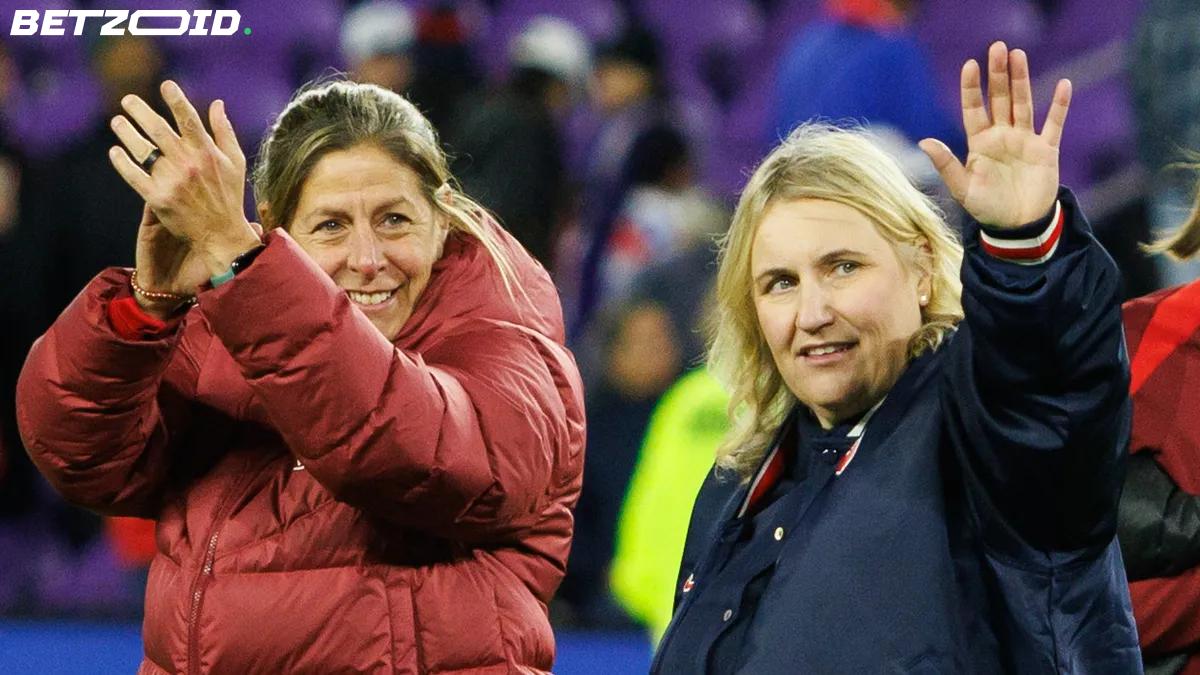
"It's an amazing day for women's football." That's Emma Hayes, USWNT head coach and someone who doesn't hand out compliments to FIFA lightly. She said it in response to a new mandate that every team competing in a FIFA women's tournament must have at least two women on their bench staff — one of whom must be either the head coach or an assistant coach.
Starting with the Under-20 World Cup in September, that's no longer a suggestion. It's a requirement.
Why this actually matters
At the 2023 Women's World Cup, only 12 of 32 competing nations were coached by women. In the NWSL, just four of 16 clubs have female head coaches. At last year's College Cup, every head coach was a man — including at national champion Florida State. The pipeline problem is real, and it doesn't fix itself by waiting around.
FIFA hasn't just dropped a rule and walked away, either. Since 2021, it has funded 759 female coaches from 73 countries through its education scholarship program. It has run mentorship programs and coaching seminars. The mandate is the next logical step — progress by policy, not by patience.
Jill Ellis, who won two World Cups as USWNT head coach and now serves as FIFA's chief football officer, put it plainly: "There are simply not enough women in coaching today. We must do more to accelerate change by creating clearer pathways, expanding opportunities and increasing the visibility for women on our sidelines."
The part FIFA still needs to answer
Here's the problem FIFA hasn't addressed: it hasn't said how it will enforce this, what penalties exist for non-compliance, or how it will verify that women on the bench are genuine contributors rather than token appointments. Those aren't small details.
There are federations around the world that will look for the shortest route around this rule. The same football culture that allowed Spain's federation president to kiss World Cup winner Jenni Hermoso on live television without her consent — less than three years ago — doesn't disappear because FIFA issued a press release.
- FIFA has not specified a penalty for teams that flout the requirement
- No monitoring mechanism has been announced
- No definition of what constitutes an "active" coaching role versus a nominal one
The intent is right. The structure needs work. FIFA being FIFA, that gap matters.
Still — Hayes led the USWNT from their worst-ever World Cup exit to Olympic gold in under three months. Becky Hammon has won WNBA titles in three of her four seasons coaching Las Vegas. Dawn Staley's South Carolina hasn't missed a Final Four since 2019. The talent is there. The jobs haven't always followed. This rule pushes the door open a little wider. Whether federations walk through it honestly is the part nobody's legislated yet.