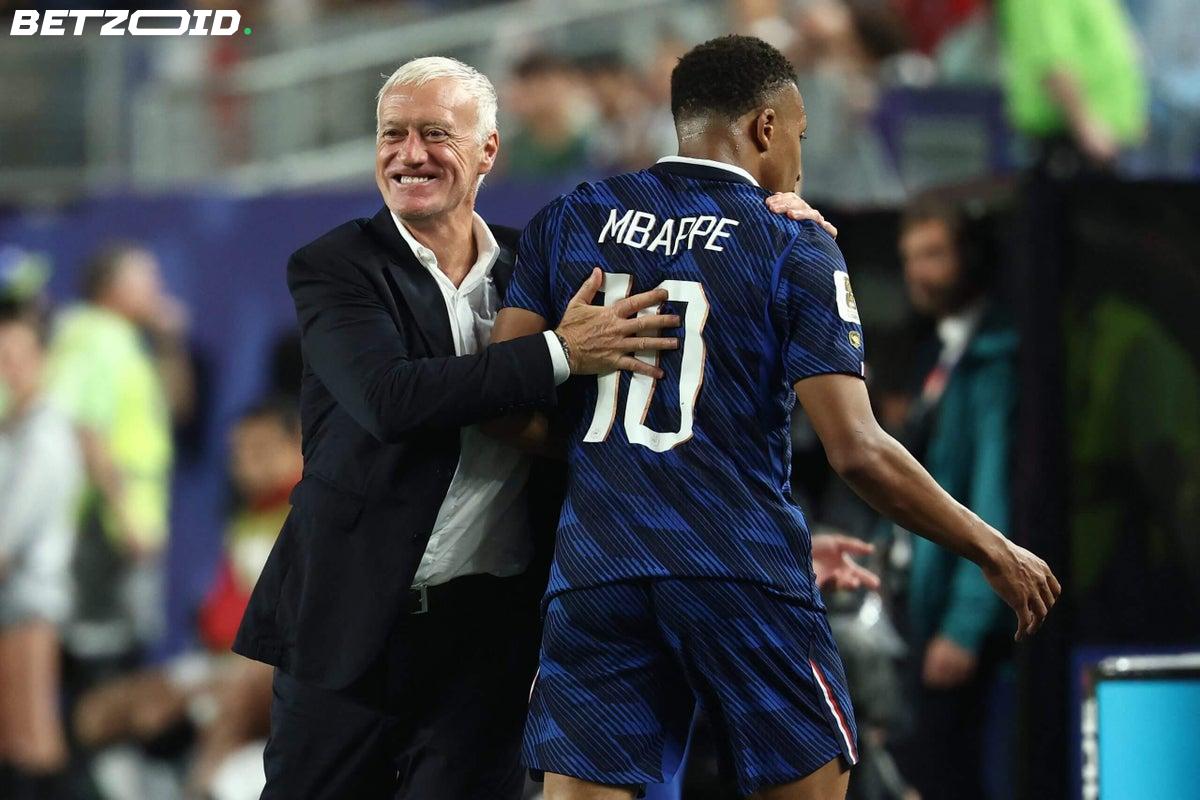
Didier Deschamps has spent most of his managerial career finding ways to make great attacking players less attacking. So what happens now that he has four of them, they're all playing, and France are actually scoring goals?
Ten in the group stage. Mbappe broke Giroud's all-time France scoring record. Dembele hit a hat-trick against Norway. Olise has been slaloming through defences and threading balls nobody else even sees. Doue has chipped in from the left. Four proper forwards, all contributing, all demanding their place in the XI.
For context: in Deschamps' previous six tournament group stages, France scored eight, four, three, four, six and two. This is different. He looks like he's actually enjoying himself.
What history says about four-attacker World Cup teams
The problem is that enjoying yourself in the group stage and winning the tournament are two different things — and World Cup history is pretty clear about what winners have done with wide-open attacks once the knockout rounds arrive.
Argentina in 1986 had Maradona, Burruchaga bombing forward, and two strikers early on. Before the quarter-final against England, Bilardo dropped his second striker and brought in an extra defender. They won. France in 1998 played flowing football with Henry on the wing through the groups, then Jacquet pulled him from the starting lineup from the quarter-finals onwards, added a second holding midfielder in Karembeu, and tightened everything up. They won. Brazil in 2002 dropped the creative Juninho for a second defensive midfielder against England in the quarters. They won. Argentina in 2022 went to three natural central midfielders after getting turned over by Saudi Arabia, and never looked back.
The pattern is relentless. At some point, the serious teams get serious.
Italy in 2006 used an energetic central midfielder as a wide man — which is exactly what Deschamps himself did in 2018 with Matuidi and Tolisso. That's his comfort zone. France won the World Cup playing it that way. The urge to go back to what works will be real.
Doue is the one watching his phone
If Deschamps blinks, Desire Doue is almost certainly the one who makes way. He's the least established of the four, and dropping him creates space for a more disciplined midfielder without touching Mbappe, Dembele, or Olise — the three who've done the most damage.
That decision, if it comes, will tank France's attacking odds but probably shorten their tournament odds. A more pragmatic France in the knockout rounds is harder to beat, even if they're less entertaining to watch. Anyone pricing up France's chances of going deep should be thinking about which version of Deschamps shows up — the man who let his forwards run free in the group stage, or the one who's won trophies by pulling the handbrake.
The last team to win a World Cup deploying four genuine attackers was Brazil in 1970. They remain the most celebrated side in the tournament's history. Deschamps knows that. He also knows he's never done things that way, and the World Cup final is not the moment to find out if it works.
One of Mbappe, Dembele, Olise or Doue is probably going to start looking over their shoulder very soon. The smart money says it's Doue.