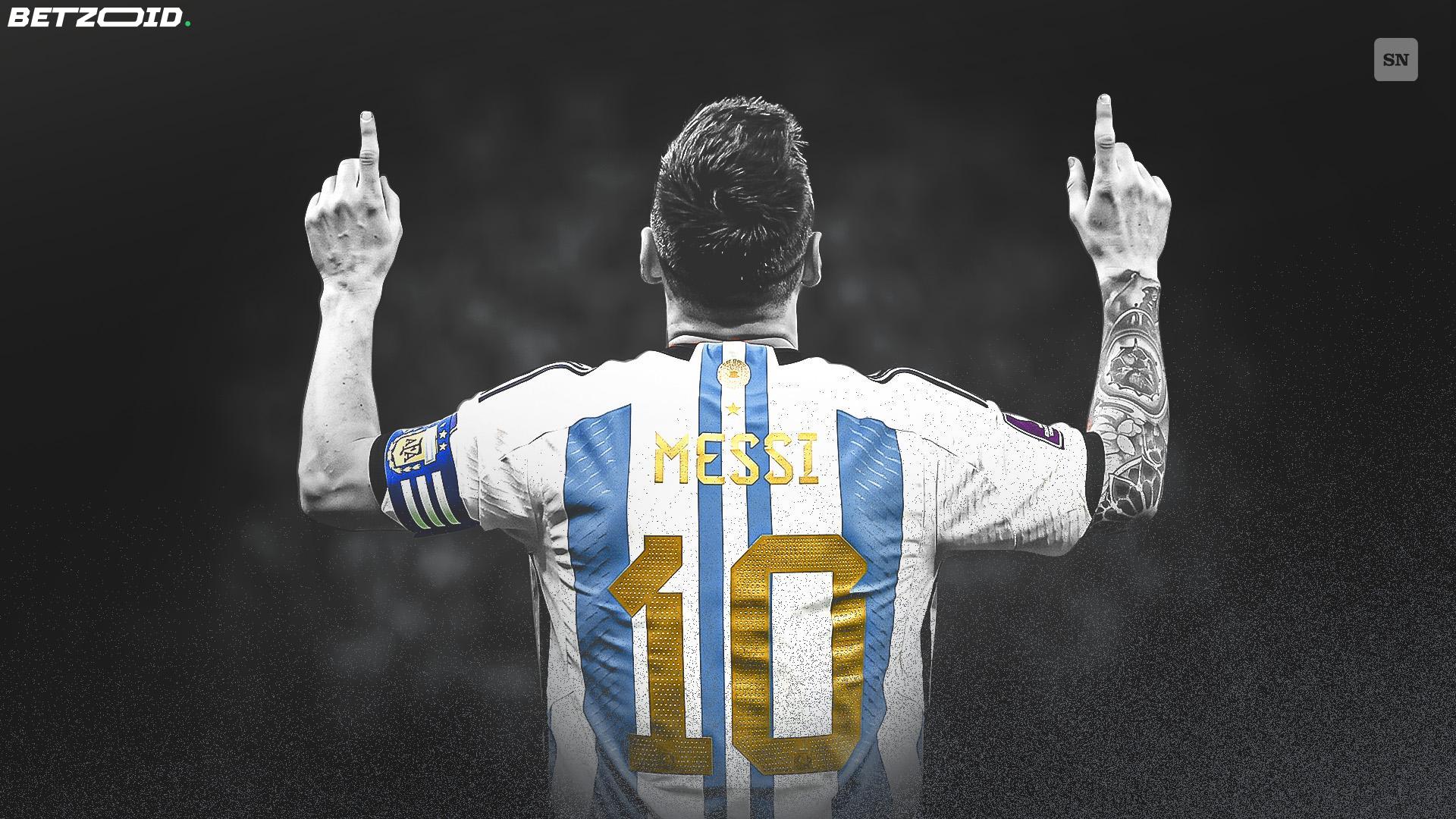
"For me, the national team is over." Messi said those words in tears at MetLife Stadium in 2016, after missing a penalty in yet another Copa America final defeat. Three finals lost in three years. A nation that had started to wonder if this was simply his ceiling with Argentina. It wasn't pity — it was exhaustion, from both sides.
On Tuesday, at River Plate's Estadio Monumental, Messi plays in Argentina colours for the last time against Benin. The same city where millions flooded the streets after the 2022 World Cup will pack out the stands to say goodbye. The tears this time will mean something entirely different.
The shadow that almost swallowed him
What gets lost in the celebration of Messi's legacy is how genuinely precarious it looked for a long stretch of his career. This wasn't just a rough patch — there was a real, sustained argument inside Argentina that Messi didn't belong to them. That he was Barcelona's player, not theirs. That the boy who left Rosario at 13 had grown into a European, not an Argentine.
Carlos Tevez got louder cheers than Messi at a 2011 Copa America game in Santa Fe. In Messi's home province. The crowd roared for the rough-edged Fuerte Apache kid and politely applauded the best player on the planet. That tells you everything about the cultural friction at play.
Argentina's football identity was built on a romantic ideal — the pibe, the street kid with dirty shoes and a rag ball, cunning and chaotic and totally self-made. Maradona was the living embodiment of it. Messi, a middle-class kid from Rosario absorbed by Barcelona's academy at 13, simply didn't fit the archetype. His shyness made it worse. He rarely sang the national anthem. He let his football do the talking and for a long time, Argentina wasn't satisfied with that.
The numbers weren't helping him either. Between 2007 and 2016, Argentina reached four major finals — the 2007 Copa, the 2014 World Cup, and back-to-back Copas in 2015 and 2016 — and lost every single one. "In Argentine culture, finishing in second place often looks worse than not competing at all," says Agustin Aboy of Sporting News Argentina. "Three consecutive losses in finals made the glory look impossible, even for Messi."
The moment the story turned
When Messi reversed his 2016 retirement and returned for World Cup qualifying, Argentina were on the brink of not making it to Russia at all. Trailing 1-0 in Quito's lung-sapping altitude against Ecuador, Messi scored a hat-trick. On his own. Fixed it himself. That performance didn't win him the country back overnight, but it planted something.
The actual turning point was a silent stadium in Rio. Behind closed doors at the Maracanã in July 2021, Argentina beat Brazil to win the Copa America. No crowd. No parade. Just the result Argentina had been waiting decades for, and a team under Lionel Scaloni — appointed largely because he was cheap and available — that had quietly become something worth believing in.
What followed is not in dispute. Eight goals and four assists at the 2026 World Cup. A third world title in 2022 in Qatar. A Copa defence in 2024. Eight Ballon d'Or trophies. Messi ends his international career having done things no Argentina player has ever done, and having done them after the country had half-written him off.
"Today, Messi enjoys something almost no one in Argentina ever achieves, not even the biggest legends in any discipline," Aboy says. "He is beyond debate."
That, more than any trophy, is the real measure of what Tuesday means. Argentina doesn't hand out unconditional love. Messi had to earn every last drop of it.