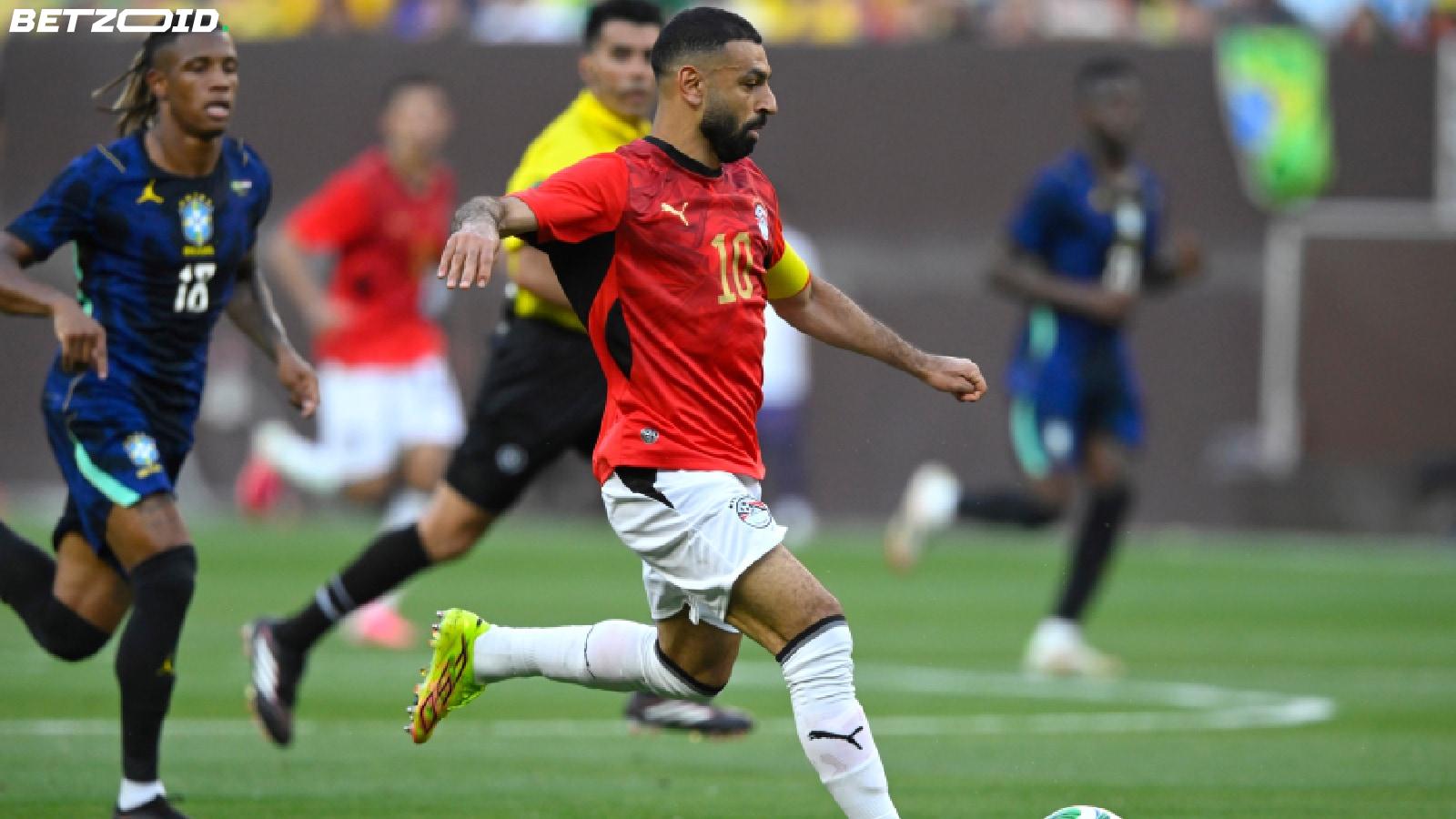
"Mo Salah is a better human being than he is a football player. And he is one of the best football players in the world." John Oliver said that, and in Spokane — where Egypt are setting up camp for Group G — the locals seem ready to agree.
The Egyptian talisman has arrived at the World Cup carrying decades of national expectation and, apparently, a very specific grocery list. Local outlet the Spokesman Review has detailed what keeps a 30-something winger playing like he's 24: broccoli, sweet potatoes, avocado, almond milk, eggs, oats, and gluten-free bread. No sugar. His one exception is koshary — Egypt's beloved street dish of rice, lentils, and caramelized onions — and only when he's back home.
The training regime is just as disciplined. Ice baths. Pilates. Yoga. Twice-daily meditation. Chess for spatial awareness. A hyperbaric oxygen chamber at home. It reads less like a footballer's routine and more like a biohacking experiment that happens to produce goals.
Egypt's group — and how much Salah matters
Group G has genuine intrigue. Belgium are here with what's left of their golden generation. Iran carry the political weight of facing the United States at some point in the tournament. New Zealand are New Zealand. And Egypt have Salah — plus Omar Marmoush of Manchester City, who could end up being the sharper attacking threat by the time the knockout rounds come around.
That tension is the story of Salah's Egypt career in miniature. His individual brilliance has never quite translated into the team result that would cement his continental legacy. He came agonisingly close at the Africa Cup of Nations, falling short against Congo. A 2-1 warm-up loss to Brazil in Cleveland — a reunion with former Liverpool teammates Alisson and Fabinho — is the kind of result that doesn't mean much in June but would have stung anyway.
Egypt's squad has plenty of character beyond Salah. Mostafa Abdel Raouf — nicknamed Little Zico — scored on his debut against Russia in May and brings the goalscoring instinct to complement the veterans. The Egyptians have always loved a nickname: Mahmoud Hasan is Trezeguet, Nabil Emad is Dunga. The tradition says something about how seriously they take their football lineage.
Salah and the Barcelona teenager
The most interesting subplot, though, is coming via the Spanish press. Mundo Deportivo reports that Salah has taken 18-year-old Barcelona starlet Hamza Abdelkarim under his wing — offering him a room to share during the tournament and handing over a jersey as a welcome gift.
Hamza is worth watching. Cairo-born, he played youth football in Kuala Lumpur before moving to Egyptian giants Al Ahly, eventually earning a loan stint with FC Barcelona Atlètic in the Segunda Federación from February of this year. That was enough to convince national team coach Hossam Hassan to hand him a senior World Cup call-up at 18. The kid is six feet tall and clearly on a trajectory.
Salah mentoring him isn't just a feel-good story. It's practical succession planning for a national team that has leaned on one man for a long time. If Hamza is the next piece — and Barcelona's interest suggests he might be — then having him room with Salah at his first World Cup is about as good a football education as exists.
Egypt's odds of advancing from Group G will depend heavily on Salah staying sharp and Marmoush finding form. But in Spokane, the conversation has already moved beyond tactics. It's about what Salah leaves behind — and whether Hamza Abdelkarim is the answer to that question.