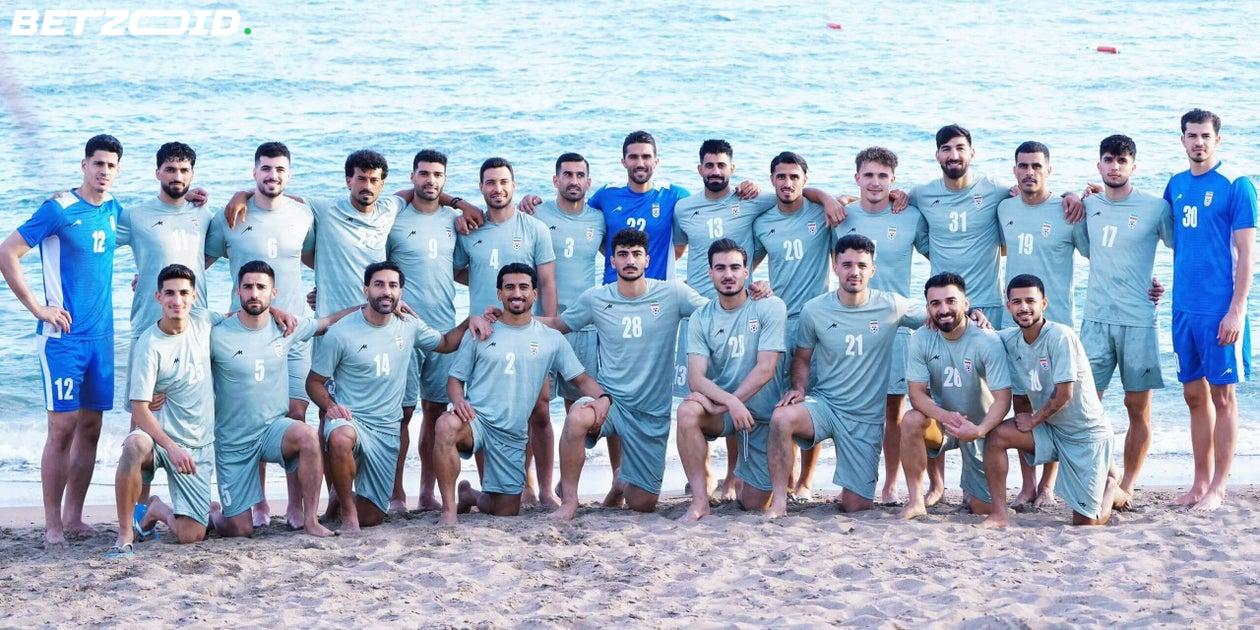
Thirteen members of Iran's World Cup delegation still don't have U.S. visas. The country is at war with the tournament's co-host. And they got to Turkey on a 40-hour bus. That's the backdrop to one of the most extraordinary World Cup preparations in recent memory.
Iran departed Antalya on Saturday afternoon, bound for Tijuana — not the U.S., crucially — after a week of grinding diplomatic tension at the American embassy in Turkey. Players and head coach Amir Ghalenoei got their visas. Two analysts, executives, media officials and other management did not. A White House statement on Friday night said the U.S. "will not allow them to abuse this system to sneak terrorists" into the country. Iranian officials, by multiple accounts, were stunned.
Tijuana, not Arizona
The switch from Arizona to Tijuana wasn't just logistical — it was a statement. An Iranian consulate in Mexico, no U.S. jurisdiction, and a calmer environment for a squad already carrying enough political weight. They're a short drive from Los Angeles, where they play New Zealand on June 15 and Belgium on June 21. Seattle hosts their final group game against Egypt on June 27.
Group G is genuinely open. New Zealand are beatable. Belgium, without the Golden Generation's peak, are navigable. Iran reaching the knockout rounds isn't fantasy — it's a real possibility, and their odds reflect a team that's been quietly preparing well despite everything.
On the pitch, the signs are encouraging. A 2-0 win over Mali in Antalya two days before departure showed an organised, coherent side — a 4-4-2 out of possession that transitions cleanly into a 4-3-3. Saeid Ezatolahi dominated the holding role. Saman Ghoddos, formerly of Brentford, covered ground beside him. They were the better team, and a Turkish agent watching pitchside put it plainly: "You can tell they have been playing together for a while."
That cohesion has a very specific explanation. Iran's 17 domestically-based players have essentially been in camp since March, when the team snaked out of Tehran on a 40-hour bus journey to Turkey as the war broke out. The domestic league is suspended. Goalkeeper Alireza Beiranvand reportedly lay in the coach aisle the whole way to stretch his 6ft 5in frame.
The players carrying this
Alireza Jahanbakhsh — 98 caps, former Brighton winger, now at Belgian side Dender — is closing in on a return from a hamstring problem and is set to reach his century at a World Cup. "If you told me when I was 12 that in 20 years you're going to play your fourth World Cup, I would have laughed," he said. He's been the group's steadying voice, telling younger players to control what they can control and make the camp enjoyable enough that they don't feel the weight of everything outside it.
Mehdi Taremi, Olympiacos striker and the squad's all-time leading scorer with 60 international goals, is fit after a precautionary substitution against Mali. Ehsan Hajsafi, on 146 caps, needs three more to equal Iran's all-time appearance record. Amirmohammad Razzaghinia, 20, is the youngest Iranian at a World Cup since Jahanbakhsh himself debuted in Brazil in 2014.
Sardar Azmoun isn't there at all. He was dropped after posting a photo with UAE ruler Mohammed bin Rashid Al Maktoum following the outbreak of war — something that, per Iranian media reports cited by Reuters, angered Iranian leadership. His club teammate Ezatolahi has stepped into the space he left.
Before friendlies against Gambia and Mali, players placed their right hands over the badge on their chests. That will be the gesture at the World Cup. Simple. Deliberate. Nothing more.
"We only want to go there to win, nothing else," said Peyman Assadian, an Iranian state TV presenter who made it to Antalya just in time for the Mali game before following the squad to Mexico.