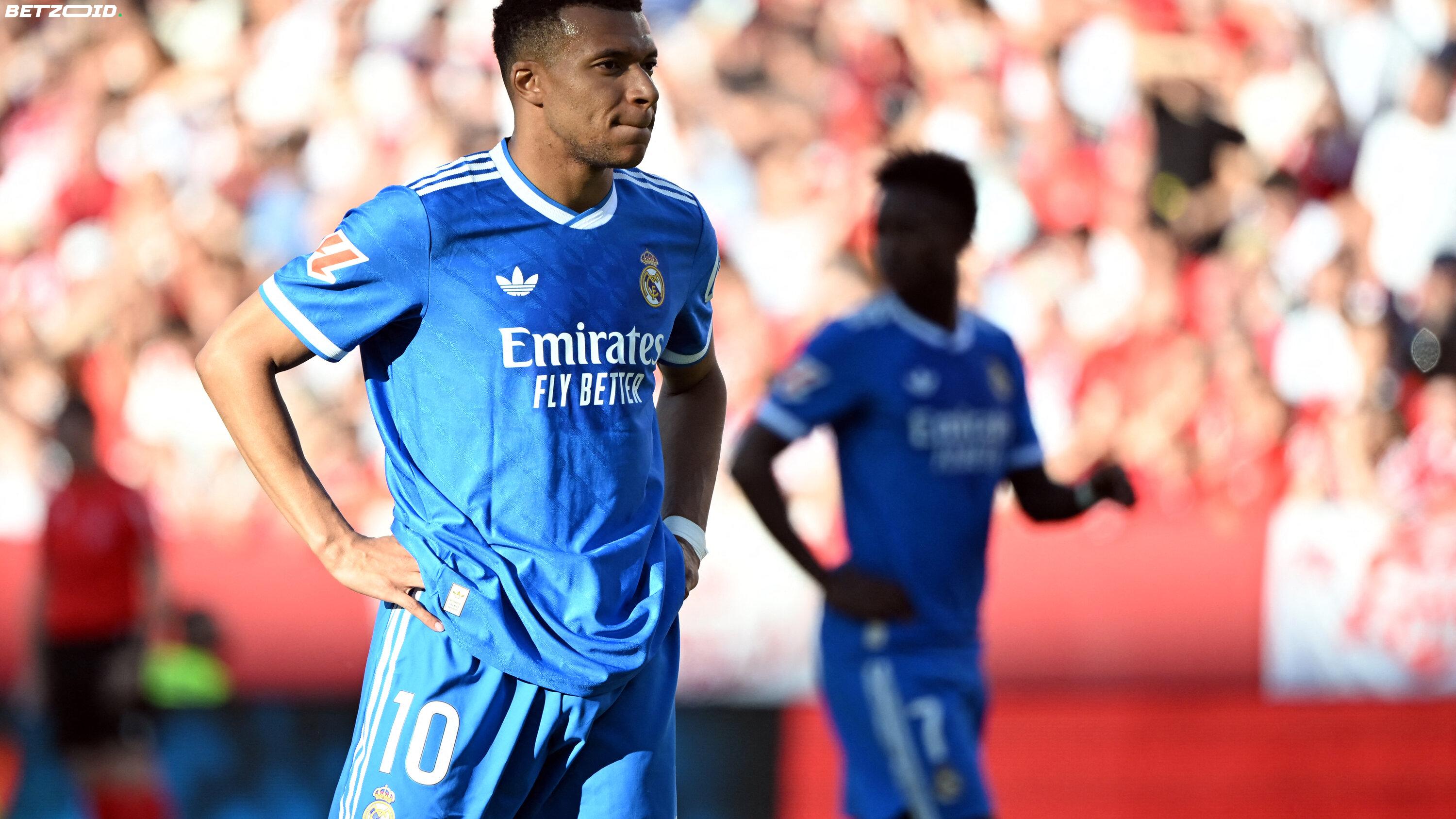
"I know what it means, and what kind of consequences it can have for my country when those kinds of people take control." That's Kylian Mbappé in Vanity Fair, one month out from leading France at the World Cup, and he's not talking about a defensive line.
The France captain used a high-profile magazine profile — cover line: Liberté, Égalité, Mbappé — to take direct aim at the National Rally party, whose leading figures Jordan Bardella and Marine Le Pen are currently ahead in polls ahead of France's presidential elections next year. The response from the far right was immediate, mocking, and strategically clever.
The PSG jab that landed
Le Pen and Bardella didn't debate the politics. They went for the jugular on football. Since Mbappé left PSG for Real Madrid — the move Macron literally begged him not to make — the Parisians have reached the Champions League final, where they'll face Arsenal on May 30. Bardella posted: "I know what happens when Kylian Mbappé leaves PSG: the club wins the Champions League!" Le Pen echoed it on RTL, drawing a pointed parallel between his departure from PSG and his prediction that they wouldn't win elections.
It's a cheap shot. But politically, it works — it reframes a serious warning as the judgment call of someone who can't read a situation. That's the game.
Mbappé's reply to the broader question of whether footballers should stay out of politics was simple: "We are citizens. We have a say, just like everyone else." He's right, of course. But he's also the most famous person in France, captain of Les Bleus, and the World Cup is four weeks away. That context makes every word land differently.
A team that's been here before
This isn't new ground for the French national team. Jean-Marie Le Pen — Marine's father and the party's founder — questioned the squad's "French identity" back in 1996, when all but one player had been born in France. Zinedine Zidane, also of Algerian descent, urged voters to reject the far right in 2002 and 2017. The friction between Les Bleus and the National Rally runs deeper than any single interview.
Mbappé's father was born in Cameroon. His mother is of Algerian descent. The team he captains is one of the most ethnically diverse in international football, and it has been for thirty years. Soccer writer Philippe Auclair, who wrote a biography on Mbappé, put it plainly: "He is totally in tune with the rest of the dressing room."
Some teammates have gone further. Mbappé's comments were, by his own squad's standards, restrained. Goalkeeper Lucas Chevalier faced a backlash last year after accidentally liking a pro-National Rally Instagram post — which shows how electrically charged the political atmosphere around this team already is.
Lawmaker Julien Odoul called on the French Football Federation to rein Mbappé in. That's not happening. And with Le Pen's presidential candidacy under threat due to an embezzlement conviction she's currently appealing, the political stakes around these elections are only going to rise between now and the tournament.
France's World Cup odds just became about more than football form. This team carries the weight of what France wants to say about itself — and its captain has made clear he knows exactly what he's saying.