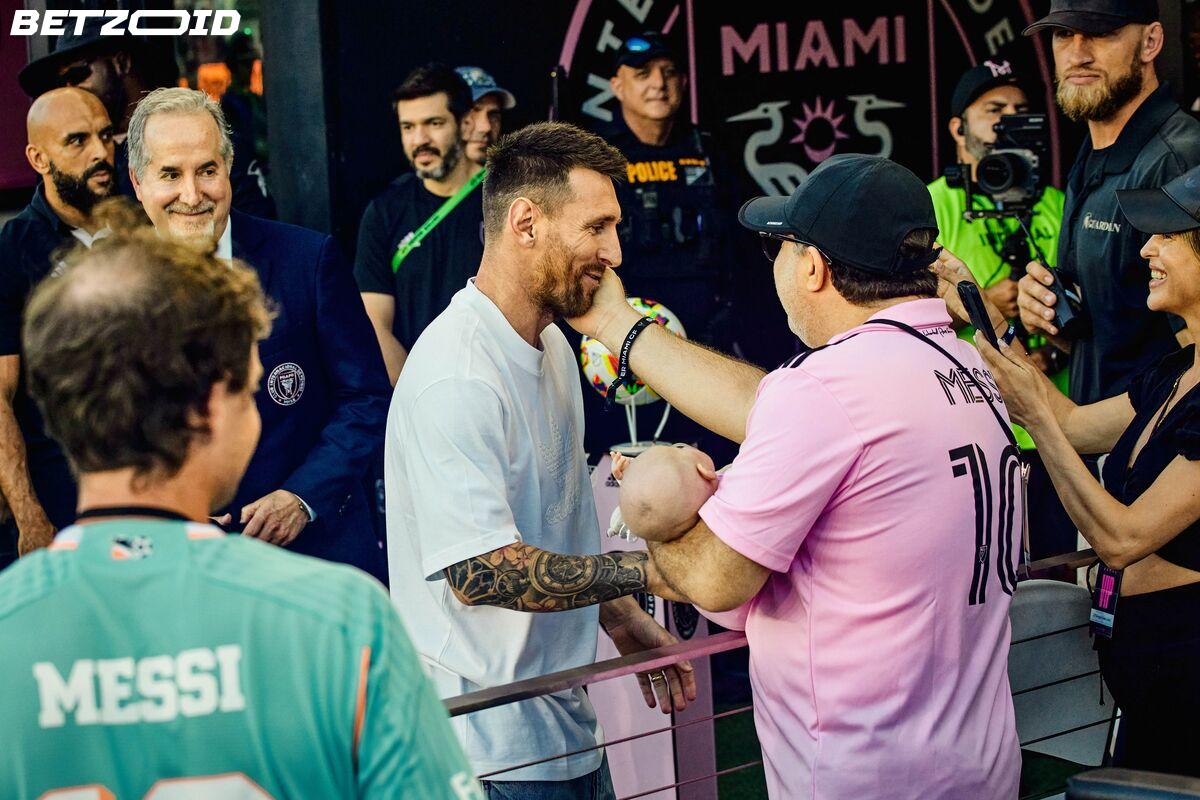
"Money was never a problem for me, nor an obstacle in anything," Messi told Mundo Deportivo in 2023. "If it had been about money, I would have gone to Saudi Arabia." He said that after turning down a reported $400 million-a-year deal. The irony? Staying in Miami is exactly what pushed him past $1 billion.
According to Bloomberg's Billionaires Index, Messi's net worth has now crossed ten figures, placing him alongside Cristiano Ronaldo as one of the only footballers — and among the rarest athletes on the planet — to reach billionaire status. Ronaldo got there first, courtesy of his Al-Nassr deal in 2023. Messi took a different road, but he arrived at the same destination.
The Miami machine
The Inter Miami move looked to some like a soft landing — a sunset gig in a second-tier league. The numbers tell a different story. Messi's total annual compensation from the club sits somewhere between $70 million and $80 million, according to co-owner Jorge Mas, once you factor in equity rights and salary. On top of that, there's a reported revenue-sharing deal tied to new Apple TV+ MLS Season Pass subscriptions — a structure nobody in football had negotiated before. Subscriptions reportedly doubled after he arrived.
Inter Miami itself is now the most valuable soccer club in the US, worth around $1.45 billion according to Sportico — up more than 20% in a single year. That equity option Messi holds on a stake in the club could yet become the most valuable piece of the whole package, depending on where MLS heads in the next decade.
Bloomberg puts his career salary and bonuses since 2007 at over $700 million. The rest — investments, sponsorships, real estate — closed the gap to $1 billion. A REIT listed on a Spanish exchange late last year is valued at $232 million. He's a shareholder in an Argentine restaurant chain. He owns stakes in lower-division football clubs in Spain and Uruguay. His father Jorge has been architecting most of this quietly for years.
How this stacks up against other sporting billionaires
The traditional route to a billion in sport runs through investments, not wages. Roger Federer made $130 million in prize money across his entire career — but it was a 3% stake in Swiss shoe brand On that built his fortune after its shares surged. Michael Jordan earned less than $100 million in NBA salary. His billions came from the Charlotte Hornets and Nike.
Messi's path is different. He's the first footballer to approach billionaire status primarily through playing wages — a reflection of how absurdly football salaries have inflated at the elite level over the past 15 years. Ten players at Barcelona last season were earning more annually than Messi was making in 2009, when he signed an extension worth roughly $12 million a year.
- Career salary and bonuses since 2007: over $700 million
- Reported annual Inter Miami compensation: $70–80 million
- REIT listed in Spain (Dec. 2024): valued at $232 million
- Inter Miami club valuation (Feb. 2025): ~$1.45 billion — US's most valuable soccer club
- Club stakes: Cornella (Spain, 5th division), Deportivo LSM (Uruguay), Los Leones (Rosario)
It all traces back to Barcelona spotting a scrawny 13-year-old from Rosario and agreeing to fund his growth hormone treatment when Newell's Old Boys wouldn't. That informal contract, written on a napkin, might be the highest-returning piece of paper in the history of sport.
"Football has an expiry date," Messi said at a business forum in Miami last year. "Business is something I like, and I am learning about." At 38, he's still playing. But the next career is already well underway.