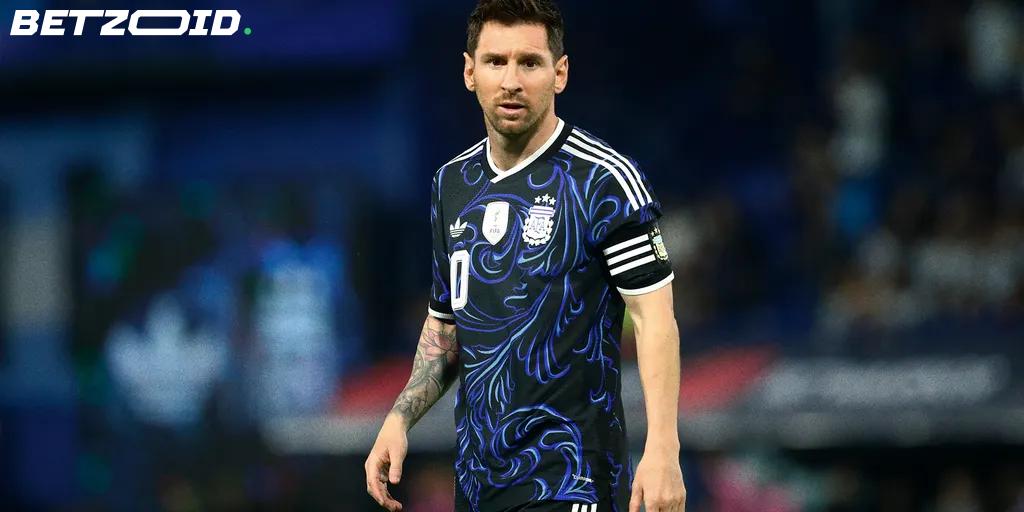
"I love playing football and I'm going to do it until I can't anymore." Lionel Messi said that this week — and then went off to train alone in Kansas City, separated from the Argentina squad, managing a hamstring problem that could define how much of a sixth World Cup he actually gets to play.
That tension — the eternal competitor versus the 39-year-old body — is the real story heading into the 2026 tournament. He holds the record for most World Cup appearances (26), needs just four more goals to pass Miroslav Klose's all-time record of 16, and is the reigning champion. But he's arriving damaged, and Argentina's coaching staff knows it.
"We all would have liked Messi to arrive without any problems, but that's not the case," coach Lionel Scaloni admitted. "Not only him, most of the players aren't fully recovered yet."
An injury list that changes the calculus
It isn't just Messi. Goalkeeper Emiliano Martínez — the man who won two penalty shootouts in Qatar, including the final against France — fractured a finger on his right hand in the Europa League final with Aston Villa. Defender Cristian Romero is nursing a knee injury picked up in April at Tottenham. Multiple fullbacks and a midfielder are also carrying muscle problems.
Scaloni is relying on 17 of the 26 players who lifted the trophy in 2022. The loyalty is understandable — these players know how to win together — but fielding a squad where the majority aren't at full fitness is a gamble that the betting markets should be pricing more carefully. Argentina retaining the World Cup would make them the first back-to-back champions since Brazil in 1962. That's the upside. The downside is a squad creaking before a ball has been kicked in anger.
Argentina open Group J on June 16 against Algeria in Kansas City, then face Austria on June 22 and Jordan on June 27 in Arlington. Winnable fixtures on paper — but paper doesn't account for a half-fit Messi or a goalkeeper protecting a fractured finger.
A future nobody wants to think about
Messi hasn't explicitly confirmed he'll retire from international football after this tournament. But last September, after Argentina's qualifier against Venezuela at the Monumental Stadium, he said: "It was very emotional, knowing this was my last competitive match here." That's not ambiguous.
Scaloni, for his part, doesn't want to face the reality. "I like to think he's going to keep playing because otherwise you get sad," the coach said. The comparison he reached for was Diego Maradona — expelled from the 1994 World Cup on the same soil, never to play another match at the tournament. Argentina carry that history into every game on American soil.
The man who replaces Messi's goals isn't in this squad. Angel Di María, who was alongside him in Qatar, retired from the national team in 2024. "It's impossible to fill Di María's shoes. He and Messi are irreplaceable," Scaloni said. Both gone — or going — at once is a generational shift that Argentine football isn't ready for.
Messi says he won't let his own kids beat him at video games. That competitive streak is real, and it has driven everything. But hamstrings don't care about winning mentality. The next few weeks will show which version of Messi turns up — the one who bends tournaments to his will, or the one training alone while his teammates prepare around him.