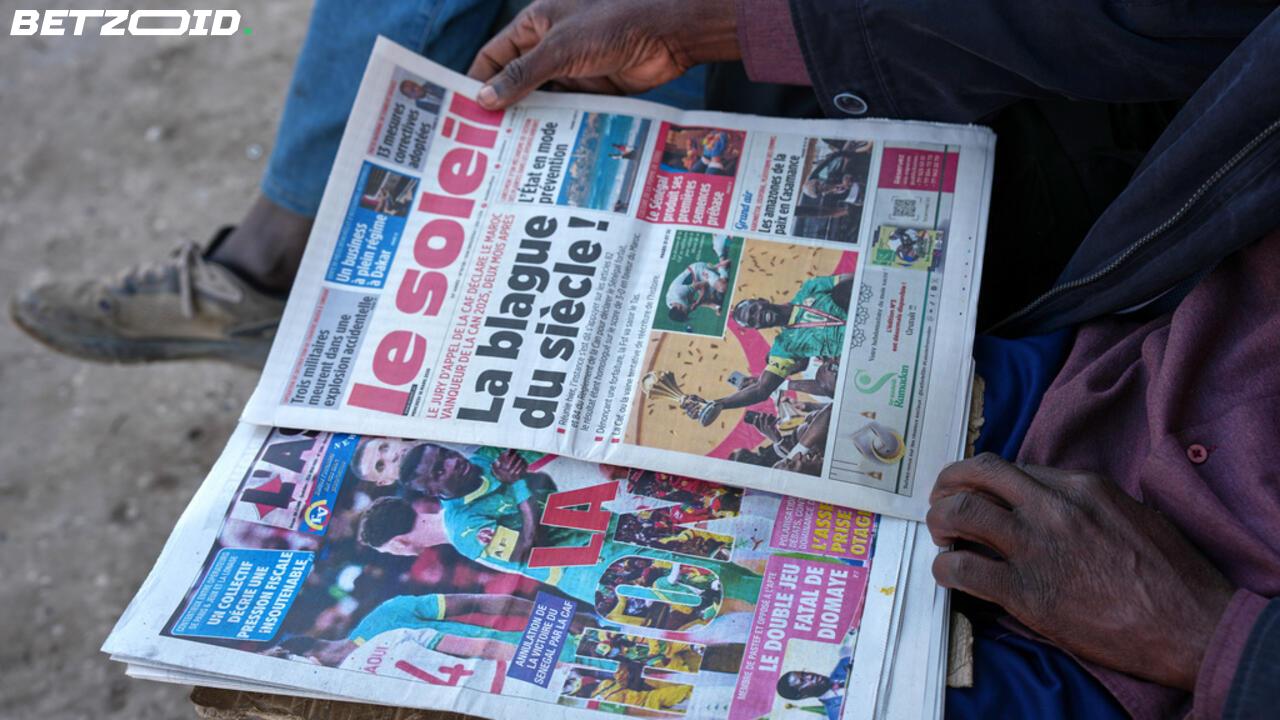
The 2024 Africa Cup of Nations still doesn't have a legitimate champion. On Thursday, Senegal and Morocco took their argument to the Court of Arbitration for Sport in Lausanne — because apparently a 1-0 scoreline, extra time, and a referee's final whistle weren't enough to settle it.
The backstory is equal parts farce and football tragedy. Senegal beat Morocco in January's chaotic final in Rabat, with Pape Gueye's strike four minutes into extra time deciding it. But Senegal's players had walked off the pitch earlier to protest a penalty awarded to Morocco — causing a 15-minute delay. That protest would eventually cost them the title.
How CAF handed Morocco a win they couldn't get on the pitch
CAF's disciplinary panel initially sided with Senegal. Fines were handed out — more than $1 million shared between the two federations, plus players and Senegal coach Pape Thiaw — but the result stood. Two months later, a CAF appeals panel reversed course entirely, ruling the game a 3-0 forfeit to Morocco.
Their reasoning: AFCON tournament rules state that any team that "refuses to play or leaves the ground before the regular end of the match without the authorisation of the referee" is considered the loser. Senegal's lawyers will likely point to one inconvenient fact — referee Jean-Jacques Ndala of Congo authorised the restart himself. The game finished. He blew the final whistle. That's the crux of this entire case.
Law 5.2 of football's rulebook is blunt: "The decisions of the referee regarding facts connected with play, including whether or not a goal is scored and the result of the match, are final." If CAS takes that seriously, Senegal have a genuine argument.
The penalty that changed everything — and the save that should have ended it
The irony buried in all this is that Morocco's penalty — the flashpoint that triggered the chaos — was comically wasted. Brahim Diaz's panenka-style chip was so telegraphed that Édouard Mendy simply stood still and caught it. In the VIP section, cameras caught a visibly stunned Moroccan Prince Moulay Rachid sitting next to FIFA President Gianni Infantino.
Sadio Mané deserves credit for persuading his teammates to return to the pitch rather than hand Morocco the title by default. That decision looked like leadership in the moment. It now looks like the most consequential 60 seconds of Senegalese football in years — and it still might not save their trophy.
The hearing was scheduled as a single closed-door day before three CAS judges in Lausanne. No verdict timeline has been set. With the next AFCON kicking off in June — co-hosted by Kenya, Tanzania and Uganda — there's a real chance African football enters its next major tournament without knowing who won the last one.
Senegal's government has publicly backed the appeal and called for an investigation into "suspected corruption" within CAF. The case has reinforced a growing perception that 2030 World Cup co-host Morocco carries considerable influence at CAF and FIFA levels — a perception that neither body has done much to dispel. The ball is now in CAS's court. Literally.