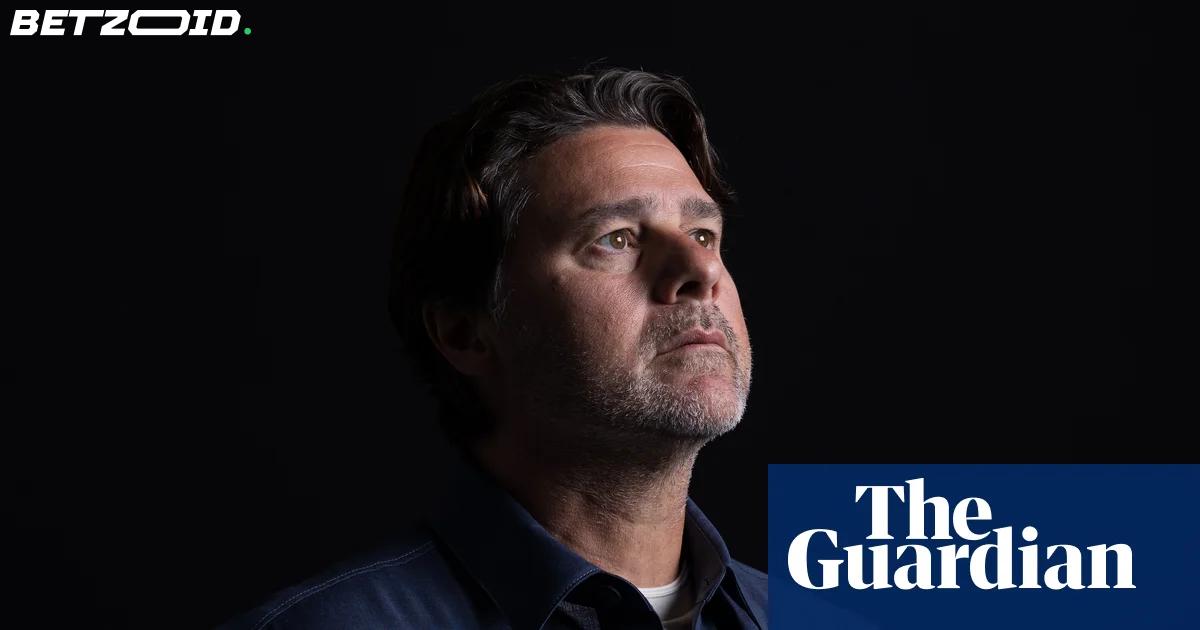
"Tottenham... it's the only club that always I am open to help. In whatever division." That's not a loyalty pledge crafted by a PR team. That's Mauricio Pochettino, unprompted, telling you exactly where his heart still sits — years after Daniel Levy handed him his letter and didn't even let him say goodbye.
This summer, the call came. Spurs reached out. Pochettino was stirred. The only problem: he was contracted to the United States ahead of a home World Cup, and walking out on that wasn't something he was willing to do. By the time Tudor imploded — leaving Spurs a single point above the drop zone with seven games left — the club had pivoted to Roberto De Zerbi. Door closed.
"When I was free, I never received a contact," Pochettino says, "and then when I was working, I received a contact but I cannot make the decision to come back. It was a little bit unlucky."
Timing has defined his career
The near-misses stack up when you trace his career. Real Madrid considered him in 2017 while Zidane was wobbling — Zidane steadied, won the Champions League, then resigned five days after Pochettino signed a new long-term deal at Spurs. Manchester United looked at him three separate times: after van Gaal, after Mourinho, before Ten Hag. England approached him after Euro 2024 before he committed to the US in August, with the FA eventually landing on Thomas Tuchel.
On England specifically, Pochettino doesn't shut the door. He acknowledges the obvious friction — an Argentine coaching England, two nations with a loaded history on and off the pitch — but frames it as surmountable. "My respect is that it's football," he says. "I am the first to feel for my people in Argentina but at the end of the day it's just football." He even notes the Argentine cultural debt to English settlers, pointing to club names like Racing, River Plate, and Newell's Old Boys as evidence that the connection runs deeper than the Falklands.
Not now, he's clear about that. He just signed a four-year extension with US Soccer through the 2030 World Cup, and he means it. But in four years? He's not closing any windows.
What the new US deal actually means
The World Cup ended with a 4-1 loss to Belgium in the last 16, a result badly muddied by the Folarin Balogun suspension saga — overturned amid political grandstanding that, by Pochettino's own assessment, ended up cursing the team rather than helping it. Before that, the tournament had gone well. A 4-1 win over Paraguay, a controlled passage through the group, Bosnia swept aside in the round of 32.
The four-year commitment changes the dynamic. His previous deal had a natural endpoint — deliver at the World Cup, then assess. Now it's a genuine long-term project with Copa América and Gold Cup benchmarks along the way. He's explicit that this makes outside conversations different: "Maybe now if someone calls in the future, it's a different, different type of thing."
For Spurs, who now have De Zerbi — backed by over £300m in summer spending — the Pochettino chapter looks firmly closed, at least for now. Pochettino says he's happy for the club. He still calls it his club. He keeps in touch with Levy, who was pushed out last September, and shows genuine sympathy: "I think he feels like I did when I was sacked... that was really, really tough for me."
There's no bitterness there. Just a man who still checks Spurs' results, still feels the pull, and knows the timing never quite worked out the way it should have.