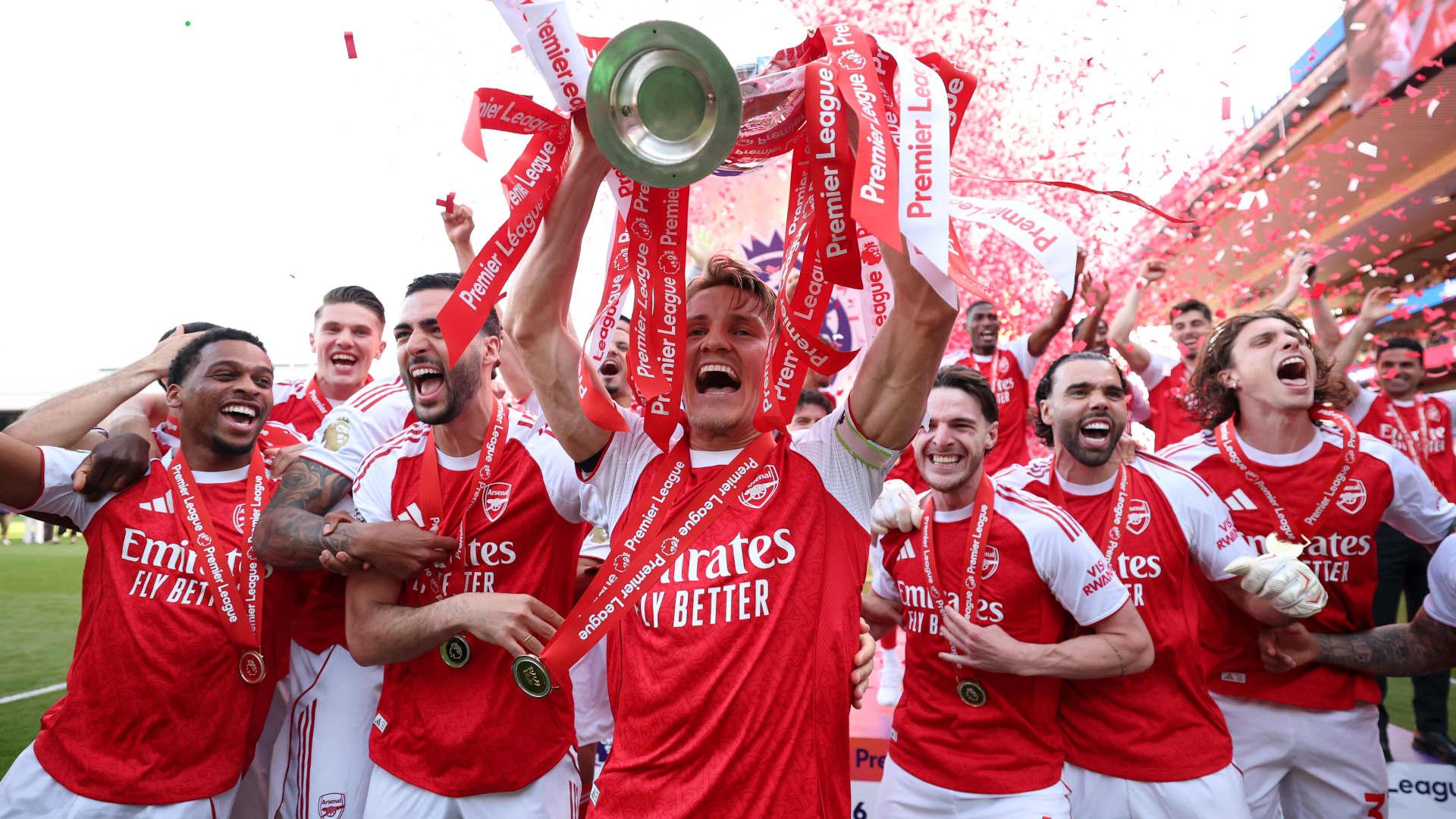
Martin Odegaard hoisted the Premier League trophy at Selhurst Park on May 24, Arsenal's first title in 22 years. The optics were perfect. The reality is more complicated.
On the surface, English football has never looked stronger. Arsenal's 14th league title made it three different champions in three seasons — following Liverpool in 2024-25 and City in 2023-24. That kind of rotation doesn't happen in Spain, where Barcelona and Real Madrid have shared 20 of the last 22 titles. It doesn't happen in Germany, where Bayern Munich have won 13 of the last 14. France? PSG have claimed eight of the last nine. Only Serie A, with four different champions across seven years, can match the Premier League for genuine competition.
English clubs also nearly ran the table in Europe. Aston Villa won the Europa League. Crystal Palace took the Conference League. Arsenal reached the Champions League final — losing only on penalties to PSG. Chelsea hold the Club World Cup. That's a lot of silverware for one country.
The money is real, but so is the exodus
The financial picture backs up the dominance. The Premier League generates more from TV rights than any other competition on earth, and English clubs took 15 of the 30 spots in Deloitte's latest ranking of football's richest clubs by revenue. Bournemouth, Brentford and Brighton made that list. That's not a fluke — it's structural wealth.
But here's the tension. More top English players are leaving than at any point in recent memory. Harry Kane is at Bayern. Anthony Gordon just moved from Newcastle to Barcelona. Six members of England's World Cup squad now play outside the Premier League.
That matters more than a trophy count. Historically, England's best players stayed home because home paid best. If that's no longer the pull it once was — whether because of sporting ambition, tax structures, or something else — the league's grip on its own talent is quietly loosening.
What it means for the betting picture
Three title winners in three seasons makes Premier League outright markets genuinely unpredictable — Arsenal, who were long-priced for much of the campaign, are proof that pre-season favourites don't always convert. The competitive spread across the top also compresses European qualification markets, where six or seven clubs can make a credible case at the start of any season.
England's club dominance in Europe is a harder trend to fade. Villa, Palace, Arsenal and Chelsea all performing at the highest level simultaneously suggests this isn't a one-off. The infrastructure and financial depth are real.
What isn't resolved yet is what happens when the best English players keep choosing Barcelona or Bayern over Brentford or Brighton. The league is richer than ever. It just might not be able to keep its own people in it.