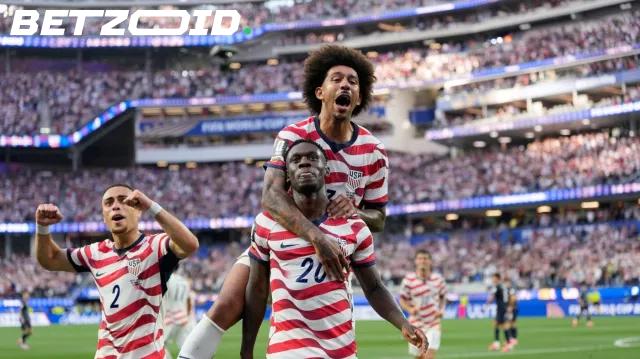
"America loves winners, and we also love big events." Matt Winkler, adviser to American University's sports analytics program, nailed it. The U.S. men's national team has handed the country both at once, and the response has been something the sport hasn't seen on this soil in three decades.
Two commanding group-stage wins over Paraguay and Australia. A gut-punch last-second loss to Turkey. And now a round-of-32 clash with Bosnia-Herzegovina on Wednesday night in Santa Clara. The Americans are still alive, the ratings are through the roof, and watch parties coast to coast are packed with fans who genuinely believe this team can go deep.
Thirty years of groundwork is paying off now
The 1994 World Cup created MLS. That much is documented history. What's different in 2026 is what three decades of infrastructure actually looks like: 30 MLS clubs across nearly every major market, a league valued above $23 billion, and marquee names like Lionel Messi, Thomas Müller, and Denis Bouanga playing their football in American stadiums week in, week out.
NBC locked down Premier League rights. Apple signed a deal to stream MLS. Youth soccer has quietly become the suburban default sport for a generation of kids who grew up with FIFA on their consoles and Champions League highlights in their feeds. "Everyone is one click away from this product," Winkler said. That's not an exaggeration — it's the entire story.
Ben Shields of MIT's Sloan School puts it plainly: the ecosystem is built. Even if the U.S. gets knocked out, fan engagement with the tournament will remain strong. That's a sentence that couldn't have been written honestly in 1994.
What a deep run would actually mean
If the USMNT advances past Bosnia and keeps going, the commercial and cultural momentum becomes self-reinforcing in a way no marketing campaign could manufacture. Soccer betting markets in the U.S. have grown sharply alongside the sport's viewership — a team that reaches the quarterfinals or beyond would likely produce the highest wagering volume on a men's soccer event in American history.
There's also the narrative layer: this roster is built substantially on immigrant talent, a pointed contrast to the current political climate that even the right-leaning Wall Street Journal acknowledged — arguing the team's diversity "shows again how bringing in foreign talent can be a win for the individuals and for the country."
- The USMNT beat Paraguay and Australia convincingly in the group stage before falling to Turkey at the death
- Wednesday's round-of-32 match against Bosnia-Herzegovina is in Santa Clara, California
- MLS is now valued at over $23 billion with 30 teams across North America
- President Trump is confirmed to attend the World Cup final on July 19 at MetLife Stadium in New Jersey
- The USWNT won the World Cup as recently as 2019, giving women's soccer a head start in building American fandom
Florida State sociologist Deana Rohlinger frames the broader moment well: "The audience for sports is so much bigger than the audience for politics in the U.S." In a fragmented, algorithmically divided media environment, a shared national sporting event is genuinely rare. The USMNT, for right now, is providing exactly that.
Wednesday night in Santa Clara, they get another chance to keep it going.