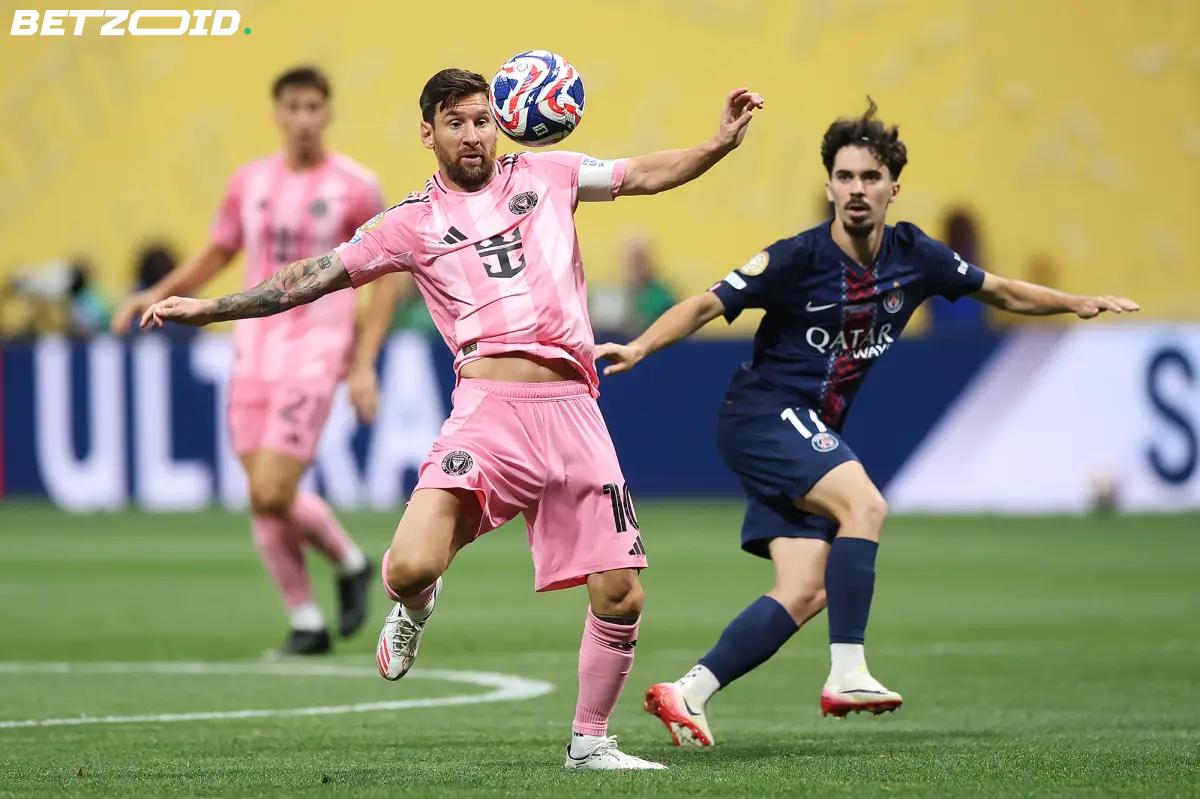
"By most any measure, Messi in Major League Soccer has been an overwhelming success." That's the verdict of soccer writer Paul Tenorio, who spent two years tracking Lionel Messi's American chapter for his new book, The Messi Effect. It's hard to argue with him.
Tenorio has a story that captures it better than any stat. He followed Inter Miami to Dallas for one of Messi's first road games in 2023. Outside the team hotel, barely a soul. Then word got out that Messi was inside. Within hours, the lobby was overwhelmed, every entrance blocked, every floor jammed. Fans rode the elevator stopping at each floor, hitting every button, hoping the doors would slide open and Messi would just be standing there.
That's not celebrity. That's something closer to a phenomenon.
The deal that changed MLS — and what it cost Messi to make it
When Cristiano Ronaldo headed to Al-Nassr in 2022 for a reported $230 million a year, the logic was simple: take the money, wind down in the desert, protect the brand. Messi could have done the same, or more. He chose Florida instead — a two-and-a-half year deal worth a reported $150 million, plus revenue-sharing arrangements with Apple TV and Adidas.
That decision alone reframed what MLS could be. Not a retirement league. Not a second act. Something with actual competitive ambition attached to it.
David Beckham and Inter Miami co-owner Jorge Mas spent three years persuading Messi to make the move. Beckham knew the territory — he'd done it himself when he left Real Madrid for LA Galaxy in 2007. As MLS commissioner Don Garber put it: "There's no Messi in MLS if David didn't come into our league in 2007." In October 2025, Messi signed an extension that also handed him equity in the club, the same arrangement Beckham received upon retirement.
The league has bent over backwards to make his life manageable. Inter Miami even holds his son's youth games at their facilities so Messi can attend without being mobbed. When you're trying to keep the world's most recognisable athlete happy, the details matter.
What MLS actually gets — and what it still doesn't have
Here's the paradox Tenorio identifies: Messi is the worst possible person to be MLS's public spokesman, and yet he's done more for the league's global profile than anyone who came before him.
He's introverted, almost allergic to media, and his aversion to press obligations "would eventually become one of the defining features of his time in MLS." He rarely speaks in public. Almost never in English. Compare that to Ronaldo's relentless self-promotion, or Beckham's comfort in the spotlight, and Messi looks like an odd choice to carry a sport.
And yet. Sold-out stadiums across the country. Global attention on a league that was previously invisible to international audiences. Apple TV subscriptions spiking. MLS in conversations it had no business being in before 2023.
"His popularity is still so overwhelming that he's been able to pull them into conversations that they otherwise wouldn't be in," says Tenorio, "and that's all down to his unique ability on the field."
The players who came before — Rooney, Gerrard, Ibrahimović, Thierry Henry, Kaká — were marquee names, but most arrived past their peak. The standard applied to Messi is categorically different. Eight Ballon d'Ors. Multiple Champions Leagues. Copa Americas. The 2022 World Cup. "You don't have the luxury of having a bad season or not winning a trophy somewhere," Tenorio notes. "You're being measured against Maradona and Pelé."
At 38, Messi is still playing. His contract runs through 2028, when he'll be 41.
The question MLS can't afford to ignore
"What's keeping those fans there once he's gone?" It's the question Tenorio keeps coming back to, and MLS doesn't have a clean answer yet.
The league's roster rules remain a structural problem. Signing one transcendent player doesn't fix the quality gap across the division. To build something that survives Messi, MLS needs stronger squads, not just stronger headliners — which means smarter roster spending, better media deals, and a clearer identity beyond importing aging stars.
With the 2026 World Cup arriving on home soil and Argentina preparing to defend their title, Messi's attention will inevitably drift back to the international stage. His final act isn't really about growing MLS anymore. It never fully was. The league just happened to benefit enormously from his presence while it lasted.
He's confirmed he has no interest in coaching. No appetite for punditry. When he stops playing, he stops. What MLS does next — whether this era becomes a launchpad or just a very expensive footnote — is entirely down to the decisions the league makes before he walks out the door.