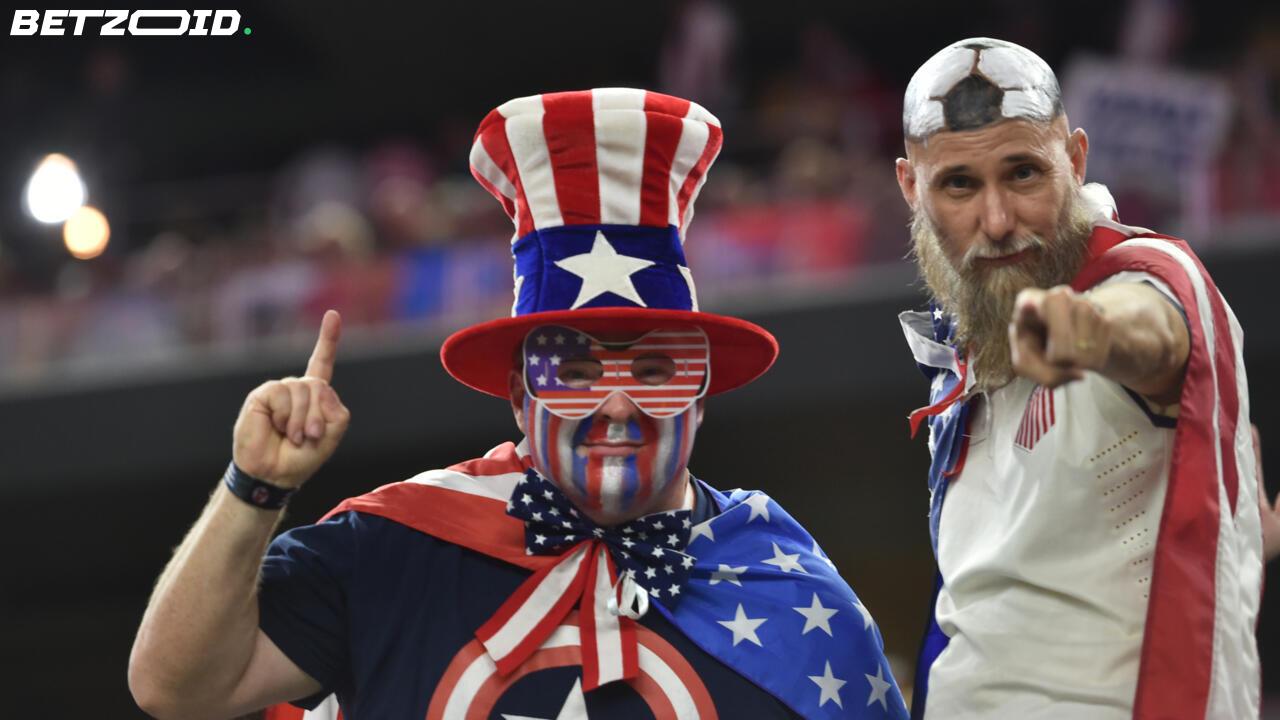
"You can go along the street here in Los Angeles, in the country, people know the players." That's Mia Hamm — a woman who helped win two World Cups for the US — saying she's still surprised by how far football has come in America. If it surprises her, the rest of the world should probably pay attention.
Soccer has overtaken baseball in American sporting interest since at least 2021. By last year, the gap was 15 percent to eight. That's not a slow drift — that's a demographic shift.
The money is already following the eyeballs
FIFA is projecting $11 billion in revenue from the 2026 World Cup. US broadcast rights for the tournament have nearly doubled since 2022, jumping from $450 million to $870 million. According to research firm Ampere, the US is now the single highest-paying market for World Cup rights on the planet. Not in its region. On the planet.
MLS drew 12.1 million attendees across the 2024 season — second only to the English Premier League globally, per Opta. Its clubs spent $336 million on transfers last year. Soccer-specific stadiums for New York City FC, Chicago Fire, and New England Revolution are on the way, adding to the $11 billion already committed to soccer infrastructure across North America.
Ampere also notes that soccer fans in the US skew wealthier and are more willing to pay for coverage than fans of other sports. For media rights sellers and broadcasters, that's an advertiser's dream demographic.
The roots go back to 1994
The current boom has a clear starting point. When the US hosted the 1994 World Cup — still the most attended in history at over 3.5 million spectators — FIFA required the country to establish a top professional league as part of the deal. MLS launched the following year. The 1996 Olympics and 1999 Women's World Cup, both played on US soil and both won by the American women's team, brought an entirely new generation into the sport.
"A lot of the parents that grew up playing now have kids, and you just see them sharing the love of the game with the next generation," Hamm said. That compounding effect is real, and it's measurable.
Lionel Messi's arrival at Inter Miami didn't create this momentum — it confirmed it. Nu Stadium sells out. LA sports bars fill up for 7am Premier League kickoffs. The infrastructure, the fandom, and the financial appetite are already there.
The 2026 World Cup isn't planting a seed. It's arriving just as the tree starts bearing fruit.