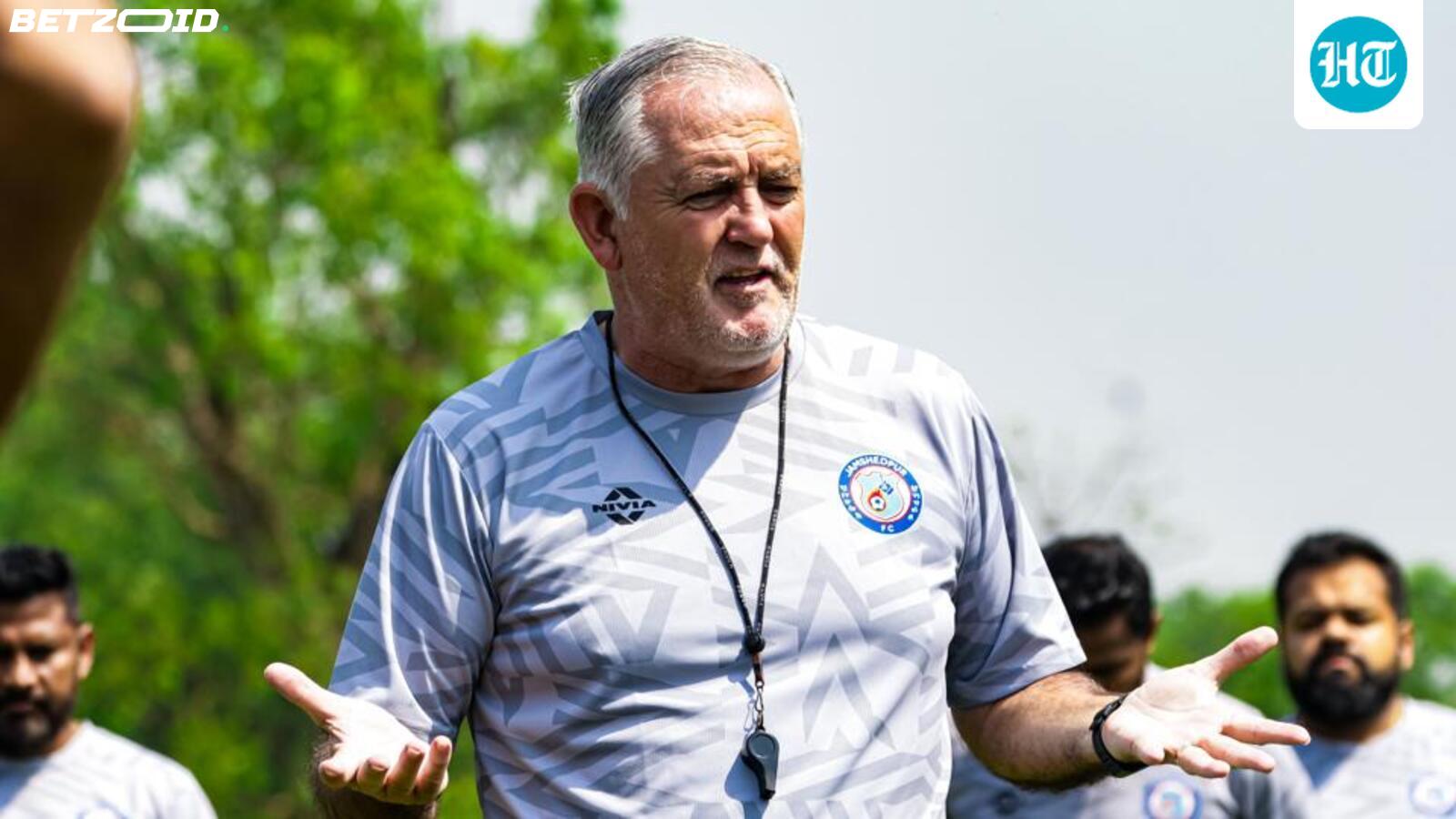
"I didn't see this coming." Owen Coyle was driving to London to watch a match when his phone rang. He missed the call. By the time he rang back, Jamshedpur FC had effectively ceased to exist as an ISL club.
The club's CEO Mukul Choudhari delivered the news. The Tata Group, Jamshedpur's owners, had decided the economics of competing in the ISL no longer made sense. The first team would be disbanded — a first in the ISL's eleven-year history. No warning. No runway. Just done.
For Coyle, 60, the timing was especially jarring. He'd signed a two-year deal just last January, fresh off the departure of Khalid Jamil, who left to manage the India national team. He had a project, a squad, and a clear identity. He'd kept Jamshedpur in title contention until the final day of the 2025-26 season — they finished fifth, a single win behind the top three, after beating champions East Bengal along the way.
A club that earned its reputation
Jamshedpur FC were never the flashiest side in the ISL. What they had was structure. Their own training pitch while others rented grounds and counted training hours. A coaching philosophy built around reclamation — turning surplus players into contributors. In 2021-22, Coyle's first stint, that approach delivered the ISL league shield and a place in Asian club competition.
This season's squad followed the same template: retain the core Jamil built, add smart imports in Mehdi Talal and Messi Bouli, trust the system. It nearly worked again. That it didn't result in a trophy doesn't diminish how competitive they were — five teams could have won the league heading into the final round.
The football fraternity noticed. Sunil Chhetri and Sandesh Jhingan have publicly asked Tata to reconsider. Bengaluru FC owner Parth Jindal posted his disappointment. Jamshedpur supporters organised a protest march. These aren't empty gestures — they reflect a club that had built genuine credibility.
What this means for the ISL
The disbandment doesn't happen in a vacuum. 2025 was already a fractured year for Indian football — the Supreme Court only approved the AIFF's new constitution in September, commercial partners had walked away, and a replacement bid drew a blank. Jamshedpur and Choudhari backed the league's efforts to get the season off the ground anyway. The league started on February 14 with 14 clubs. Now, at least symbolically, it's down one.
For anyone watching the ISL's long-term commercial picture, this isn't a reassuring signal. If a club with Tata's resources, its own infrastructure, and genuine on-pitch competitiveness can decide it's not worth it, the league's ownership model deserves serious scrutiny.
Coyle, characteristically, keeps the door open. "The one thing you never lose is hope," he said. The club says it will continue investing at grassroots level and is already playing in the Durand Cup.
But hope doesn't fill a first-team roster. And the ISL's credibility just took a hit it didn't need.