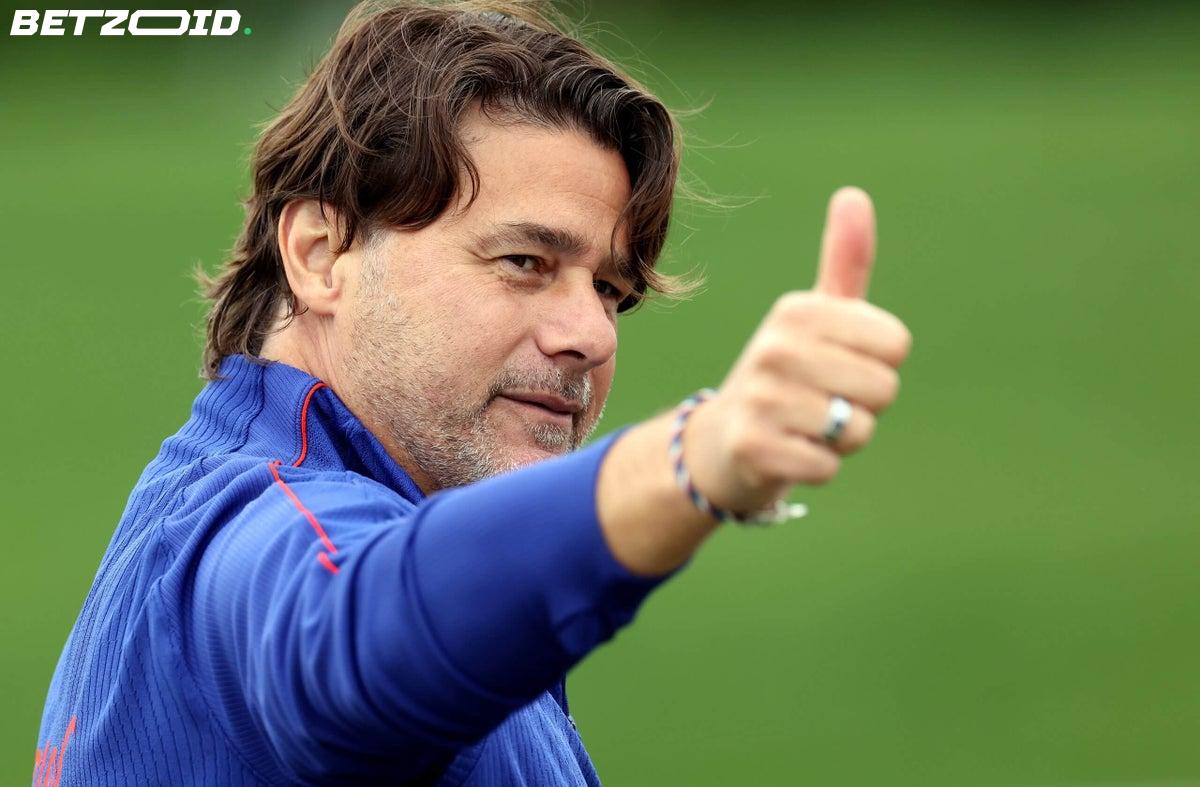
A 4-1 hammering by Belgium in the round of 16, on home soil, during a World Cup the United States co-hosted — and Mauricio Pochettino might still be the man in charge. U.S. Soccer CEO JT Batson confirmed Thursday that the federation is in "active discussions" with Pochettino and his staff about extending their deal.
Make of that what you will.
"We all share a belief that the best days of U.S. soccer are ahead of us," Batson said, which is the kind of statement that sounds reassuring until you remember it applies no matter who the coach is. The USMNT's best days being "ahead" has been the official position of U.S. Soccer for roughly three decades now.
What's actually keeping Pochettino in the picture
To be fair to Batson, there's substance behind the optimism. Pochettino's staff were reportedly involved in the recent hiring of Steve Cherundolo as U-23 head coach, which suggests genuine buy-in on long-term architecture rather than just collecting a paycheck through the World Cup. That kind of cross-department involvement is exactly what a federation trying to build something real should want from a senior coach.
Arsene Wenger, now FIFA's Chief of Global Football Development, was also on hand Thursday and put the American situation in sobering perspective. Spain and Argentina — the 2026 finalists — have football embedded across generations. The U.S. doesn't. Wenger pointed out that France won its first major trophy in 1984, eleven years after establishing its first national academy in 1973. Batson didn't sugarcoat it: "This will take time and this will be hard."
That timeline matters for anyone trying to assess what Pochettino's continued tenure is actually worth. If the project genuinely spans a decade or more, the round of 16 loss stings but doesn't necessarily disqualify him. If U.S. Soccer is quietly expecting a 2030 contender, the arithmetic looks different.
The Balogun situation still hanging over everything
Then there's the Folarin Balogun subplot, which refuses to go away. Balogun was red-carded against Bosnia and Herzegovina, suspended under FIFA's Article 10.5, and then — following a phone call from Donald Trump to Gianni Infantino — had that suspension reversed so he could play Belgium. He played. The U.S. lost 4-1.
Asked whether Trump's intervention had been a mistake, Batson offered precisely nothing: "The president is able to do what the president wants to do." That's not an answer. It's a deflection dressed up as a civics lesson.
Whether the Balogun reinstatement changed the Belgium result is unknowable. What it did was hand critics a permanent escape hatch — the U.S. used political pressure to override a sporting ruling and still got beaten by three goals. That's the version of events that will follow this squad for years.
Batson did not confirm whether other coaching candidates have been approached, nor when a decision will come. Which means the uncertainty continues — exactly the kind of situation that makes it hard to set USMNT futures with any confidence heading toward 2030 qualification.