Spain are world champions again. Luis de la Fuente's side lifted the 2026 World Cup trophy — their second — completing a run that started with back-to-back Euros in 2008 and 2012, a World Cup in 2010, Euro glory again in 2024, and now this. Two years after winning Europe, they've won the world. That's not a dynasty anymore. That's a standard.
The question isn't whether Spain are elite. They've answered that for nearly 20 years. The real question is what the teams chasing them keep getting wrong — and three programs in particular have the most to learn.
The USMNT problem isn't talent. It's identity.
Let's be honest about the gap. Spain have two World Cups and three Euros since 2008. The USMNT have won two knockout round games in program history — total. This isn't a talent comparison. It's a structural one.
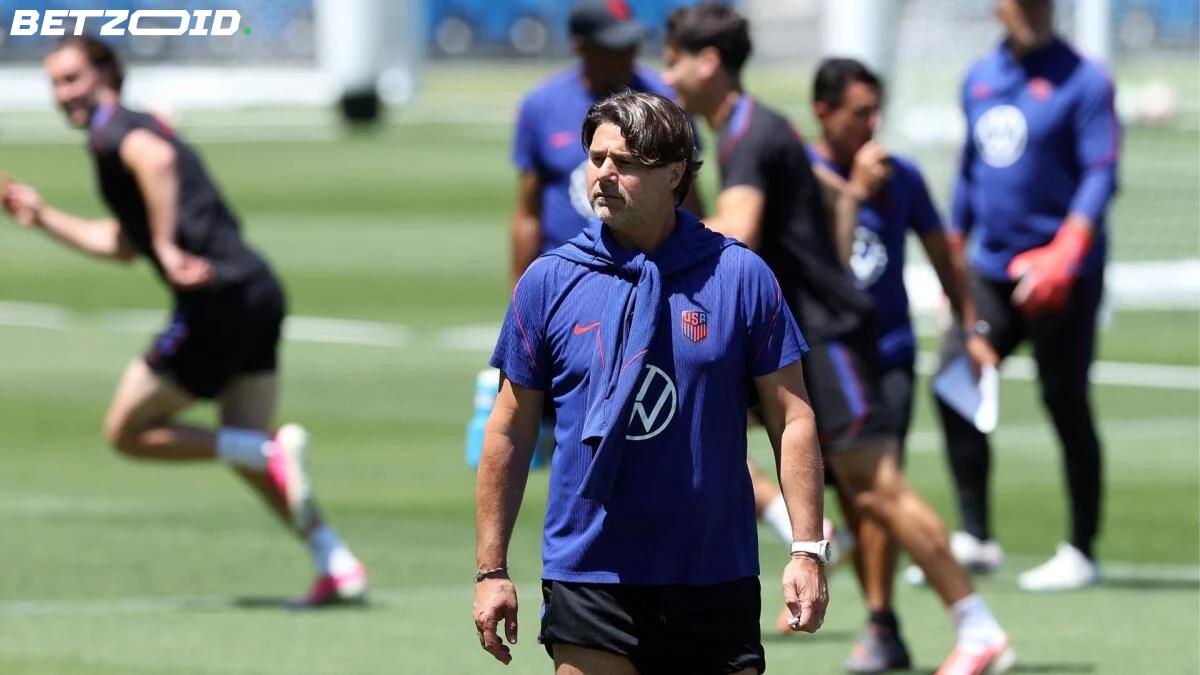
Spain under De la Fuente didn't pick the flashiest names. He picked players who fit a specific system, even when that meant leaving out Champions League regulars. The USMNT have spent years hyping individuals — Pulisic, McKennie — without building an identity around them. Pochettino has pieces. What De la Fuente proved is that pieces alone don't win anything. A philosophy does.
There was a moment early in the tournament — the 4-1 win over Paraguay — where this USMNT looked like something different. Dominant possession, clinical finishing, a team that imposed its will. It lasted 90 minutes and never really came back. That's the problem in one fixture.
The deeper issue is structural. Spain's success is the direct payoff of nearly two decades of academy investment. Barcelona's La Masia produced multiple players on that World Cup-winning squad. The U.S. has nothing comparable — not because the talent isn't there, but because the system isn't built to find it. Soccer is still a pay-to-play hobby in large parts of the country: twice-weekly training, long off-seasons, and a model that prices out the kids who might actually become elite. Until that changes, any comparison to Spain's pipeline is cosmetic.
England and Brazil made the same mistake from opposite directions
England's lesson is simpler and more painful. De la Fuente's greatest discipline wasn't who he picked — it was who he didn't. Unai Simon is Spain's first-choice goalkeeper despite David Raya being one of the best stoppers in the Premier League. Simon won the Golden Glove at this World Cup. Not Raya. Because Simon fits the system, and the system comes first.
Thomas Tuchel took a similar approach with England — willing to leave out Cole Palmer and Phil Foden in pursuit of collective structure. The principle was right. The execution, based on results, wasn't enough. But at least Tuchel was asking the right question: does this player make the team better, or just the squad sheet more impressive?
Brazil never got there. Carlo Ancelotti included Neymar despite his recent form and left out Joao Pedro, who had been one of Chelsea's standout performers all season and had done everything asked of him at international level. It was a decision built on reputation, not form, not tactical fit. Ancelotti manages superstars for a living — that instinct to protect the big name is understandable. It also cost Brazil.
De la Fuente made Aymeric Laporte a starter over Dean Huijsen, who wasn't even in the squad. He picked Marc Cucurella over Alejandro Grimaldo. Alex Baena over Ferran Torres. None of those calls were obviously popular at the time. All of them were right.
Spain didn't win this World Cup by assembling the best XI on paper. They won it by building the right XI — players with defined roles, genuine trust in the system, and a manager who didn't flinch when the selection got uncomfortable. That's the blueprint. Most programs know it exists. Very few have the patience or the courage to actually follow it.