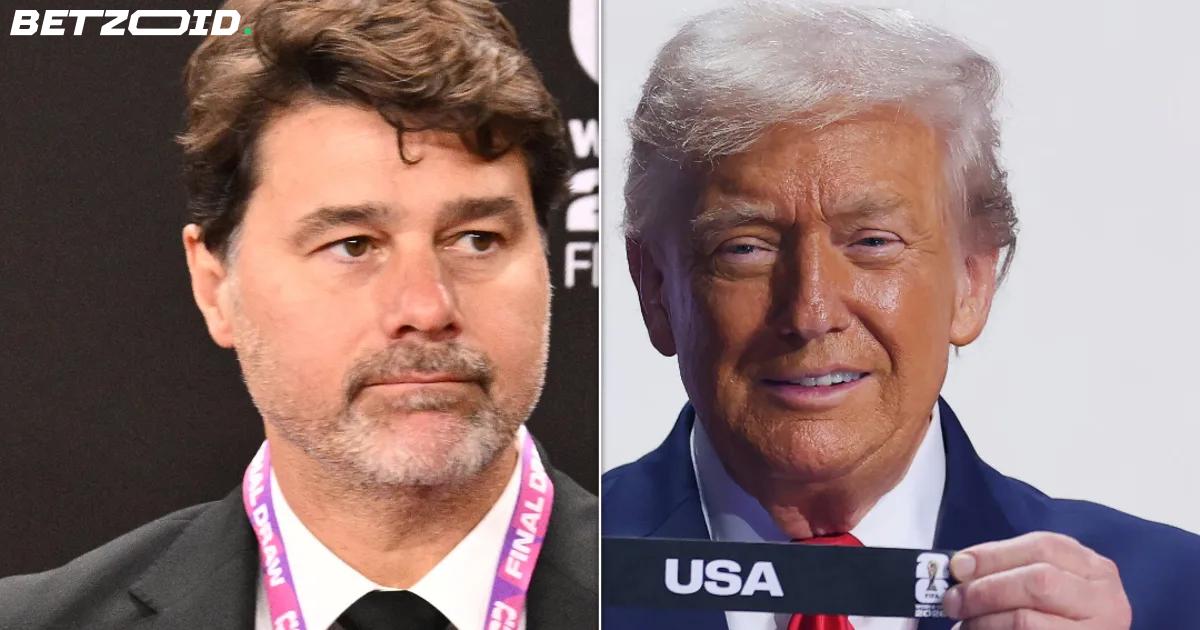
"Do you think, coach, that we can win?" That's what Donald Trump asked Mauricio Pochettino ahead of the World Cup draw in Washington, D.C. in December. Pochettino's answer, at least publicly, was a shrug and a challenge: "Why not?"
It's a charming response. It's also the kind of thing coaches say when they need to keep a fanbase dreaming without technically lying.
The Morocco comparison only goes so far
Pochettino leaned on precedent to make his case, pointing to Morocco reaching the semi-finals in Qatar and South Korea doing the same in 2002. Both are legitimate examples of tournament football defying the pre-tournament odds. But both those sides also had something the U.S. has historically lacked — a settled tactical identity and a generation of players who had grown up playing the same system together. Morocco's run wasn't an accident. It was built.
The U.S. is ranked 16th in the world, which is respectable. They've reached the round of 16 in 2010, 2014, and 2022, which shows consistency at a certain level. But there's a gap between "reliable last-16 side" and "World Cup winner," and Pochettino has had roughly a year to close it.
Home advantage will matter. Playing in front of packed American crowds, with familiar surfaces and no travel fatigue, is a genuine edge — one that has historically moved tournament lines for host nations. Argentina in 1978, France in 1998, Germany in 2006 all benefited from it. The U.S. will too, at least on paper.
Still, "Why not?" is a long way from a plan. Pochettino was speaking on Gary Neville's podcast, not a pre-match press conference — so the optimism is forgivable. But if the U.S. is going to do something genuinely extraordinary in 2026, the belief needs to be followed by a lot more than a rhetorical question.
Trump got the answer he wanted. Whether the football backs it up is a different conversation entirely.