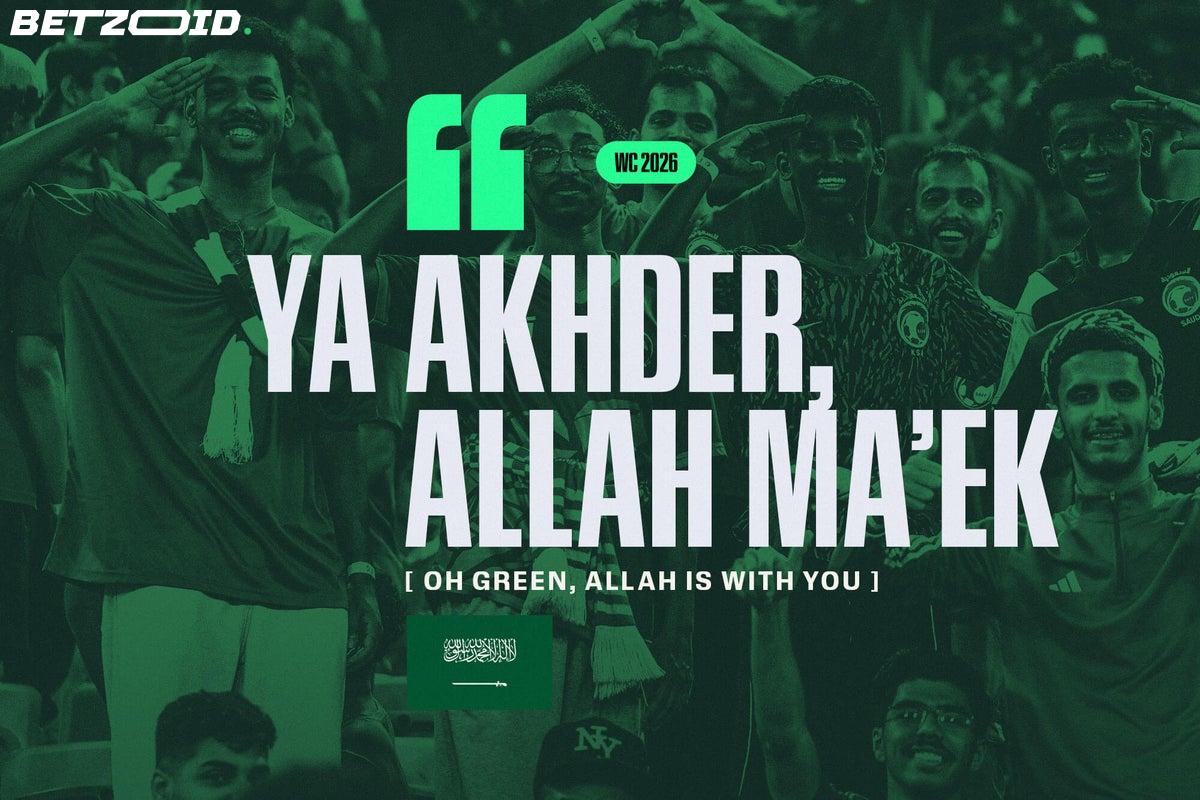
"For Saudis, football is emotional fuel," says Riyadh supporter Galaway Aladdani. He was in the stadium in Qatar when Saudi Arabia beat Argentina. He watched the shock ripple across the planet. And he still doesn't expect his team to reach the knockout rounds this summer.
That tension — deep love for the game, measured expectations of the national side — defines Saudi Arabia's relationship with the Green Falcons ahead of the 2026 World Cup. It's not apathy. It's something more complicated.
Club loyalty is eating the national team alive
The Saudi Pro League has quietly reshaped the country's football identity. Ronaldo at Al Nassr, Benzema at Al Ittihad, Neymar — albeit briefly — at Al Hilal. The influx of global names has given Saudi fans something the national team rarely delivers: weekly, elite-level football worth watching.
The consequence is predictable. Kids wear club shirts, not the green of the Falcons. Rivalries between Al Hilal and Al Ittihad run hotter than any international fixture. University lecturer Manar Al-Ghamdi supports Al Ittihad with her father's lifelong devotion, while her husband bleeds Al Hilal. When those two clubs meet, diplomacy ends at the front door.
When Saudi Arabia play, though, that tribalism gets shelved. Al-Ghamdi describes the scene after the Argentina win in 2022 — public squares packed, drums beating, green flags everywhere. The government declared a national holiday. Her grandmother watched. Every generation, in that moment, was watching.
The problem is that moments like that one are rare. Saudi Arabia didn't get out of their group in Qatar. They've only reached the knockout stage once in six World Cups — back in 1994, when the generation Aladdani and 62-year-old Arafan Al-Ghamdi still reference as the gold standard.
The coaching change and what it signals
Fifty-nine days before their Group H opener against Uruguay at Hard Rock Stadium in Miami, Saudi Arabia sacked Hervé Renard. Greek manager Georgios Donis — experienced in the Saudi Pro League and with AEK Athens — has stepped in.
Late coaching changes this close to a tournament are rarely a sign of confidence. Saudi Arabia's World Cup odds reflect a team in transition, not one building momentum. Uruguay, with their defensive structure and South American tournament pedigree, will start that June 15 fixture as clear favourites.
Manar Al-Ghamdi, for her part, is cautiously optimistic about Donis. "We do not ask to win the World Cup," she says. "We only ask for spirit, commitment and performances that make the people proud." That's a fan recalibrating expectations in real time.
Aladdani's diagnosis of the structural problem is sharp: too many foreign players crowding out local talent. Saudi clubs can field more than eight overseas players. The result is a national team that cannot find enough Saudi players with consistent top-level minutes. Morocco, he points out, has a weaker domestic league financially — but their players compete at elite European clubs and their national team is substantially stronger for it. That gap won't close by 2026.
- Saudi Arabia's World Cup record: six appearances, one knockout stage reached (1994 Round of 16)
- Their 2022 win over Argentina remains just their fourth World Cup victory in history
- Head coach changed with under 60 days until their opener vs Uruguay
- Group H opponents: Uruguay, plus others — Saudi Arabia open June 15 in Miami
The 2034 World Cup on home soil is the real horizon for Saudi football. Between now and then, the infrastructure investment — sports medicine, facilities, stadium cities — is genuine, whatever else is being said about the kingdom's motivations. But infrastructure doesn't win you group games in North America this summer.
"We do not ask for miracles," says Arafan Al-Ghamdi from Jeddah. "We only want a good level of performance, because we know the team is not in its best condition."
That's the Saudi fan's position in June 2026 — proud, present, and under no illusions.