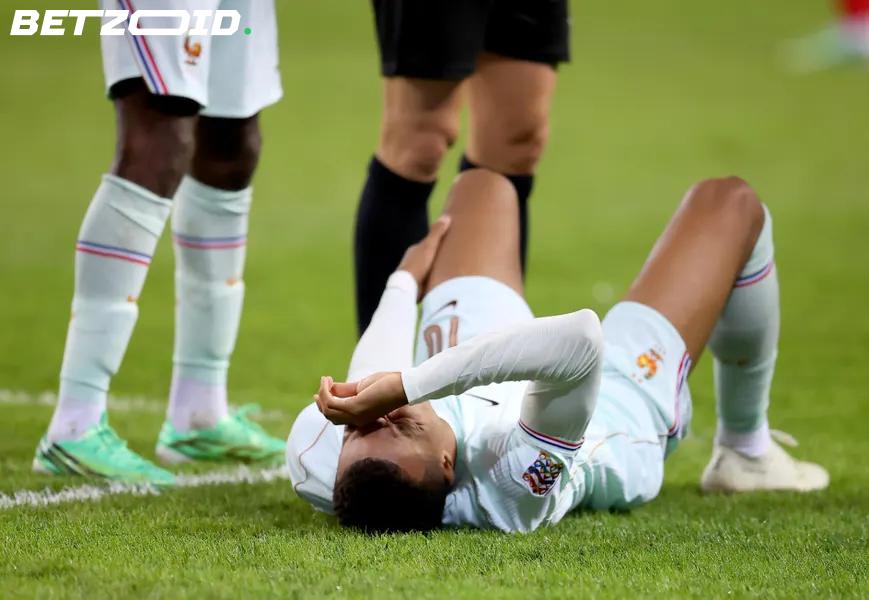
"International matches worry me," José Mourinho said ahead of September's break. "I'm less concerned about players who go with their national teams to play than those who are selected but don't play — those are the ones I worry about the most." He wasn't wrong, and Real Madrid proved it almost immediately.
Mbappé picked up a scare with France. Ibrahima Konaté got injured in training before playing a single minute under his new national coach. Valverde nursed a knock from the Madrid derby that stopped him flying out at all. Three first-team players. One international window. Zero input from the club's medical staff on any of it.
A €3.45 billion structural problem
This isn't just about September, or Real Madrid, or bad luck. Insurance broker Howden's latest Men's European Football Injury Index puts the collective injury cost for European clubs at €3.45 billion over five years. PSG top the list. Real Madrid are second. Barcelona third.
That ranking isn't a fluke — it reflects what happens when you build a squad of the highest-paid players in the world and then periodically hand them over to national setups with different protocols, different workloads, and no financial stake in whether they come back fit.
The financial exposure for a club with an injured star has several layers:
- Wages: Full salary continues regardless. An elite earner sidelined for six weeks is a fixed cost with zero output attached.
- Replacement costs: January emergency cover is expensive and rarely efficient. The market knows when you're desperate.
- Sporting losses: Dropped points mean league position. League position means Champions League qualification — or not. That's worth hundreds of millions in broadcast and prize money swings.
- FIFA reimbursement: The Club Protection Program exists but its caps rarely come close to covering the real commercial value of a top-tier absence. The gap between what FIFA pays and what the injury actually costs is where the exposure lives.
Davies and Oulmers: when it goes seriously wrong
Real Madrid's recent injury run is inconvenient. Bayern Munich's Alphonso Davies situation was something else. The Canadian left-back tore his ACL just 12 minutes into a CONCACAF Nations League third-place match in March 2025 — a dead-rubber tie — having already played the full 90 minutes of a semi-final loss three days earlier. Six months on the sidelines followed. His agent publicly accused Canada coach Jesse Marsch of fielding a player who wasn't fit. Bayern's director of sport Max Eberl put it bluntly: "During international breaks there's always the risk that players will return injured. This time it's hit us particularly hard."
The legal groundwork for how clubs fight back was laid even earlier. In 2004, Moroccan midfielder Abdelmajid Oulmers suffered a serious injury on international duty with Royal Charleroi having explicitly told FIFA beforehand he was carrying a knock. Charleroi sued. The resulting legal pressure became the direct catalyst for FIFA creating the Club Protection Program in 2012 — the same scheme that now routinely falls short of covering what it's supposed to protect against.
The programme was built because clubs demanded accountability. Twenty years later, the biggest clubs in Europe are still absorbing costs that FIFA's safety net doesn't catch. The system exists. It just doesn't work well enough — and Real Madrid's injury bill is one of the clearest proofs of that.