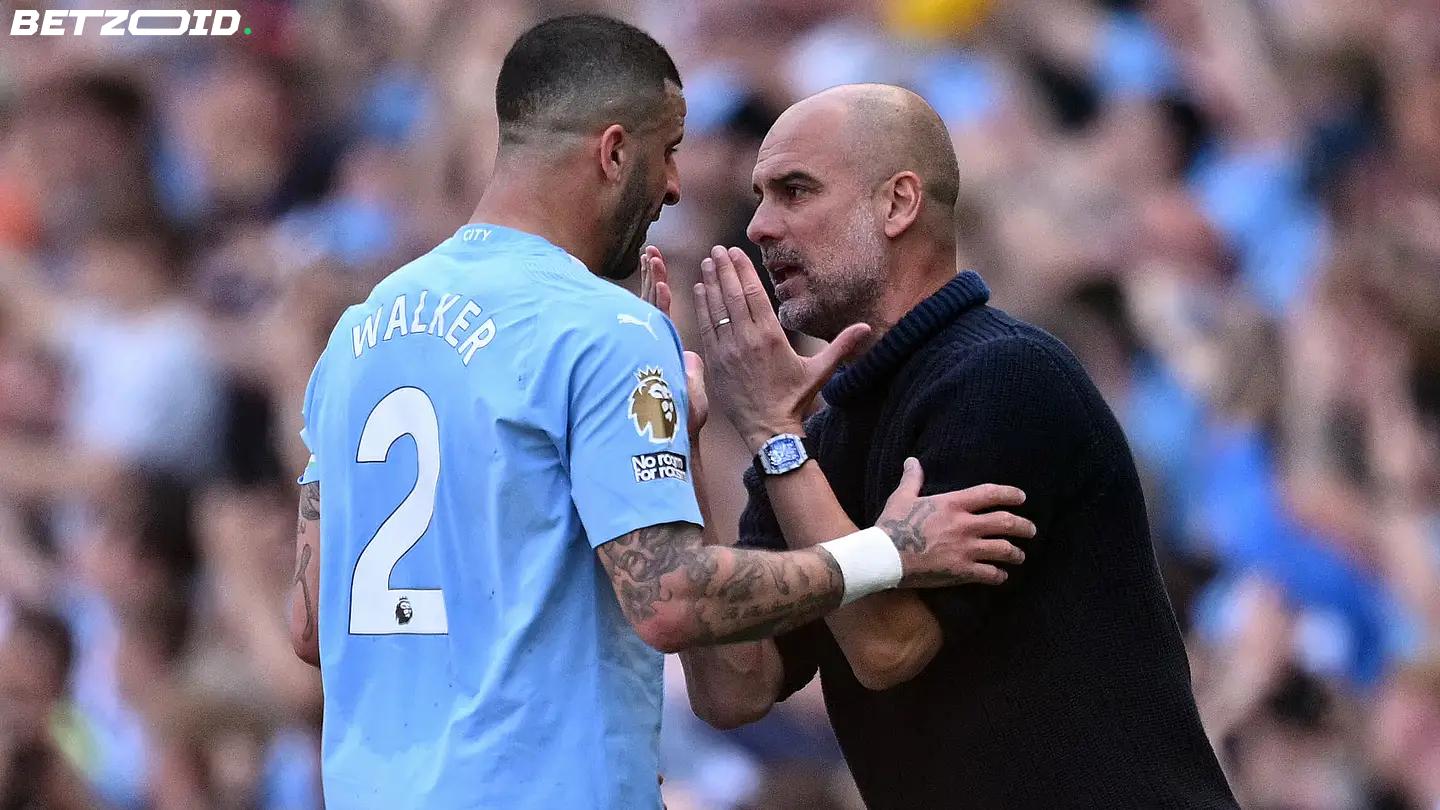
"You keep saying my name in every f---ing thing. Every f---ing meeting, it's my name." That's Kyle Walker, squaring up to Pep Guardiola after a 2-0 loss at Anfield, and it's the moment that defines Amazon Prime Video's new four-part docuseries A Beautiful Obsession better than anything else could.
The series covers Guardiola's final two seasons at Manchester City — a period that began with the club making English football history by winning four consecutive league titles and ended with a crisis that exposed just how thin the margins were between dynasty and collapse. City went one win in 13 matches by the end of 2024. The cracks weren't just tactical. They were personal.
Walker's flashpoint and what followed
The Walker confrontation came after the December 1 defeat to Liverpool — a result that put Arne Slot's side in control of a Premier League title race they never really let go of. Guardiola pointed to Rúben Dias and Walker as culpable for Liverpool's second goal. Walker didn't take it quietly.
"You didn't want me to be a captain," Walker fired back. "I've reacted to someone else, I lost the ball, you somehow bring my name into it."
Guardiola's response was disarming. Visibly emotional, he told Walker: "If I am a problem, tell me. That is not going to change the love I have for you, not one second." It was the kind of moment that's impossible to script — a manager unravelling in real time, trying to hold together a squad that was already coming apart.
Walker started three more games after that exchange. He was on loan at AC Milan before January ended, and permanently gone to Burnley that summer. Months later, Guardiola told the remaining squad: "You cannot behave as a captain the way he has done it. You cannot [do that] in the toughest moments in our lives." Still, he admitted he was "incredibly sad" Walker had left. Both things can be true.
The confession that changed the dressing room
Ten days after the Liverpool game, following a Champions League loss to Juventus on December 11, Guardiola stood in front of his players and called what he was about to say a "confession."
"I am f---ing divorced from the most beautiful woman in your planet, my wife, my ex-wife. I love her unbelievably but we lost the passion."
He'd been married to Cristina Serra for a decade — they'd first met in 1989. Longtime aide Manuel Estiarte had already quietly told the squad what was going on, explaining they were "seeing a human being" rather than the controlled, precise manager they were used to. Players had noticed. They were, according to Estiarte, worried.
The speech turned into something else entirely — a lesson in motivation framed around his own loss. "How do you play football? Because you play, or for something inside? Do it with passion. I don't want good players, I want players with passion." Whether it landed or not, the season's results suggest it wasn't enough to reverse a slide that had gone too deep.
De Bruyne's exit
Kevin De Bruyne was told his contract wouldn't be renewed. He cried on camera.
"My kids don't want to go," he said. "It's been really stressful days, and I'm not making decisions any more based on myself." A decade in Manchester, and the end of it came down to a conversation with club executives. City CEO Ferran Soriano noted De Bruyne "understood the message but was sad about it" — which is a remarkably clinical way to describe one of the best midfielders the Premier League has ever seen being shown the door.
Guardiola: "It kills me."
Soriano's version was colder. And that tension — between the emotional weight Guardiola placed on these relationships and the institutional logic that ultimately ended them — is what the documentary seems to be really about. City's era didn't just end because results dipped. It ended because everything that held it together started giving way at once.