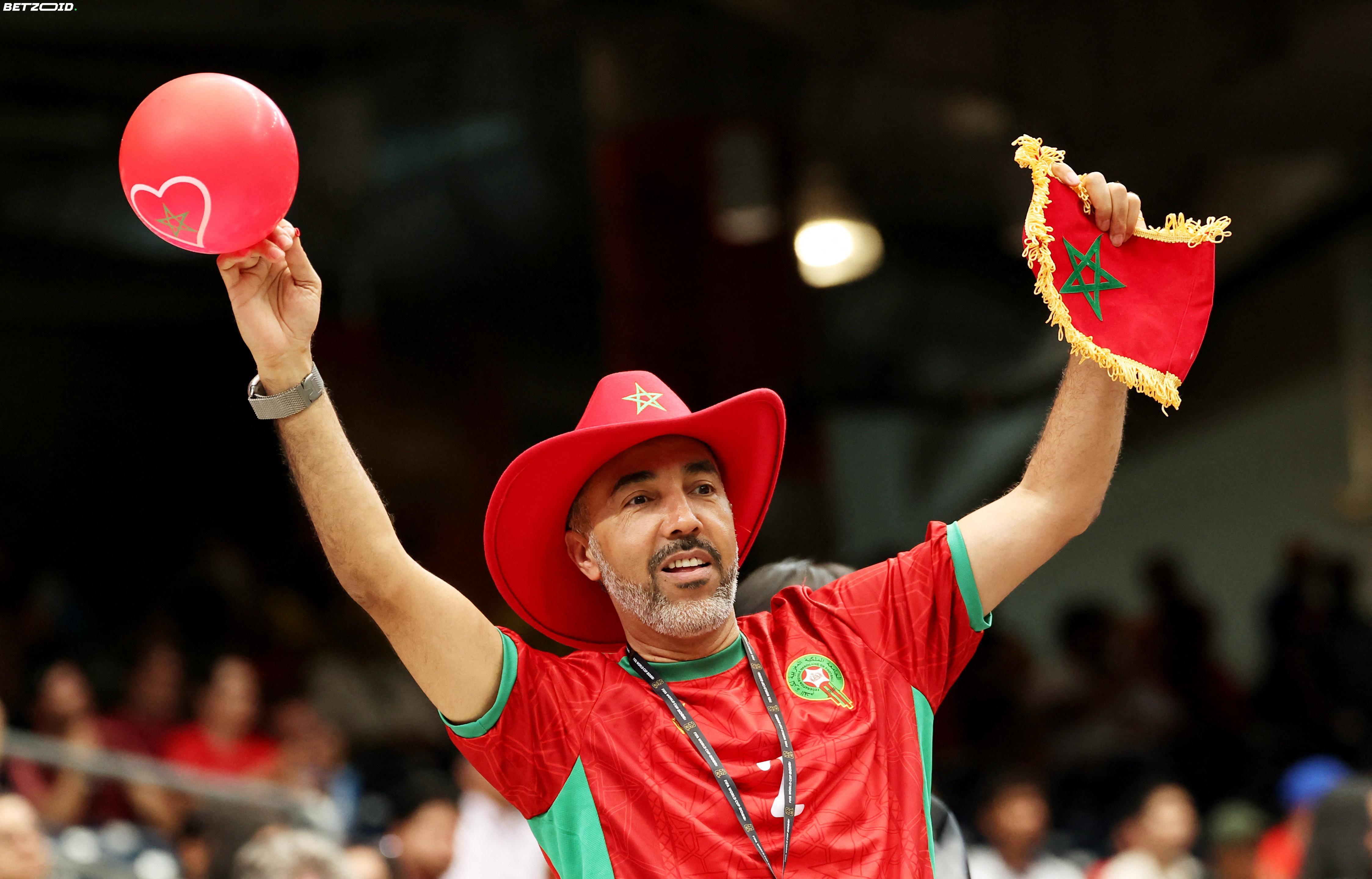
That loud, piercing hiss you keep hearing during Morocco's 2026 World Cup games isn't a technical glitch. It's deliberate, coordinated, and it works.
Morocco's supporters have developed a reputation as one of the most disruptive fanbases in international football — and whistling is their signature move. Not as a cheer. As a weapon. When an opponent has the ball, when a referee makes a call they disagree with, when the opposing coach wanders too close to the touchline — the hissing starts. It's the Moroccan equivalent of booing, and at high volume, it genuinely affects communication on the pitch. The kind of crowd interference that betting markets often underestimate when calculating home advantage.
The Viking clap that starts in silence
Whistling isn't the only trick in the arsenal. Morocco fans also deploy the "Viking clap" — a routine borrowed from Icelandic football culture but made entirely their own. It begins in complete silence. Then, on cue, the whole section starts clapping with arms outstretched, chanting "SIR!" — meaning "go" in Darija, the Moroccan Arabic dialect. The clap builds. Gets faster. Gets louder. By the time it hits full pace, it's disorienting for anyone trying to hold a defensive line or organize a set piece.
These aren't spontaneous moments of passion. They're organized, practiced, and timed. Morocco's fans treat the atmosphere like a tactical element — and the team has benefited from it.
Morocco's rise makes the noise matter more
Context is everything here. Four years ago, Morocco became the first African nation to reach a World Cup semifinal. They've since broken the world record for the longest winning streak in international football, won the 2025 FIFA Arab Cup, and claimed the 2025 Africa Cup of Nations. This is not a team that stumbled into relevance.
Now at the 2026 World Cup — their seventh all-time appearance — Morocco has drawn France in the quarterfinals. The same France that knocked them out in 2022. The fans know. Expect the whistling to reach a different level entirely.