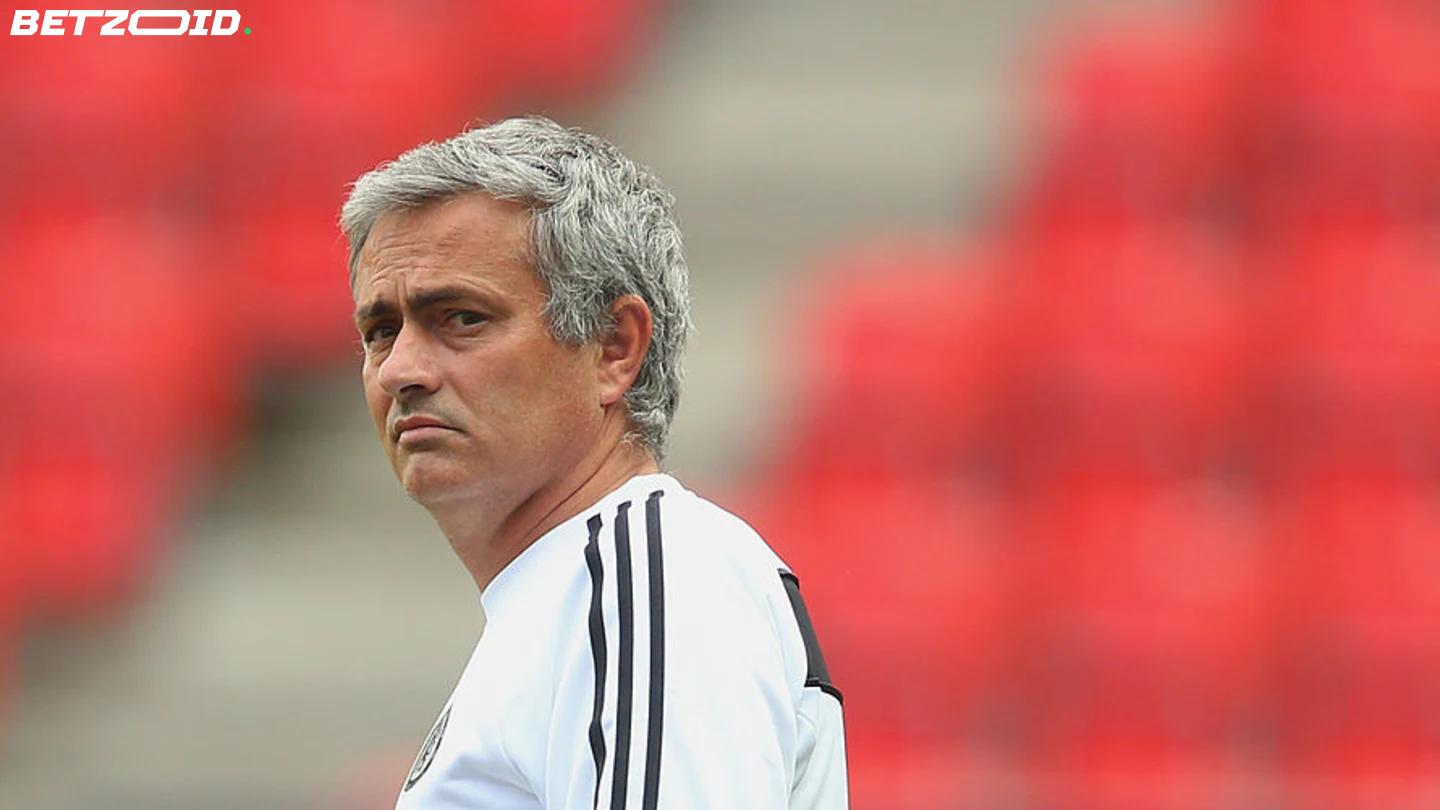
José Mourinho is heading back to Real Madrid. Advanced talks are underway, Florentino Pérez is interested, and the 63-year-old looks set to walk away from Benfica the moment the Portuguese season wraps up. The question isn't whether the reunion is happening — it's what version of Mourinho Madrid are actually getting.
Because the 12 years since he left the Bernabéu have been complicated. One league title. A Conference League. A Europa League final lost on penalties. A nose grabbed in Istanbul. A laptop placed in front of TV cameras as evidence. There has been genuine achievement scattered between the chaos, but the trajectory is harder to ignore the longer it runs.
Here's what the record actually looks like.
The Chelsea Years: One Title, Then Implosion
The return to the club that "loved" him started cautiously. Mourinho called Chelsea a "little horse" in the 2013-14 title race — they finished third. He did, however, orchestrate Steven Gerrard's infamous slip to sink Liverpool's title hopes in April, which was very much on brand.
Year two was his best since Madrid. Diego Costa and Eden Hazard drove a title-winning Chelsea side through the 2014-15 season with something approaching swagger. It remains the last league title of Mourinho's career. He signed a contract extension that summer. By December 2015, he was out — nine losses in 16 games, a falling out with his medical staff, and a dressing room that had clearly stopped listening. Win rate: 58.8%.
Manchester United came next. The Europa League arrived in 2016-17, Mourinho held up three fingers at the trophy ceremony to remind everyone of his haul, and most people cringed. The following season United finished second — genuinely his best league performance of the post-Madrid era — but Sevilla knocked them out of the Champions League round of 16, and his post-match "football heritage" rant became one of those moments that define a manager's decline. He was gone by December 2018, with United 19 points off the pace. Win rate: 58.3%.
Tottenham was where the meme era truly set in. Amazon documented the 2019-20 season for All or Nothing, and what it mostly captured was a man increasingly at odds with the players and the moment. Spurs finished sixth. He was sacked days before a League Cup final his team then lost. No trophies. Win rate: 51.2%.
Roma, Fenerbahçe, Benfica: The Third Act
Roma represented something different — a return to Italy, a genuinely historic club, and a first trophy in 11 years delivered via the inaugural Conference League in 2022. That night, Mourinho became the only manager to win all three major UEFA competitions. He had it commemorated with a tattoo, which tells you everything about how he processed the achievement.
A year later, he reached the Europa League final and lost to Sevilla on penalties — his first defeat in a major European final. He then confronted referee Anthony Taylor in a car park. By January 2024, Roma were closer to the relegation zone than the top of Serie A, and he was out. Win rate: 49.3%.
Fenerbahçe was, by most measures, the most turbulent season of his career. He was booked 20 minutes into his debut. He grabbed Galatasaray manager Okan Buruk by the nose in a derby. He brought a laptop to a press conference to argue a refereeing call. His side finished 11 points behind champions Galatasaray, failed to beat either Gala or Besiktas across all meetings, and he was eventually dismissed after a Champions League playoff defeat — to Benfica. Win rate: 59.7%, which illustrates how misleading win rates can be.
He then joined Benfica. Yes, the same club that knocked him out. In his one season there, he guided them to what has been largely an unbeaten domestic campaign — yet they still sit third in the Primeira Liga, still needing results to go their way on the final day to qualify for the Champions League. The high point was a 4-2 win over Real Madrid in January. The low point was his response to Vinícius Jr's racism allegations against Benfica's Gianluca Prestianni, in which he said: "Every stadium that Vinicius plays, something happens. Always" — a comment that drew significant criticism and one UEFA ultimately sidestepped when they banned Prestianni for homophobic conduct rather than racism.
What Real Madrid Are Actually Buying
The statistical summary across all clubs since 2013 tells one story: win rates in the high 50s at the biggest clubs, hovering around 49-51% at the others. One league title — Chelsea, 2015. One European trophy that genuinely mattered historically — Roma's Conference League. And a steadily rising count of press conference blow-ups, referee confrontations, and dressing room ruptures.
Madrid's calculation appears to be that what they need right now isn't a builder or a philosopher. They need someone who will grab a fractured locker room and impose order on it through sheer force of will. Mourinho, whatever else has happened, has never lost that instinct.
Whether that's enough to succeed at the Bernabéu a second time is a separate question. The odds on a Mourinho-led Real Madrid winning La Liga next season will depend on which version of the man actually shows up — the one who won 100 points in 2011-12, or the one who finished third in Portugal with Benfica on the final day of the season.