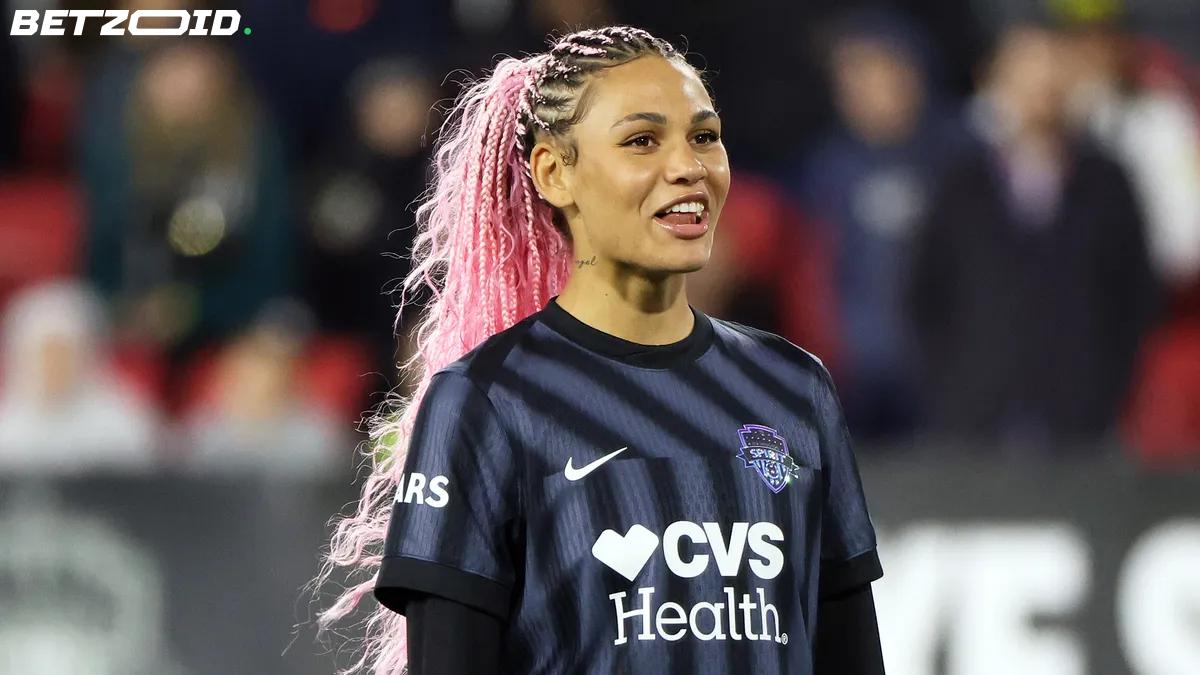
Trinity Rodman just became the highest-paid female footballer in the world. The USWNT star signed a deal with the Washington Spirit worth over $1 million per year through 2028. But getting there wasn't easy.
After sleeping until 1:30 p.m. on Wednesday, Rodman finally got some rest after a wild offseason. "I was supposed to hang out with my family, and they knew not to call me," she said at NWSL media day. The 22-year-old had just finished the biggest contract dispute in women's sports history.
Rodman was a free agent when her Spirit contract expired at the end of 2025. She agreed to a multi-million dollar deal with Washington in December. But NWSL commissioner Jessica Berman blocked it, saying it "violated the spirit of the league." The Players Association wasn't happy and filed a grievance.
Meanwhile, European clubs came calling. Stars like Alyssa Thompson and Naomi Girma had already left for million-dollar transfers overseas. The NWSL needed to act fast to keep its best players.
The Controversial HIP Rule Changes Everything
The league's solution was the High Impact Player rule. It lets teams exceed the salary cap by up to $1 million for elite players. But you need to meet strict criteria like being in the Ballon d'Or top 30 or playing heavy minutes for the USWNT.
The rule sparked immediate controversy. USWNT coach Emma Hayes said nobody told her about it. The Players Association even filed a lawsuit, calling for it to be scrapped. They wanted a simple salary cap increase instead.
But here's the thing – most players actually like it. "That's changing the game," said Mallory Swanson, Rodman's national team teammate. Gisele Thompson went even further: "Trinity deserves to be paid more. This shouldn't even be a problem."
For bettors watching the NWSL, this changes the competitive landscape. The Spirit keeping Rodman makes them serious title contenders. Teams that can afford HIP-designated players will have a clear advantage in the odds.
What This Means For Women's Soccer
Players see this as progress they've fought for. Ivonne Chacón, who came from Spain's Liga F, thinks it'll attract top talent worldwide. "It makes the top players want to come to this league," she said in Spanish.
Mia Fishel knows both sides. She rejected the NWSL draft in 2021 to play in Mexico, then spent two years at Chelsea. Now she's back with Seattle Reign FC. She thinks the HIP rule is how the NWSL competes with Europe's big-spending leagues.
"We all want what we deserve," Fishel said. The Women's Super League has no salary cap at all, meaning unlimited spending. The NWSL needed something to level the playing field.
Rodman couldn't imagine leaving DC anyway. "I can't imagine a different feeling than what you get in DC," she told USA TODAY Sports. The connection with fans matters as much as the money.
The HIP rule isn't perfect. But it's a start. "I want it to hold more than that," Rodman said about her deal's impact. She hopes it opens doors for players coming after her.
For now, the Spirit have their superstar locked in. And women's soccer has taken another step toward paying players what they're actually worth. The legal battles might continue, but the momentum is clear – things are changing fast.