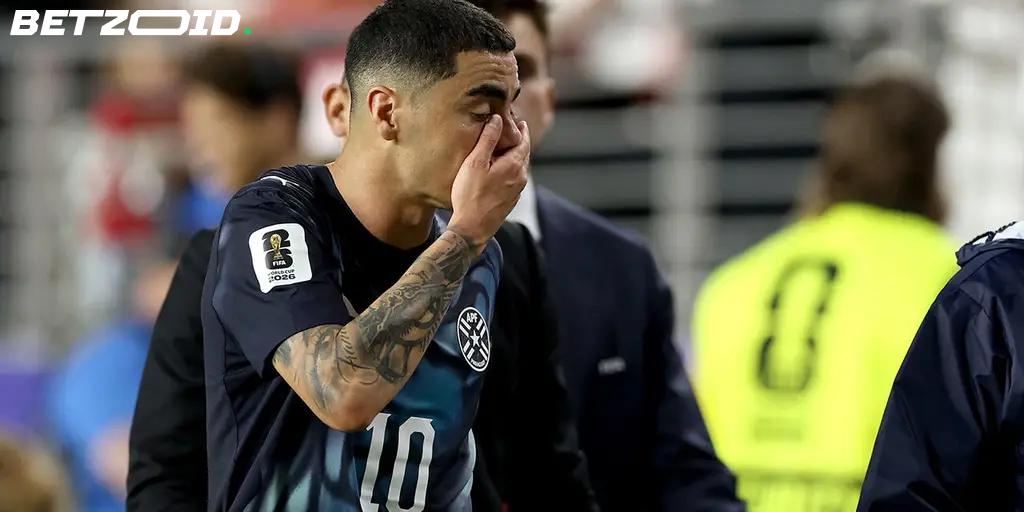
UEFA has quietly drawn a line in the sand: FIFA's red card rule for mouth-covering won't apply in the Champions League, Europa League, or Conference League next season. Yellow card, maximum. Ejection is off the table.
That's a meaningful pushback. FIFA introduced the rule specifically to stop players hiding abusive, discriminatory, or offensive language from lip-readers and camera crews — a direct response to an incident in February when Benfica winger Prestianni allegedly directed a racially charged insult at Real Madrid's Vinícius Júnior while shielding his mouth with his jersey. FIFA president Gianni Infantino pushed hard for the change, the International Football Association Board unanimously approved it, and two players have already been red-carded under it.
What UEFA actually will and won't do
UEFA's position isn't a free pass for players who cover their mouths. The governing body confirmed it will issue yellow cards for "attempting to conceal communication as an act of unsporting behaviour." Any disciplinary investigation into the content of what was said can still follow independently.
So the intent is there. The punishment just stops short of ejection and a one-game ban — which, in knockout European football, is a very different calculation to a group-stage booking.
The IFAB rule technically isn't mandatory within the Laws of the Game. It's an option tournament organizers can adopt at their discretion, which is exactly why FIFA can enforce red cards at the Club World Cup while UEFA does something different in its own competitions. That flexibility is by design, but it also creates a patchwork of standards that will confuse players and fans alike.
The Vinícius incident that started all of this
The Vinícius-Prestianni confrontation was the catalyst. Real Madrid teammate Kylian Mbappé publicly backed Vinícius's account of what was said. The whole episode put FIFA under pressure to show that discriminatory abuse has consequences beyond a post-match report that quietly goes nowhere.
Whether a yellow card in a Champions League semifinal is really a deterrent is debatable. Ask any manager — a booking in the wrong moment can be as damaging as a red. But for players calculating risk in the heat of a match, knowing they won't be sent off changes the math significantly.
UEFA says it will monitor the situation. Which, in governing body language, usually means they'll revisit it if something embarrassing happens on a big stage.