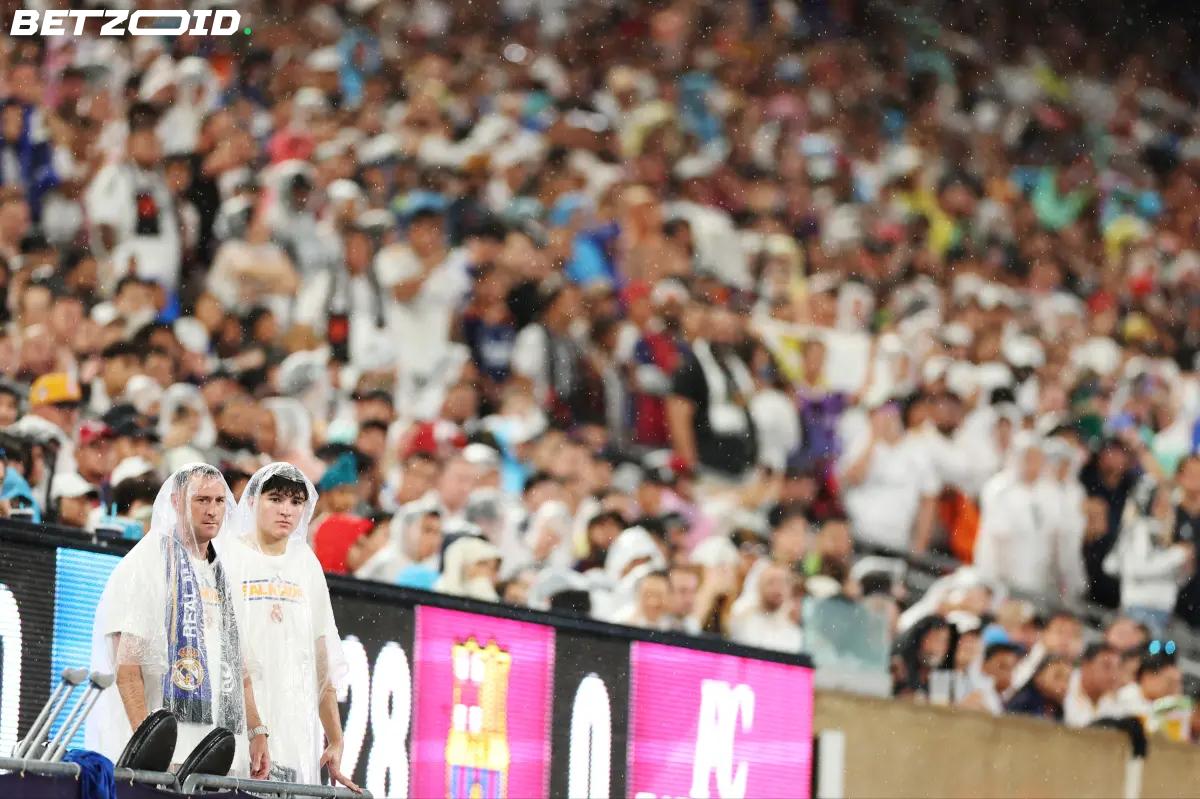
FIFA has no cut-off point for abandoning a match due to weather. None. And with 78 World Cup games scheduled across the United States between June 11 and July 19 — peak thunderstorm season — that policy is going to be tested.
Under American sporting regulations, any event within eight miles of a lightning strike must stop immediately. Once play is suspended, 30 minutes must pass without further lightning before it can resume. The catch: that clock resets with every new strike. A persistent storm rolling through Miami or Houston doesn't need to be severe to kill an entire evening.
We already saw what this looks like
Last summer's Club World Cup offered a preview nobody asked for. Chelsea's round of 16 tie against Benfica was suspended for nearly two hours due to lightning in the area. By the time the final whistle blew, more than four and a half hours had elapsed since kick-off. That was a club tournament. Imagine it happening in a World Cup quarter-final.
The 11 host cities are not equally exposed. Miami, Atlanta, Houston and Kansas City are among the most lightning-active urban environments in the country during summer months. MetLife Stadium in New Jersey — the final venue — sits in a region that gets its share of summer storms too. There is no safe corner of this tournament schedule.
What makes this genuinely complicated isn't the rain. Rain doesn't stop football. Lightning does, full stop, regardless of what the sky looks like directly above the pitch. International fans filling these stadiums for the first time will have no frame of reference for why a game under clear skies just got suspended because a storm is eight miles away.
The betting implications are real
Suspended matches, restarted at odd hours, with players who've been sitting in tunnel corridors for 90 minutes — that changes games. Momentum evaporates. Substitution strategies get scrambled. Any market built on in-play data or expected momentum becomes effectively useless once a two-hour weather break lands in the middle of a tight knockout tie.
FIFA has managed extreme heat and torrential rain across decades of tournaments. A rolling American thunderstorm that restarts its own delay clock is a different animal entirely. And right now, their only plan appears to be hoping it doesn't happen too often.