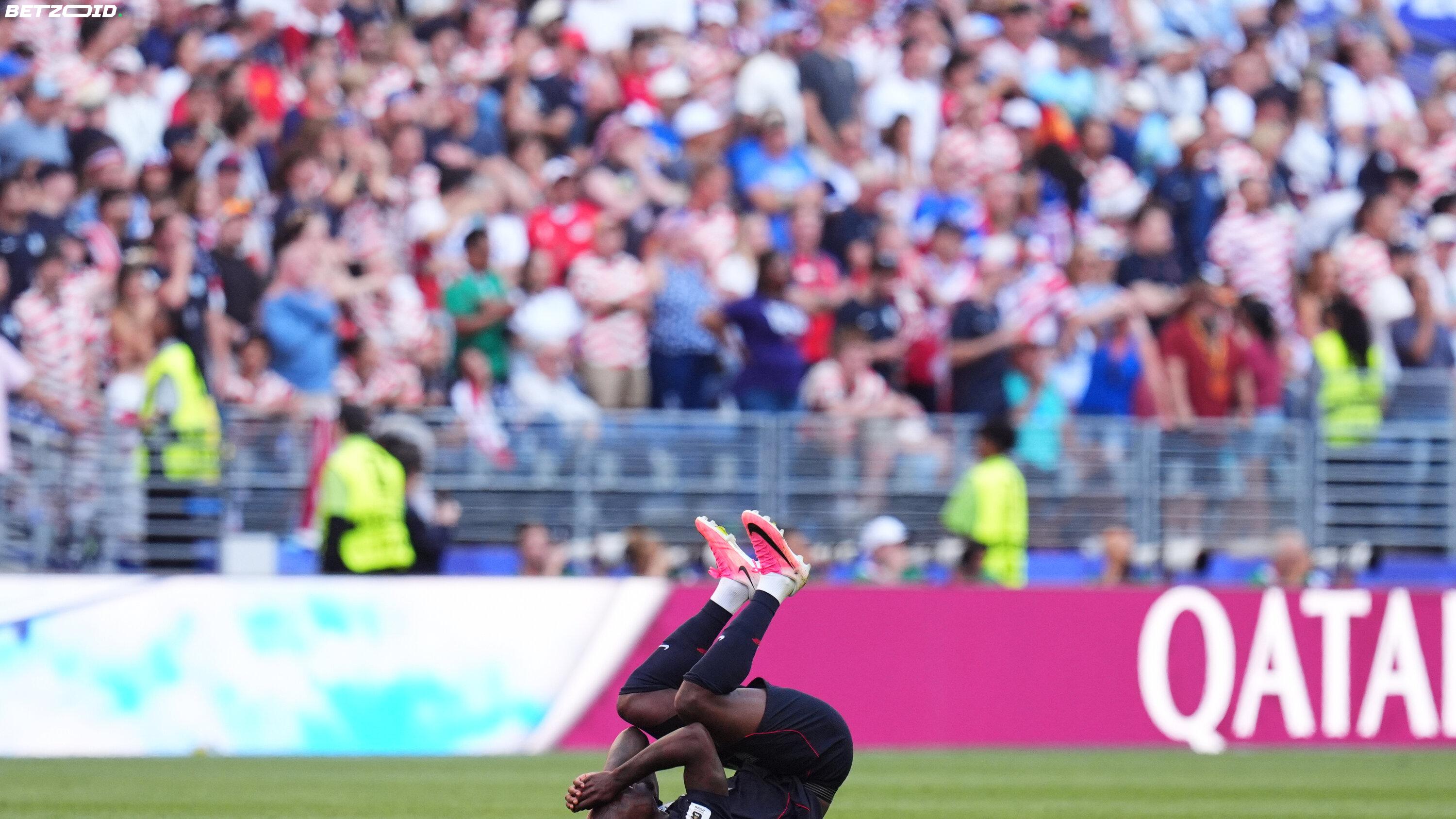
The United States lost 4-1 to Belgium in Seattle. Heads dropped, a nation briefly captivated by soccer snapped back to reality — and yet the argument that American soccer is in genuine trouble doesn't hold up.
Record viewership. Record attendance. A youth participation surge of 15.8 percent in a single year, the fastest growth of any team sport in the country. The scoreline hurt. The trajectory didn't change.
The numbers behind the noise
The Americans' win over Bosnia and Herzegovina drew 24 million viewers on Fox — the most-watched English-language World Cup broadcast in U.S. history — with another 9 million watching in Spanish on Telemundo. Some 4.6 million spectators attended the first 72 matches across 16 host cities, already past the 3.5 million record set at the 1994 World Cup across only 52 games.
That's not a tournament doing okay. That's a tournament rewriting the record books on American soil.
MLS commissioner Don Garber put it plainly: "The growth of the sport is not dependent on that. The success of the World Cup in general has been driving the sport forward in ways that are almost as important as the success of the U.S. team." He's right, even if it stings to say it the morning after a four-goal defeat.
There were 16.8 million outdoor soccer players aged six and up in the United States in 2025. Soccer sits third among all team sports for participation, behind only basketball and baseball. Lionel Messi joining Inter Miami in 2023, the 2024 Copa América, last year's Club World Cup — each one nudged those numbers higher. This World Cup is expected to be another multiplier.
MLS has real questions to answer
Here's where the optimism runs into friction. Former U.S. international Eric Wynalda isn't buying the feel-good narrative around Major League Soccer, and he makes a sharp point: "We are not in a spot where we should look at the U.S. national team's success and for one second think this is because of Major League Soccer."
Wynalda's critique is structural. In most football nations, the domestic league serves as the engine that produces national team talent. MLS, he argues, still operates more like location-based entertainment than a development pipeline. Modest payrolls, a habit of signing aging stars for commercial appeal — Beckham, Messi — and a calendar that's been out of sync with the global game for its entire existence.
The league is moving to a fall-to-spring schedule in 2027 to align with Europe and South America. Garber says promotion and relegation is being considered. Those aren't small changes — and anyone with money on MLS closing the gap with Europe's top leagues should note that the league is still at least a cycle behind where it needs to be. Average attendance sat at around 22,000 per game last year. That's solid. It's also 48,000 short of the NFL average.
Giovanni Reyna, whose father played in the 1994 World Cup, noticed that mainstream American sports shows — normally NFL and NBA territory — gave real airtime to this tournament. "It's really, really cool to see the country rally around this sport," he said during the team's run, "which seems like the strongest they ever have."
The talent is there, too. Christian Pulisic and several other starters at top European clubs represent the strongest generation of American players the country has produced. The pipeline is real. Whether MLS becomes part of it — rather than just adjacent to it — is the defining question of the next decade.
Garber framed the ambition simply: "If the goal in '94 was to start a league, the goal in 2027 and beyond is to have one of the top leagues in the world."
The gap between that goal and the current reality is where the actual work lives.