"We bragged that we could buy Sweden with our sovereign oil wealth fund. It wouldn't have even been funny if they weren't so upset about it — but they got really mad." That quote, from Torstein Hamran of Norway's largest supporters' club, tells you more about where Norway stand right now than any tactical breakdown could.
This is a country that spent decades watching World Cups from the sofa — every tournament since a group-stage exit at France '98 — quietly certain they deserved better. Now they're back, with the best striker on the planet leading the line, and they are not pretending to be modest about it.
The qualifying numbers were absurd
Norway went through European qualifying with a perfect record, scoring 37 goals in eight matches. Argentina, who topped South American qualifying, scored 31 — in 18 matches. Erling Haaland accounted for 16 of those goals, matching Robert Lewandowski's record for the most prolific European qualifying campaign ahead of the 2018 World Cup. They beat Italy — four-time world champions — twice, by a combined 7-1.
Martin Odegaard captains the side. Antonio Nusa starts for RB Leipzig. Oscar Bobb just moved to Fulham for £27 million. This isn't a team built around one superstar hoping for a miracle run. It has real depth.
That said, the group is brutal. France are chasing a third consecutive World Cup final. Senegal arrive as reigning African champions. Iraq are the only opponents Norway are genuinely expected to beat. Third place is enough to advance in the expanded 48-team format, but nothing here is free.
From wartime resistance to the stands at Ullevaal
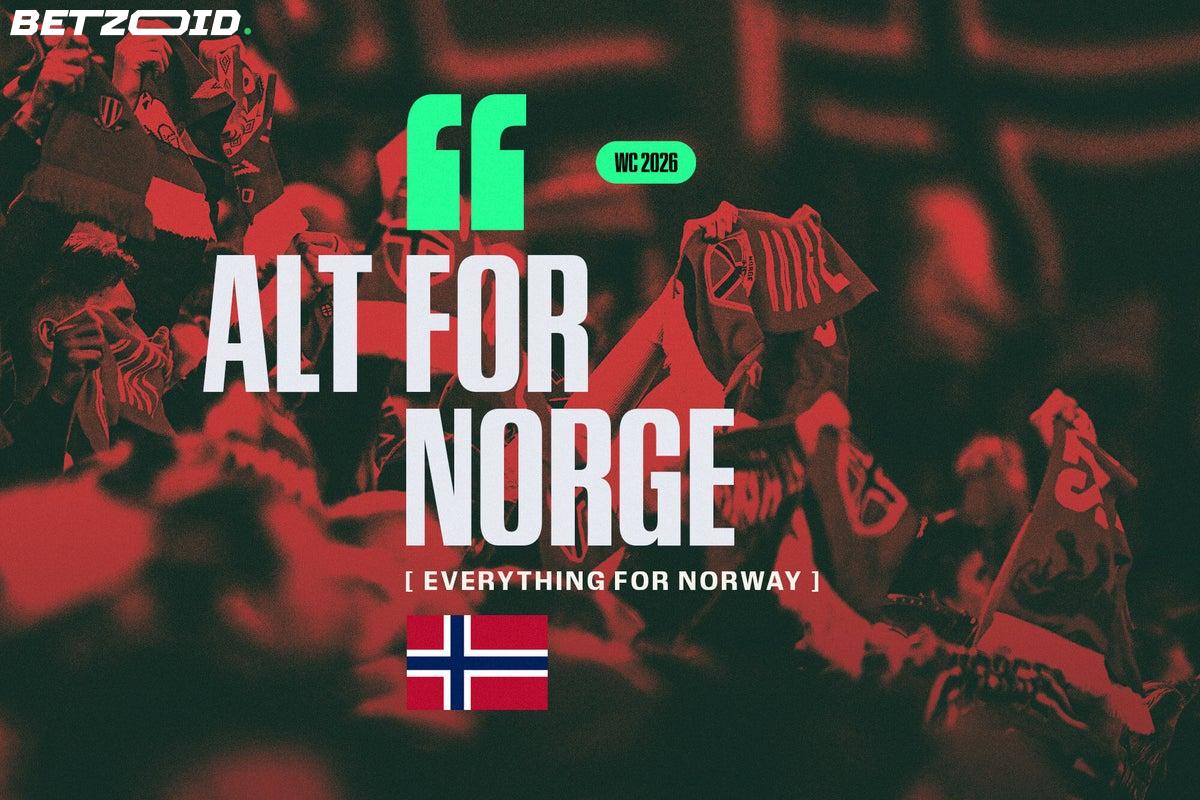
"Alt for Norge" — Everything for Norway — didn't start as a football chant. It became a symbol of resistance and national unity during the Nazi occupation in World War Two. By 1994, when Norway qualified for their first World Cup since 1938, it had been reimagined as a fan anthem, and it's been the sound of Ullevaal Stadion ever since.
The supporters' culture around it is genuine and inventive. Oljeberget, the country's biggest Norway supporters' club, recently unveiled the Ro — a collective rowing action inspired by Viking seafaring, their answer to Iceland's famous thunderclap at Euro 2016. It debuted in March during a 0-0 draw with Switzerland and immediately picked up international attention.
Some fans are apparently considering sailing a modern-built Viking ship across the Atlantic to reach the tournament. That's either deeply committed or completely unhinged, and honestly both feel appropriate.
Norway are playing their group games in Boston and New Jersey, and their fanbase — tight-knit by necessity given the country's 5.5 million population — will travel. "Norway is a very small country, and it feels like everyone knows someone on the team," says Halvor Viste Berg, an Oljeberget member. "Either you grew up with some of them, or they come from your hometown. It feels like cheering for your friends."
That collective identity is the point. The phrase captures a real tension at the heart of Norwegian culture — the Law of Jante, which demands modesty and collectivism, constantly wrestling with the national belief that it's simply "typically Norwegian to be good." Haaland, once viewed as too brash and "almost non-Norwegian," has gradually been embraced as the embodiment of both: carrying the whole country on his back, but doing it for everyone.
If Norway make the knockouts, the one opponent they want more than anyone is Sweden. There's a song about buying the entire country with Norway's sovereign wealth fund. It's called "Kjøpe Hele Sverige." The Swedes apparently hated it. Norway found that very funny.